Mastering Temple Visits in Japan: Etiquette and Customs
Learn practical Japan temple etiquette — how temples differ from shrines, how to use the purification fountain, what to wear, when photos are okay, and mistakes to avoid.
Japan temple etiquette is mostly about moving quietly, following posted signs, and copying what locals do when you are unsure. Temples and shrines are active places of worship, not outdoor museums. A little preparation keeps your visit calm for you and for the people who came to pray.
This guide covers how temple and shrine customs differ, how to use the purification fountain, what to wear, when photos are okay, and the mistakes travelers make most often. Soft walking shoes help — many approaches include gravel, stairs, and wooden floors.
Temple vs shrine: get this right first
Buddhist temples (often ending in -ji or -dera) and Shinto shrines (often ending in -jinja or marked by a torii gate) sit side by side in many cities, and visitors mix up their customs. At a shrine you usually bow twice, clap twice, then bow once at the offering hall. At a temple you typically do not clap; you may light incense, bow quietly, and keep your hands together for a short prayer.
When a complex includes both, follow the signs for each building. If you only remember one rule: stay quiet, do not block the path, and watch one local cycle of prayer before you copy it.
Before you go
Check opening hours and whether an entrance fee applies. Many sites charge roughly 300–600 JPY for halls or gardens; some grounds are free. Large Kyoto temples can get crowded on weekends and holidays — early morning is quieter and easier for photos where photography is allowed.
Pack socks you do not mind showing, because you will remove shoes in some halls. A small tote for shoes helps when no lockers are provided. Cash coins for the offering box are useful; a 5-yen coin is a common, lightly lucky choice, though any small coin is fine.
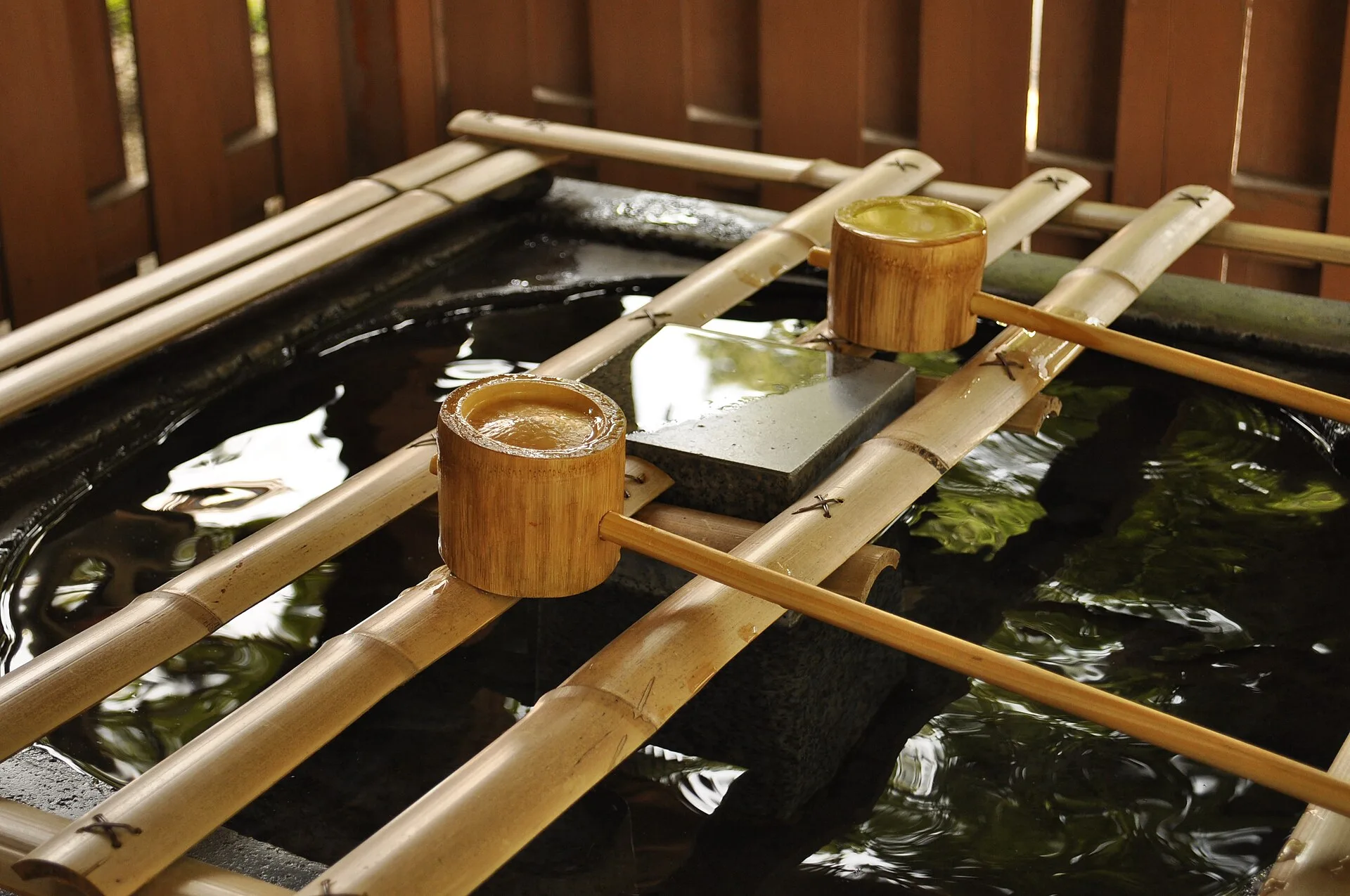
Near the entrance you will often find a stone basin with ladles — the temizuya or chozuya. Dip the ladle, rinse your left hand, then your right. Pour a little water into your left hand to rinse your mouth (spit beside the basin, never back into it), then rinse the ladle handle and return it. You do not need to overdo it; a quick, careful rinse is enough.
Stone temizuya purification fountain with bamboo ladles at a Japanese shrine
A quick checklist before you enter
Before you step through the gate, silence your phone and check the posted rules. Keep a little cash handy, wear clean socks, and leave bulky bags somewhere they will not brush against other visitors. At the purification fountain, use only enough water for a brief rinse and keep the ladle above the basin. Inside a hall, speak softly and give people space to pray. If a rope, barrier, or sign marks an area as off limits, do not cross it for a better view.
Plan extra time for stairs, gravel paths, and queues at popular sites. Weather can change quickly, so a compact umbrella is useful, but store it where staff indicate. If you are traveling with children, explain the quiet atmosphere before you arrive and choose a place at the edge of the walkway for breaks. These small habits make the visit easier for everyone and help you enjoy the architecture, gardens, and atmosphere without treating a sacred site like a backdrop.
Stone temizuya purification fountain with bamboo ladles at a Japanese shrine
Stone temizuya purification fountain with bamboo ladles at a Japanese shrine
Stone temizuya purification fountain with bamboo ladles at a Japanese shrine
At a temizuya, rinse your hands (and lightly your mouth) before going farther in. Photo: SC36 / Wikimedia Commons (CC BY-SA 3.0).
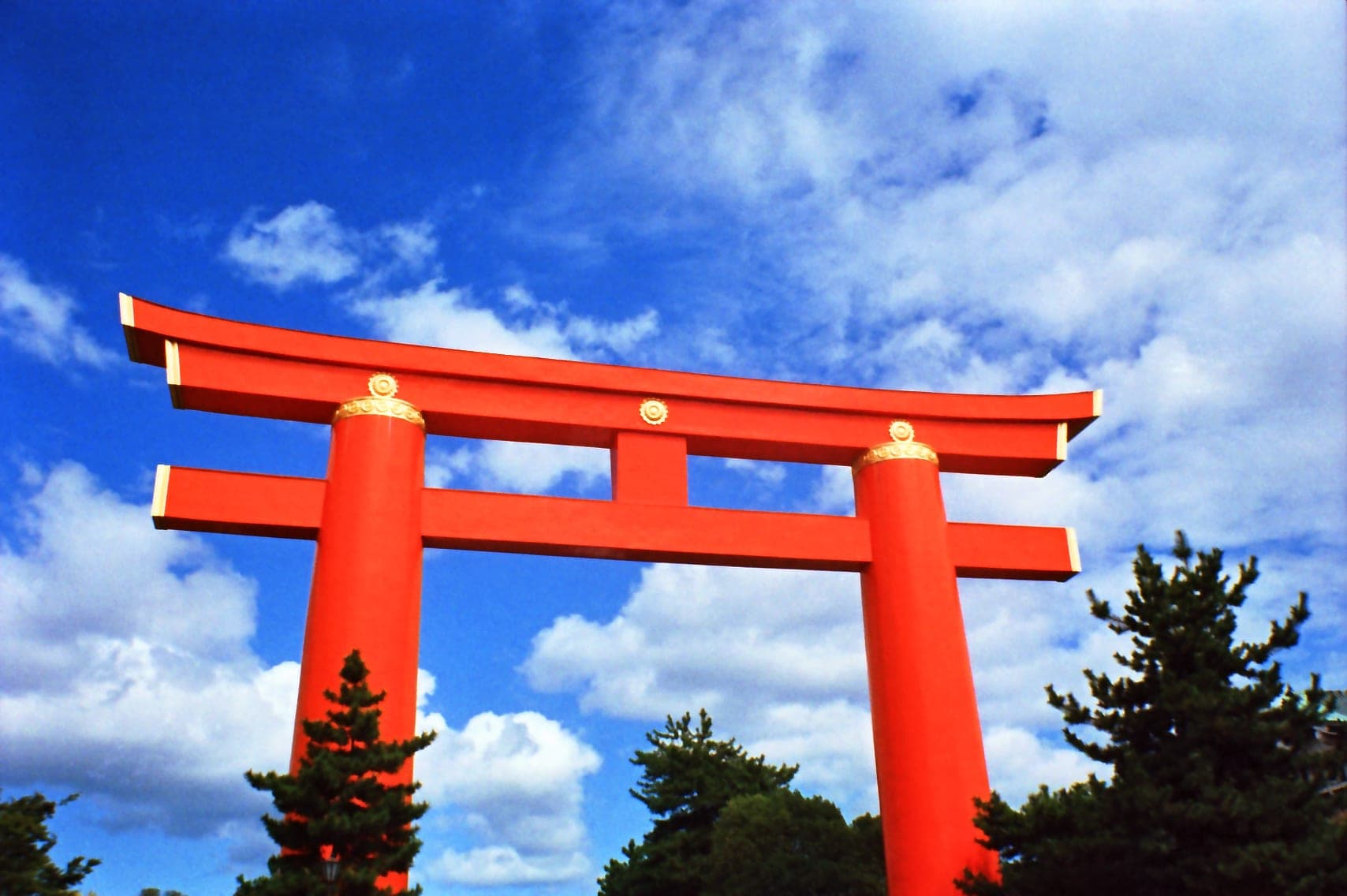
Bow lightly as you pass under a temple gate or torii. Stay on the marked approach when possible; the center line is sometimes treated as a path for deities, so many visitors walk slightly to one side. Remove shoes where you see shoe shelves or a raised wooden threshold, and step up carefully.
Prayer, offerings, and incense
At a shrine offering hall: toss a coin into the box, bow twice, clap twice, then bow once. Keep the prayer short. At a temple: many people offer a coin, bow with hands together, and skip the claps. If incense is available, light a stick from the shared flame or burner, wave it gently to put out the flame (do not blow), and place it upright in the sand.
You do not have to join every ritual. Standing quietly to the side is fine. Temple staff and other visitors are usually patient if you move slowly and keep your voice down.
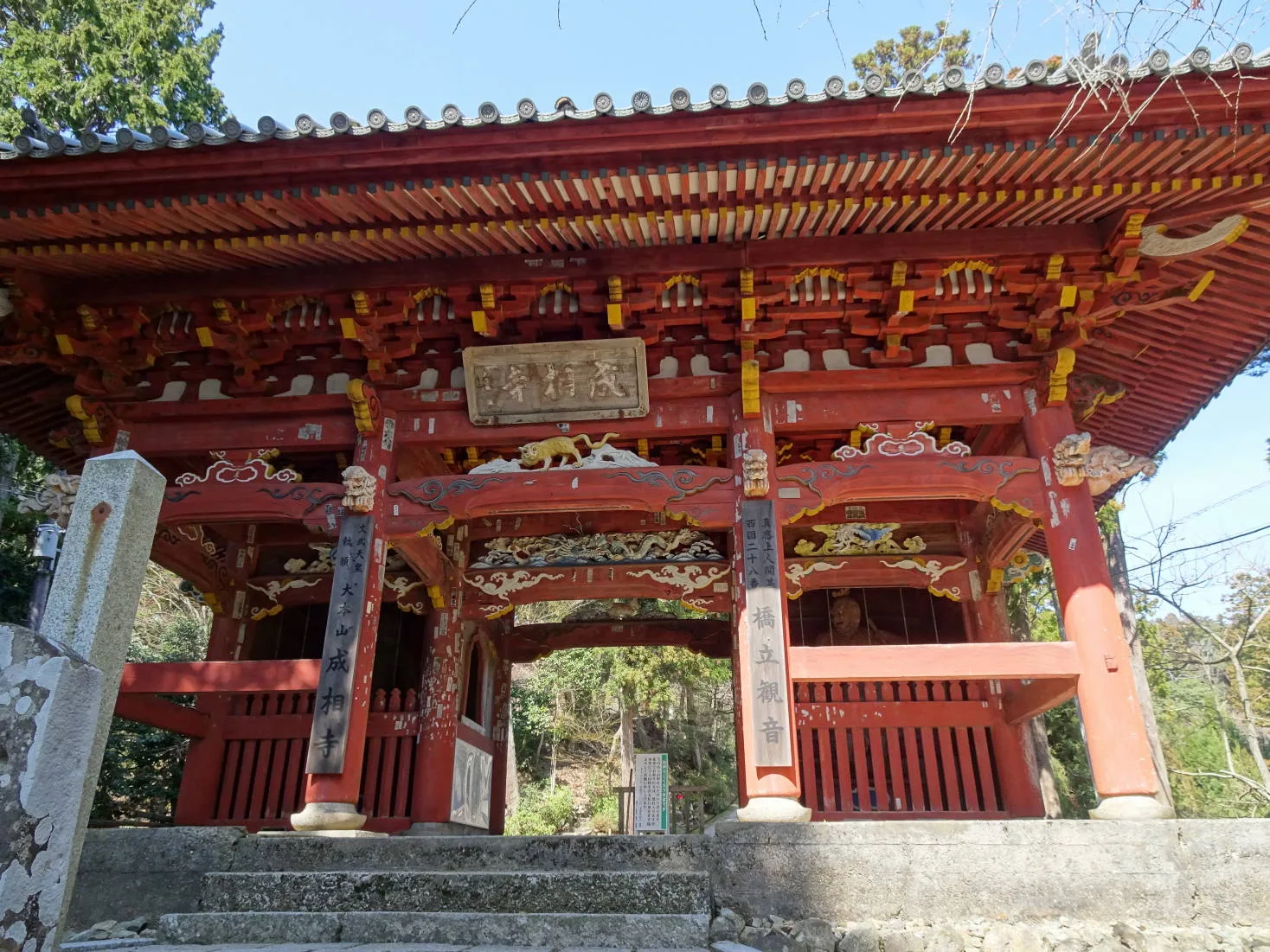
Wooden Niomon temple gate at Nariai-ji along the approach path
Wooden Niomon temple gate at Nariai-ji along the approach path
Wooden Niomon temple gate at Nariai-ji along the approach path
Wooden Niomon temple gate at Nariai-ji along the approach path
Pause at the gate, look for posted photo and shoe rules, then continue inside. Photo: Tenkyoritsu / Wikimedia Commons (CC BY-SA 4.0).
What to wear
Japan temple etiquette also shows up in what you wear. Choose clothes that cover shoulders and knees when you can. Avoid slogans or images that would look odd in a place of worship. Slip-on shoes save time. In winter, layer up — stone courtyards stay cold even when the city feels mild.
Hats come off indoors. Umbrellas go in stands or bags at the entrance of many halls. If you carry a large backpack, hold it in front of you in narrow corridors so you do not bump altars or other guests.
Photography without getting in the way
Look for camera icons or "no photo" signs before you raise your phone. Interiors, statues, and ceremony spaces are often restricted even when gardens are fine. Skip flash. Do not photograph people praying unless they clearly agree.
Step aside after your shot so the walkway stays open. Tripods and loud shutter sounds draw the wrong kind of attention. If a monk or attendant asks you to stop, stop immediately and apologize briefly.
Common mistakes to avoid
Talking loudly, eating on the grounds, and leaving trash are the fastest ways to annoy staff and locals. Phones should be silent. Do not point your feet at altars when sitting. Do not climb on stone lanterns or pose in ways that block the main approach for long stretches.
Another frequent mix-up: using the shrine clap sequence inside a Buddhist hall, or walking straight through a line of people waiting to pray. When unsure, wait, watch one person complete the steps, then follow.
Putting it into practice on a real visit
Once the basics feel familiar, temple days in places like Nara, Nikko, Kamakura, and Kyoto become easier. You spend less energy worrying about mistakes and more time noticing the buildings and gardens. For a wider cultural overview, read the Discover Japanese Culture and Traditions: A 2026 Guide for Travelers.
Mastering Japan temple etiquette is not about perfection. It is about arriving prepared, keeping your voice down, and treating the grounds as someone else's sacred space — because they are.
Stay quiet, follow posted signs, purify your hands at the temizuya when one is present, remove shoes where shelves or raised floors indicate it, and do not block people who are praying. Watch one local complete a prayer cycle before you copy it.
Not exactly. At Shinto shrines you usually bow twice, clap twice, then bow once after offering a coin. At Buddhist temples you typically skip the claps, may light incense, and pray with hands together. Always check signs for that specific site.
Scoop water with the ladle, rinse your left hand, then your right. Pour a little into your left hand to rinse your mouth, spit beside the basin (never into it), rinse the ladle handle, and return it. A quick rinse is enough.
Modest clothing that covers shoulders and knees when you can, plus shoes that come off easily. Bring clean socks. Avoid loud slogan shirts. In colder months, wear layers because courtyards stay cool.
Often outdoors yes, indoors sometimes no. Look for camera or no-photo signs before shooting. Avoid flash, do not photograph people praying without clear permission, and step aside so the path stays clear.
Any small coin is fine. Many visitors use a 5-yen coin. Toss it gently into the saisen box, then complete the shrine or temple prayer steps that match the site. You do not need a large donation to visit respectfully.