
Visiting temples and shrines in Japan is a profound experience that offers insight into the country's rich cultural and spiritual heritage. To ensure a respectful visit, understanding the etiquette and customs is essential. This guide will provide you with essential tips on how to properly visit a temple in Japan in 2026.
Cultural Insights7 min read20 views
Master Japanese Temple Etiquette in 2026: A Guide for Respectful Visitors
Navigate Japanese temples with confidence using our 2026 etiquette guide. Respectful tips for a meaningful visit.
By MickyEdited by Talha Nabeel
Understanding Japanese Temples and Shrines
Temples and shrines are integral to Japan's cultural and spiritual landscape, serving as places of worship for Buddhism and Shintoism, respectively. Temples are typically associated with Buddhism and often house sacred relics and statues of Buddha. Shinto shrines, on the other hand, are dedicated to kami, the deities of the Shinto religion. These sites are not just religious, but also historical landmarks that offer a glimpse into Japan's past.
When you visit these sacred places, it's important to recognize their significance to the local community and the country as a whole. Temples and shrines are often located in tranquil settings, offering a peaceful retreat from the bustle of city life. Understanding the difference between these two types of sites and their cultural contexts can enhance your visit and your appreciation of their importance.
Dress Code Essentials
When visiting temples and shrines, dressing appropriately is a sign of respect. The Japan temple dress code advises modest clothing that covers your shoulders and knees. While casual attire might be acceptable in some places, it's best to avoid wearing shorts or sleeveless tops. If you're wondering, "Can I wear shorts to a Shinto shrine?" the answer is generally no, as it may be seen as disrespectful.
Quick tip: Always carry a light scarf or shawl, which can be used to cover your shoulders or legs if needed. Comfortable shoes are also advisable, as you may need to remove them before entering certain areas of the temple or shrine.
Seasonal Considerations
Japan experiences a wide range of weather conditions, from hot and humid summers to cold winters. During summer, lightweight, breathable fabrics are recommended, but ensure they are still modest. In winter, layers are key, as many temples and shrines do not have heating. Consider wearing thermal undergarments to stay warm while maintaining a respectful appearance.
Respectful Behaviors
Respectful behavior is paramount when visiting Shinto shrines and temples. Avoid loud conversations and keep your phone on silent mode. It's also important to follow the designated paths and refrain from touching any objects or artifacts unless permitted. Never point at statues, as this is considered rude, and avoid placing your feet on sacred areas such as altars or stepping stones.
Pro tip: Bowing is a common gesture of respect. When approaching the main hall, bow slightly before entering. If you are unsure about specific customs, observe the locals or ask for guidance from a temple staff member. Additionally, avoid eating or drinking within the temple grounds unless there is a designated area for such activities.
Rituals and Practices
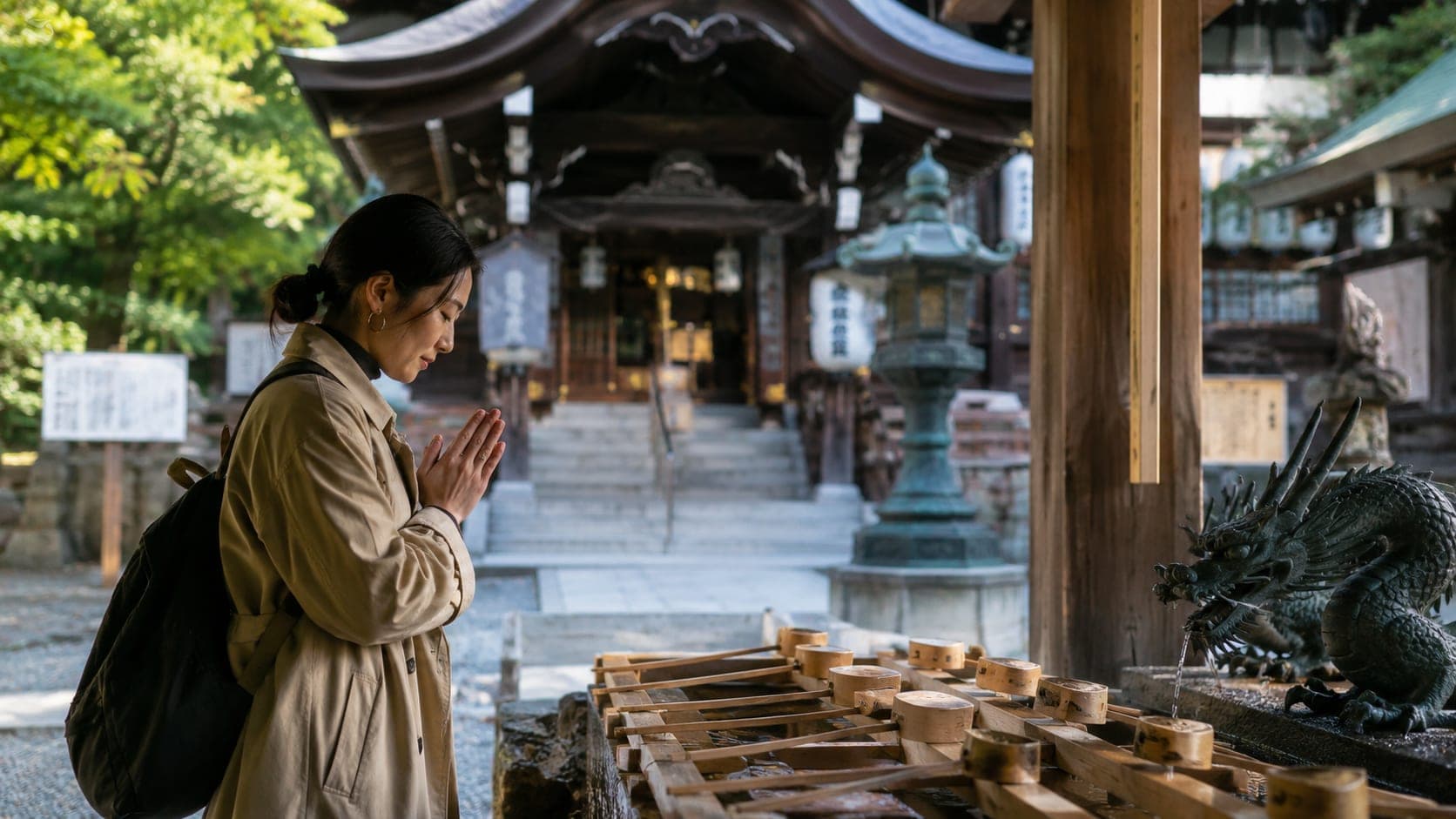
Upon entering a temple, you may encounter several rituals. One common practice is purifying your hands and mouth at a temizuya (purification fountain) before entering. To do this, fill a ladle with water, pour it over your hands, rinse your mouth, and then rinse the ladle. This ritual is a symbolic act of cleansing before prayer.
Inside the temple, you'll often find a large incense burner. It's customary to waft the smoke towards yourself as a form of purification. When approaching the main hall, make a small offering, bow deeply, and clap your hands twice to attract the deity's attention. Then, bow once more in gratitude.
Pro tip: Some temples offer guided tours that explain the significance of these rituals. Participating in a tour can enhance your understanding and appreciation of the practices.
Photography Guidelines
Photography in temples and shrines is a nuanced topic. While many places allow photography in outdoor areas, taking pictures inside the main halls is often prohibited. Always look for signs or ask permission to avoid disrespecting the site's sanctity.
Local tip: If photography is allowed, refrain from using flash as it can disturb others and damage delicate artifacts. Additionally, avoid taking photos of people in prayer without their consent. Respect the privacy of worshippers and the solemnity of the rituals. Some temples may have specific photo spots, so look out for these designated areas.
Making Offerings
Making offerings at a shrine is a simple yet meaningful gesture. Offerings typically consist of coins, often 5 or 50 yen, as these denominations are considered lucky. Gently toss the coin into the offering box, bow twice, clap twice, and bow once more to complete the ritual.
Pro tip: Offerings are a way to express gratitude and ask for blessings. While monetary offerings are common, some shrines may also accept food or sake. Always check the shrine's specific customs beforehand. If you're unsure, observe the locals or ask a shrine attendant for guidance.
Special Events and Festivals
Japanese temples and shrines host various festivals throughout the year, each with its own set of customs. During these events, the atmosphere is lively, with traditional music, dance, and food stalls. It's important to adhere to etiquette even during festive times. Be mindful of the crowd and avoid obstructing paths or ceremonies.
During festivals, you may witness unique rituals or performances. Participation can offer deeper insight into Japanese culture, but always seek permission if you're unsure about joining certain activities. For example, the Gion Matsuri in Kyoto is one of the most famous festivals, featuring grand processions and traditional floats. Arrive early to secure a good viewing spot, and be prepared for large crowds.
Pro tip: Check the local calendar for festival dates and plan accordingly. Some festivals require advance reservations, especially if they involve special ceremonies or performances.
Cleansing Rituals
Cleansing before entering a shrine is a crucial step to purify oneself. At the entrance, you'll find a temizuya where you should wash your hands and mouth. Begin by taking the ladle in your right hand, pour water over your left hand, switch hands, and repeat. Finally, pour water into your left hand to rinse your mouth, then rinse the ladle.
Pro tip: This ritual is about spiritual cleanliness, so perform it mindfully and respectfully. Take your time to ensure you are following the steps correctly. If you're unsure, observe others or ask for assistance.
Tips for First-Time Visitors
For first-time visitors, understanding temple etiquette is key to a respectful and enjoyable experience. Plan your visit during the early morning or late afternoon to avoid crowds. Always approach with an open mind, ready to learn and observe.
It's also wise to familiarize yourself with the basic customs and dress code before your trip. This will make your visit more respectful and far more rewarding. Consider joining a guided tour for deeper insights into the history and significance of the temples. Additionally, be aware of seasonal variations, as some temples may have different opening hours or special events during certain times of the year.
Pro tip: Use apps like Google Maps or Hyperdia to plan your route and check train schedules. For more travel tips, check out Essential Japan Travel Tips for First-Time Visitors in 2026.
Transportation Logistics
Japan's public transportation system is efficient and easy to navigate, making it simple to visit multiple temples and shrines in one day. If you're in Tokyo, consider getting a prepaid Suica or Pasmo card to make travel smooth, or reserve a Tokyo private day tour by car to move between temples without worrying about train transfers. For those venturing beyond the city, the Japan Rail Pass can be a cost-effective option for long-distance travel. Always check the train schedules in advance, especially if you're traveling during peak hours or holidays.
Pro tip: When planning your temple visits, group nearby sites together to minimize travel time. For example, in Kyoto, you can explore the Kinkaku-ji, Ryoan-ji, and Ninna-ji temples in one day, as they are all located in the same area. This approach saves time and lets you experience a variety of architectural styles and historical contexts in a single outing.
Suggested Itinerary for Kyoto
If you're planning a day of temple visits in Kyoto, a suggested itinerary might include starting at Kinkaku-ji (Golden Pavilion) early in the morning to avoid the crowds. Afterward, head to Ryoan-ji, famous for its rock garden, and then make your way to Ninna-ji, a temple with beautiful gardens and a five-story pagoda. In the afternoon, visit the serene Tenryu-ji in Arashiyama, followed by a peaceful walk through the nearby bamboo grove. End your day at Fushimi Inari Shrine, where you can walk through the famous red torii gates as the sun sets, providing a magical end to your temple exploration day.
Pro tip: Allocate enough time for each site to fully enjoy the experience without rushing. Consider using a taxi or a rental bike if you're short on time between distant locations. For more on planning your Kyoto visit, check out Crafting the Perfect Kyoto Private Tour Itinerary for 2026.
TopicsJapan templestemple etiquetteShinto shrinescultural tips
Frequently Asked Questions
Related posts
Ready to explore Japan?
Book a private tour with OHAYO TRAVEL JAPAN.
View all private tours · Browse by category · Destinations · Contact us