There are practical things to know before going to Japan, and they are easier to handle at home than at the airport. This checklist covers official arrival registration, money, IC cards, rail passes, taxis, phones, and power. It is not another etiquette manual.
I checked official pages from Visit Japan Web, Japan Rail Pass, the Tokyo Taxi Association, and related government notices on November 22, 2026. Fees and rules change, so confirm the current figures on those sites before you travel.
Visit Japan Web is the Japanese government's official service for immigration and customs procedures, and it also supports tax-free shopping registration. The official English page is on the Digital Agency site. Register in advance, complete the required steps on a computer or smartphone, and present the 2D code from your own device at arrival.
Each traveler needs a separate account. A parent can help a child, but you should not plan to share one login across a whole family at the counter. You will still go through immigration and customs in person. The pre-registration simply speeds up the paperwork if the service is operating as planned.
You still need a valid passport and, if your nationality requires one, the correct visa. I am not listing visa-waiver rules here, because those depend on your passport and can change. Check the official guidance from Japan's Ministry of Foreign Affairs and from your own embassy or consulate.
Download any airline or immigration apps you already use, and keep screenshots or offline copies of hotel names and addresses in English and Japanese. Immigration officers and taxi drivers both benefit from a written address, not only a pin in a map app.
Money, cash, and IC cards
Japan is more card-friendly than it was a decade ago, but cash is still useful at smaller restaurants, some temples, and a few local shops. Plan to withdraw yen from a bank ATM after you arrive, or to exchange a modest amount before you travel, rather than arriving with no cash at all.
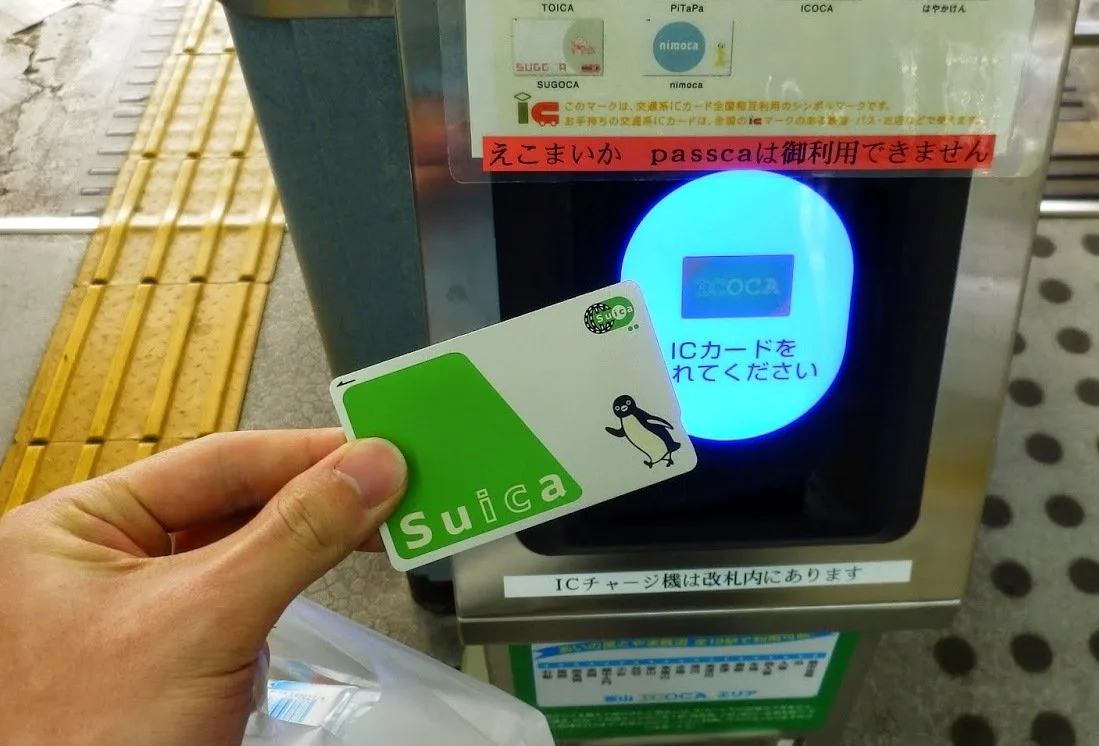
An IC card such as Suica or PASMO is the simplest way to ride trains and buses in the Tokyo area and in many other cities. You tap in and tap out, and the fare is deducted automatically. JR East also issues visitor products such as Welcome Suica. Confirm the current card types, deposit rules, and purchase points on the official Suica site, or set up Mobile Suica if your phone supports it.
Keep a little cash even if you rely on an IC card and credit cards. Ticket machines, coin lockers, and some food counters still work more smoothly with yen. If a machine rejects a foreign card, a nearby ATM is usually the faster fix than arguing at the register.
Tell your bank you will be traveling so it does not block withdrawals. Use official bank or Japan Post ATMs when you can, and avoid informal street exchange. I am not quoting unofficial "best" exchange-rate shops, because those change and are hard to verify from public documents.
The Japan Rail Pass after the 2023 price change
The Japan Rail Pass can still pay for itself on a long-distance trip that includes several shinkansen rides. It often does not pay for itself if you are staying only in Tokyo or making one short side trip. That became more true after the major price increase on October 1, 2023.
As of November 22, 2026, the official Japan Rail Pass website lists these Ordinary adult prices for passes bought on the official site: 7 days at ¥50,000, 14 days at ¥80,000, and 21 days at ¥100,000. A Green Car (first class) 7-day pass is listed at ¥70,000. Prices sold through overseas agencies are higher, following a change that took effect for agency sales on October 1, 2026: Ordinary 7 days at ¥53,000, 14 days at ¥84,000, and 21 days at ¥105,000, with a Green 7-day pass at ¥74,000. The official site prices were left unchanged for a limited time under a JR Group notice issued in April 2026. Confirm the current figures at japanrailpass.net before you buy, and compare them with the actual JR fares for the trips you already plan to take.
Children ages 6 to 11 have their own official rates. A pass does not cover every private railway, subway, or bus, and it does not automatically include every reserved seat. If your trip is mostly subways, local JR lines, and one day trip, an IC card plus single tickets is usually the clearer math.
Hyperdia, which older blogs still mention, is no longer a current planning tool. Use official JR East sources, the official fare search, and a current trip-planning app instead.
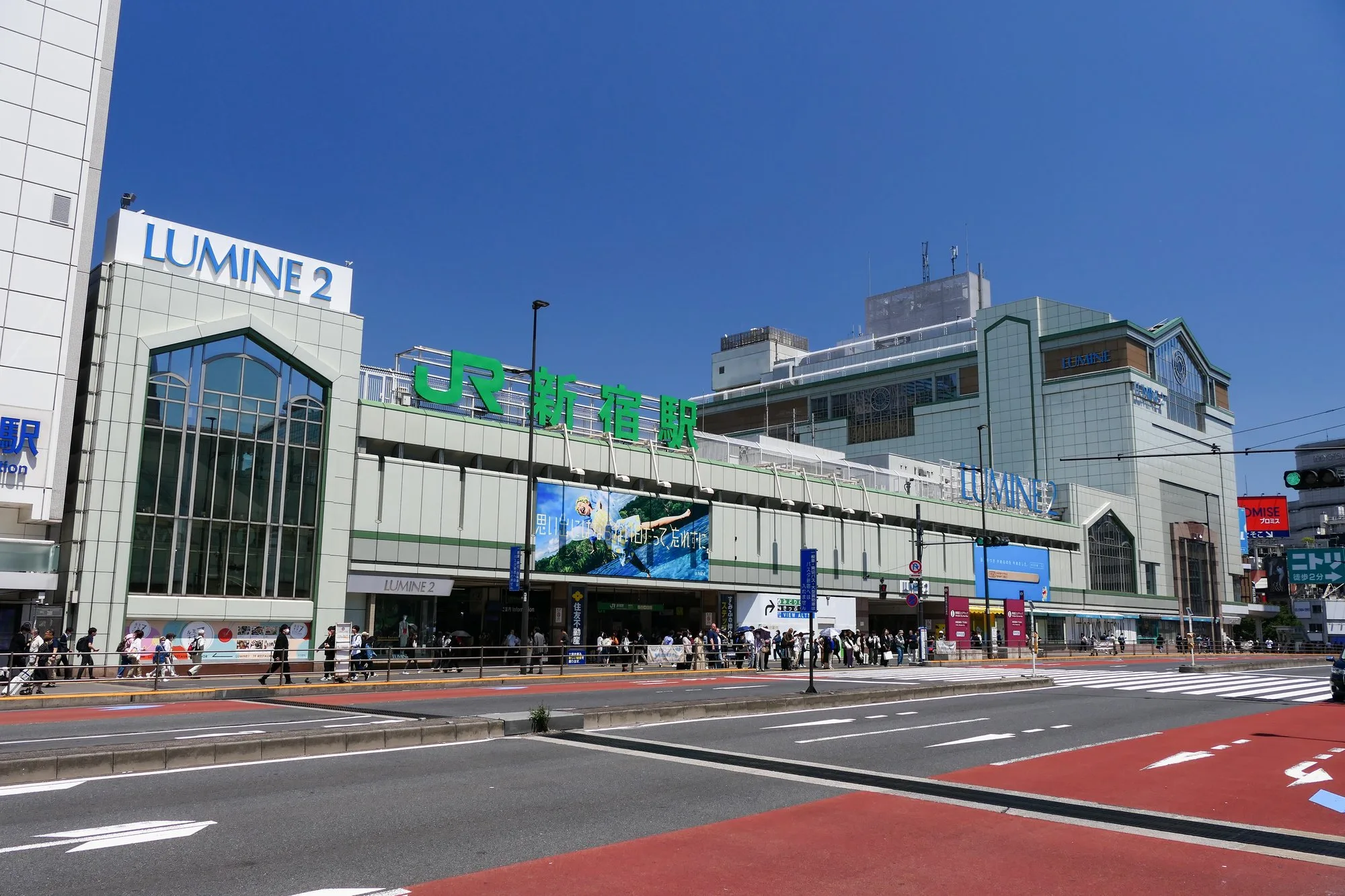
The south entrance of JR Shinjuku Station in Tokyo
The official starting fare for a standard taxi in Tokyo's 23 wards, plus Musashino and Mitaka, is ¥500. That figure was already in effect from a 2022 revision, and it remained ¥500 after the fare update that took effect on April 20, 2026. Under the current official table, the ¥500 covers the first 1.0 kilometer (it had been 1.096 kilometers). After that, the meter adds ¥100 every 232 meters. In slow traffic under 10 km/h, a time-distance charge of ¥100 per 1 minute 25 seconds applies. A 20 percent late-night surcharge runs from 10:00 p.m. to 5:00 a.m. Confirm these figures with the Tokyo Taxi Association or the official fare table if you need the latest notice.
Older "around ¥710" starting fares you may still see in blogs are out of date. A taxi from the airport to central Tokyo will cost much more than the starting fare, so compare that ride with the official airport train and bus options before you leave the terminal.
Once you are in the city, walking and trains will cover most of a first visit. Taxis are useful late at night, with luggage, or when you are going somewhere the rails do not reach cleanly. Have the destination written in Japanese when you can. Rear-seat passengers usually get in on the left, and the rear doors on many taxis open and close automatically.
Weekday morning and evening peaks are crowded on commuter lines. If your hotel is near a major station, a short walk at those times can be easier than a one-stop train ride. For app recommendations, including maps and translation tools, see our must-have apps for traveling Japan.
Phones, power, and what to pack
Japan's household electricity is 100 volts. Standard outlets take Type A plugs, the two-flat-pin type also used in North America. If your devices already use Type A, you may only need to confirm voltage and bring a short extension or a second USB charger. If your plugs are a different shape, pack a travel adapter. I am not recommending a specific brand.
A working phone matters more than almost any other gadget. Decide before you fly if you will use an eSIM, a physical SIM, or an official rental Wi-Fi unit. Install the eSIM and test it at home if your phone allows that. Download offline maps and your airline boarding passes. Keep a portable battery in your carry-on, because a dead phone makes Visit Japan Web codes and ticket apps harder to use.
Pack clothes you can layer, a pair of shoes you can walk in all day, and socks you do not mind slipping off at temples and some restaurants. For what to wear at religious sites, see our Japan temple dress code guide. For bathing manners, use the onsen etiquette guide. For restaurants, see Japanese restaurant etiquette. Those articles cover the details. This one is only here to remind you to read them before you pack.
Medications should stay in original packaging, with a copy of the prescription if a doctor has given you one. Some products that are common at home are restricted in Japan. Check official customs and ministry guidance for your specific medicine rather than assuming it is fine because it is over the counter in your country.
Your first days, without overplanning
You do not need a minute-by-minute city itinerary before the plane lands. You do need a booked first hotel, a plan for the airport transfer, a way to pay, and the Visit Japan Web registration done. After a night of sleep, Tokyo is easier to take in on foot and by train.
If you want a guided first look at the city's religious sites and gardens, our Tokyo Temples and Japanese Gardens Private Day Tour is an 8-hour day with an English-speaking driver guide. It starts at $450 for two people in a sedan, with hotel pickup and drop-off in Tokyo's 23 wards. Fuel, parking, and expressway tolls are included. Lunch, drinks, and garden admission are not. Official garden fees on the tour page include ¥300 at Rikugien and ¥300 at Hama-rikyu. Time beyond 8 hours is ¥5,000 per 30 minutes, paid by card.
Handle the paperwork and the money first, then enjoy the trip. If you want help planning those first days, get in touch or browse our custom tours.
TopicsJapan travelpre-trip checklistVisit Japan WebJR Passtravel tips
Frequently Asked Questions
Visit Japan Web is the Japanese government's official service for immigration and customs procedures, and it also supports tax-free shopping registration. Create your own account, complete the steps in advance, and present the 2D code from your smartphone or tablet at arrival. Each traveler needs a separate account. You will still go through immigration and customs in person.
The official starting fare for a standard taxi in Tokyo's 23 wards, plus Musashino and Mitaka, is ¥500. That rate was set in 2022 and remained ¥500 after the April 20, 2026 revision. The current official table covers the first 1.0 kilometer in that ¥500, then adds ¥100 every 232 meters. A 20 percent late-night surcharge applies from 10:00 p.m. to 5:00 a.m. Older starting fares around ¥710 are out of date.
As of November 22, 2026, the official Japan Rail Pass website lists Ordinary adult prices of ¥50,000 for 7 days, ¥80,000 for 14 days, and ¥100,000 for 21 days when you buy on the official site. A Green Car 7-day pass is listed at ¥70,000. Overseas agency prices are higher after a change that took effect for agency sales on October 1, 2026 (Ordinary 7 days ¥53,000). Confirm current prices at japanrailpass.net before you buy.
Yes, it helps to carry some yen even if you also use credit cards and an IC card such as Suica or PASMO. Cards are widely accepted in cities, but smaller restaurants, some temples, ticket machines, and coin lockers can still be easier with cash. Withdraw at an official bank or Japan Post ATM after you arrive, and confirm card types on the official Suica site.
Japan uses 100-volt household power and Type A outlets, the two-flat-pin plug also used in North America. If your devices already use Type A, you may only need to confirm voltage and pack a spare charger. If your plugs are a different shape, bring a travel adapter.
Usually no. The pass can still pay for itself on a trip with several long-distance shinkansen rides, but a stay that is mostly Tokyo subways, local JR lines, and one short side trip is often cheaper with an IC card and single tickets. That is especially true after the October 1, 2023 price increase. Compare official pass prices with the JR fares for the rides you already plan to take.