The Japan temple dress code is relaxed, with no formal rules at most temples, but your shoes often come off inside. Here is what to wear in every season, which shoes and socks help, and what to pack.
The Japan temple dress code is simpler than most travelers expect. At almost every temple there is no formal rule, and nobody checks your outfit at the gate. What matters more is your feet, because you will often take your shoes off to go inside a hall. This guide covers what to wear through the seasons, how to think about shorts and bare shoulders, which shoes and socks make a temple day easier, and the small things worth carrying, from coins for the offering box to a goshuincho stamp book.
If you want the full rundown on bowing, purification, and prayer, read our guide to Japanese temple etiquette. This post sticks to your clothes and your day bag.
Is there a Japan temple dress code?
For everyday sightseeing, no. The Japan National Tourism Organization (JNTO) guide to shrine and temple traditions asks visitors to behave calmly, take off their shoes where required, and wear a good pair of socks. It says nothing about covering shoulders or knees. Tokyo's official travel guide describes the rules at shrines and temples as relatively relaxed. Every day, thousands of people walk into Senso-ji in Tokyo or Kiyomizu-dera in Kyoto in T-shirts, jeans, sneakers, and summer dresses.
That does not mean anything goes. A temple is a working place of worship, and many of the people around you came to pray, attend a memorial service, or visit a family grave. The official Aichi Prefecture travel guide puts it in a balanced way: revealing outfits are by no means forbidden, but some people may feel uncomfortable around them in sacred places, and Japanese people tend to show little skin in public. So treat modest clothing as a courtesy, not a rule you can be turned away for.
A few situations call for a little more thought:
If you join a prayer ceremony or a memorial service inside a main hall, dress neatly, the way you would for a church service at home.
Zazen meditation, sutra copying, and temple stays involve sitting on the floor for a long time. Loose pants or a long, roomy skirt work far better than tight jeans or a short skirt. Follow any clothing note on the booking page.
Some halls post their own notices about hats, photos, bags, or food. If you see a sign, follow it.
Can you wear shorts to temples in Japan?
Yes. Shorts are not banned at Japanese temples, and during the hot, humid months from June through September you will see plenty of visitors wearing them, Japanese and foreign alike. Knee-length shorts look a bit tidier than very short ones, and that is about the only adjustment worth making.
The same goes for sleeveless tops. Nobody is likely to stop you, but bare shoulders and very short hemlines get more attention inside a quiet hall than on a city street. A light scarf, a shawl, or a thin overshirt in your bag is the easy fix. Put it on before you step into a hall and take it off again when you are back outside in the heat.
Hats are worth a quick note. Taking off your hat when you enter a hall or stand in front of the altar to pray is good manners, and Kyoto's official travel site lists it among the basics. Wearing a sun hat around the grounds is completely normal.
The one thing to leave at the hotel is clothing with rude slogans or offensive images. Tattoos, on the other hand, are not an issue at temples. The tattoo rules you may have read about apply at some hot springs and public baths, which is a separate topic covered in our onsen etiquette guide.
Shoes and socks matter more than your outfit
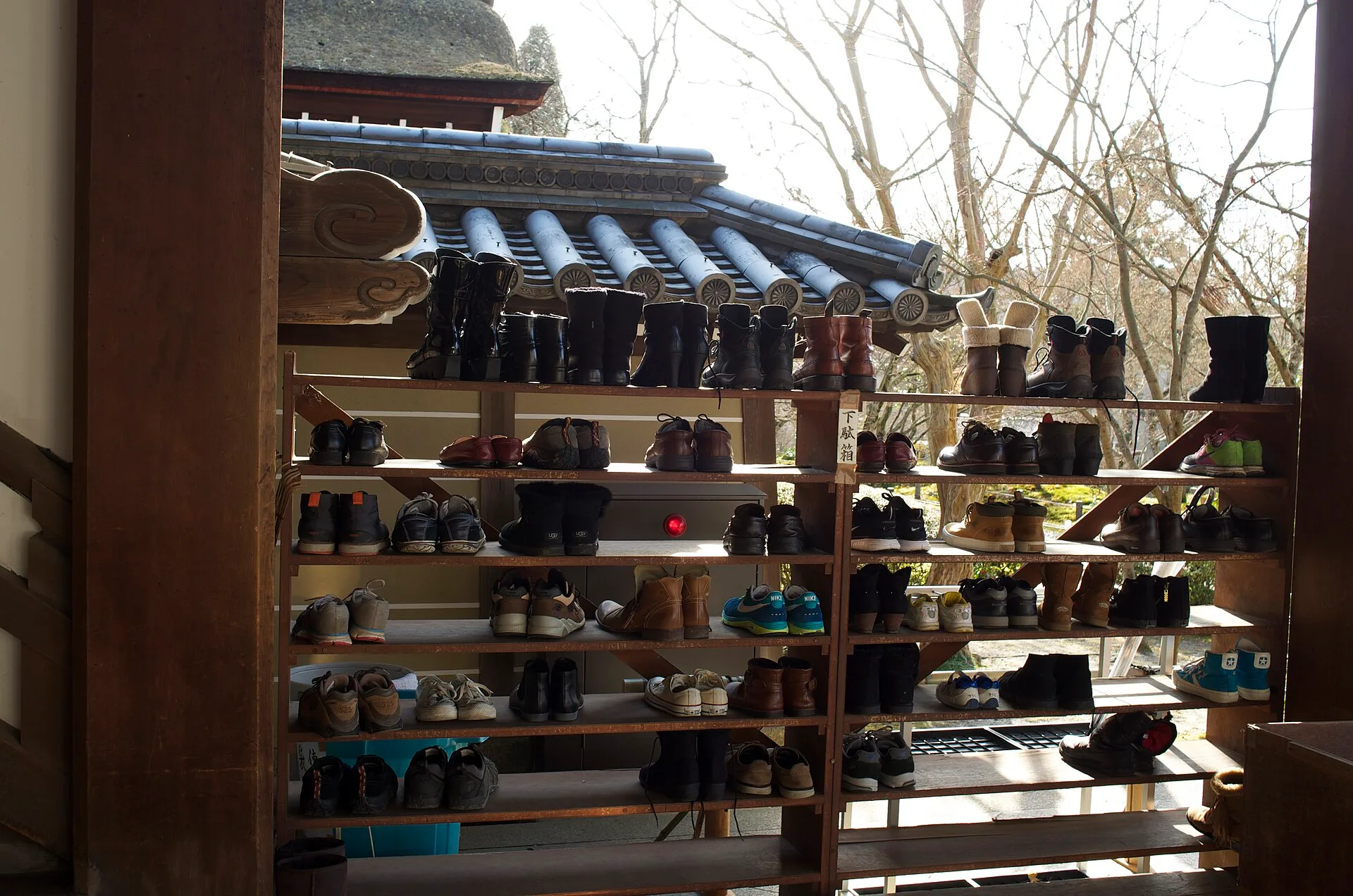
This is the part of temple dressing that actually affects your day. Many temple buildings have wooden or tatami floors, and you take your shoes off before stepping up into them. JNTO notes that you leave your shoes on shelves at the entrance, or carry them in the plastic bags that some temples hand out. Kyoto's official travel site adds that walking on tatami in bare feet is frowned upon, so wear socks or bring a pair with you.
Rows of visitors' shoes on wooden shelves at the entrance of Eikando temple in Kyoto
Visitors' shoes on the entrance shelves at Eikando (Zenrin-ji) in Kyoto, where you walk the connected halls in socks. Photo: Morgan Calliope / Wikimedia Commons (CC BY 2.0).
Pick shoes you can slip off quickly
At a big temple complex you might take your shoes off and put them back on four or five times in one afternoon, often with a line of people waiting behind you. Slip-on sneakers, loafers, or sandals with an adjustable back strap make this painless. Tall lace-up boots are the worst choice. If you do wear lace-ups, loosen them before you reach the entrance so you are not holding everyone up.
Comfort counts just as much. Temple grounds mean gravel paths, long stone stairways, and uneven paving, and a day of temple hopping in Kyoto or Nara involves a lot of walking. Shoes you have already broken in will serve you better than new ones.
Wear socks you are happy to show
Your socks will be on display, so leave the pair with holes at home. At large temples with covered wooden walkways between buildings, you may stay in your socks for an hour or more. If you wear sandals without socks, slip a thin pair into your bag and put them on at the entrance.
Some halls set out slippers for wooden corridors. Take them off before you step onto tatami, which is only ever walked on in socks.
Mind the step and the threshold
When you take your shoes off, step straight up onto the raised floor instead of standing in socks on the lower entry area where shoes go. In doorways and gates, step over the raised wooden threshold rather than on it. The Aichi travel guide notes that stepping on the threshold is considered disrespectful.
What to wear by season
Spring and fall
March through May and October through November are the busiest temple seasons, thanks to cherry blossoms and autumn leaves. Days are usually mild, but mornings can be cool, and old halls often feel colder inside than out. Dress in layers: a T-shirt or blouse, a light sweater, and a jacket you can take off and carry.
Summer
June into July is the rainy season, and July and August are hot and humid in Kyoto, Nara, and Tokyo. Wear breathable cotton or linen, bring a sun hat for the grounds, and carry a small towel for sweat. A loose long skirt or light linen pants keep you cool outside and cover a bit more when you step into a hall.
Winter
Most traditional temple halls are not heated, and a wooden floor feels very cold through thin socks. Wear warm socks, thermal layers under your clothes, and a coat that is easy to take off and carry. Hand warmers from any convenience store help a lot on a long day.
Wearing a kimono or yukata to a temple
Renting a kimono for a day of temple visits is popular in Kyoto and in Asakusa in Tokyo, and it is perfectly fine to wear one to a temple. Rental shops dress you and usually supply zori sandals and split-toe tabi socks, which come off easily at hall entrances. Give yourself extra time on stone stairs, since you will walk in smaller steps. Yukata are lighter cotton robes, most often worn to summer festivals and in hot-spring towns.
What to bring on a temple visit
Cash and coins
Many temples charge an entrance fee, usually somewhere between a few hundred yen and about 1,000 yen, and smaller temples often take cash only. Bring a handful of coins for the offering box too. There is no set amount. The Aichi travel guide suggests that anything from 5 to 500 yen is fine, and points out that many Japanese people include a 5-yen coin because "go-en" sounds like the word for a fortunate connection. Coins also come in handy for incense and for omikuji fortune slips.
A goshuincho for temple stamps
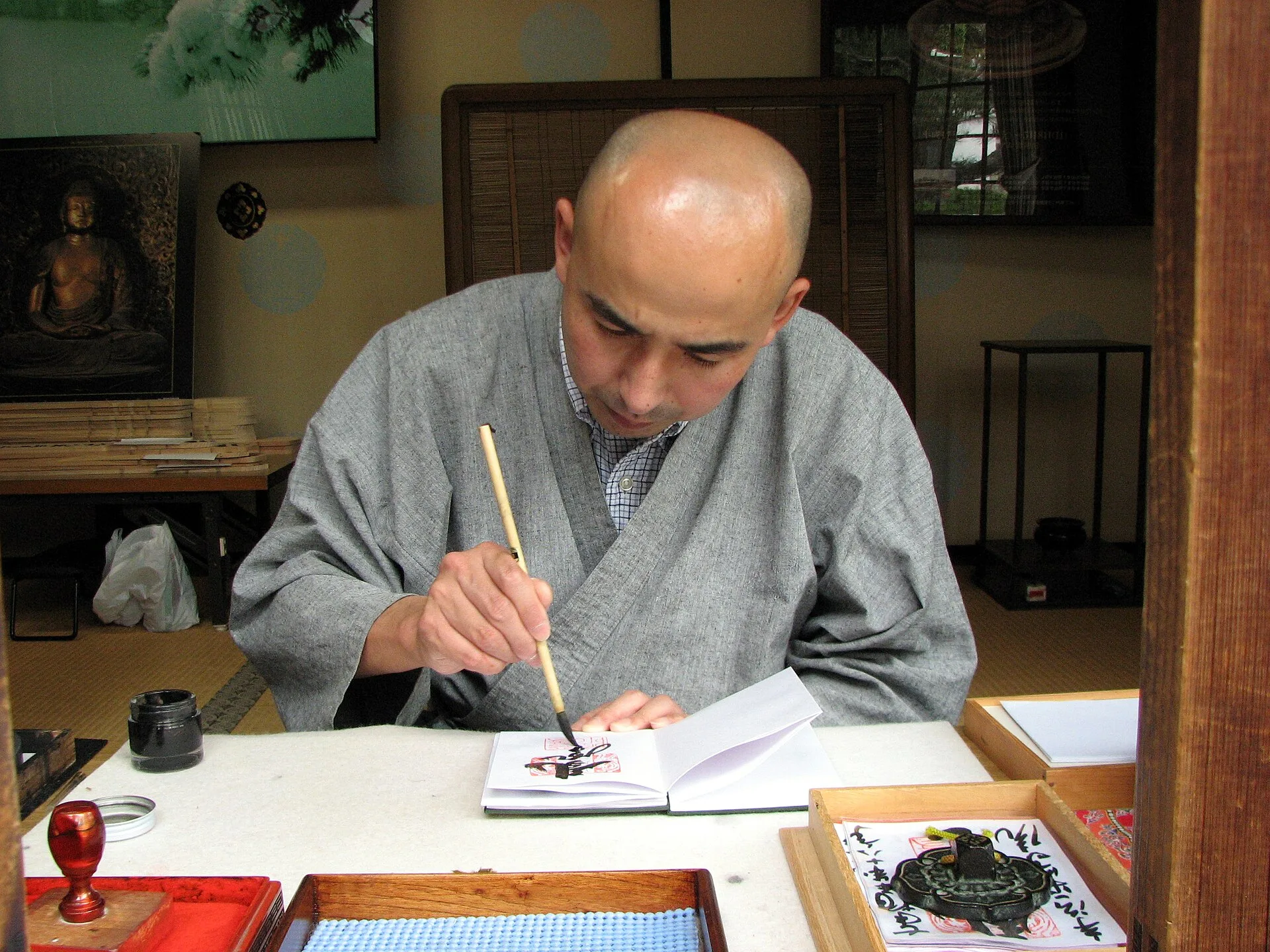
A goshuin is a red seal stamped into a book and finished with brushed calligraphy, usually including the temple name and the date of your visit. It is a record of worship rather than a souvenir stamp, so pray at the main hall first and then go to the temple office. The book is called a goshuincho, and you can buy one at many temple offices and shops that sell charms.
A monk brushing calligraphy into a visitor's goshuin stamp book at Byodo-in temple in Uji
A monk writing calligraphy in a visitor's stamp book at Byodo-in in Uji, near Kyoto. Photo: Chris Gladis / Wikimedia Commons (CC BY 2.0).
According to JNTO, a goshuin usually costs around 300 to 500 yen, and many temples, including Chion-in in Kyoto, now ask for 500 yen. Pay in cash, and exact change is appreciated. Open your book to a blank page and hand it over, then wait quietly. At busy times staff may ask you to leave the book and come back for it later. If you forget your goshuincho, or no calligrapher is on duty, you will often get the goshuin on a sheet of paper to paste in later. Keep the book only for goshuin and do not fill it with the tourist stamps you find at train stations. Some shrines and temples prefer not to share a book with the other, so a lot of collectors carry two.
A small bag and a few extras
A light shoulder bag or small backpack is easiest, since you will be carrying it while you take your shoes off. Leave big luggage at your hotel or in a station coin locker. Higashi Honganji in Kyoto, for example, asks visitors to leave wheeled luggage and strollers in a designated space before entering its halls.
Here is what is worth packing:
A small towel or handkerchief, to dry your hands after the temizuya water basin and in restrooms without paper towels
A spare pair of socks
A light scarf or overshirt for covering up inside halls
A folding umbrella for rain or strong sun
A water bottle, though you should not eat or drink inside the halls
A small bag for your trash, since public bins are hard to find
Photography is usually fine on temple grounds but often forbidden inside buildings, according to JNTO. Look for signs, and put your phone on silent before you go into a hall.
A quick checklist before you leave the hotel
Clothes you are comfortable in, with something light to cover your shoulders if you want it
Shoes that slip on and off easily
Clean socks, plus a spare pair if you are in sandals
Coins and some cash in yen
Your goshuincho, if you collect stamps
A small towel, an umbrella, and water
Once your feet and your bag are sorted, the rest is about how you behave on the grounds. Our guide to Japan etiquette for tourists covers the everyday basics, and our guide to temple visits walks through the order of a visit step by step.
Visit Japan's temples with a local guide
Temple days go more smoothly with someone beside you who knows where the shoe shelves are, when the goshuin office closes, and which halls are worth the entrance fee. Our Tokyo temples and Japanese gardens private tour links Senso-ji and Zojo-ji with two Edo-period gardens, and our Kyoto private tour and Nara private day tour take you through the country's great temple cities at your own pace. For ideas on where to go, see our picks for the best temples in Tokyo and temples in Nara. Want a custom day? Contact us and we will help you plan it.
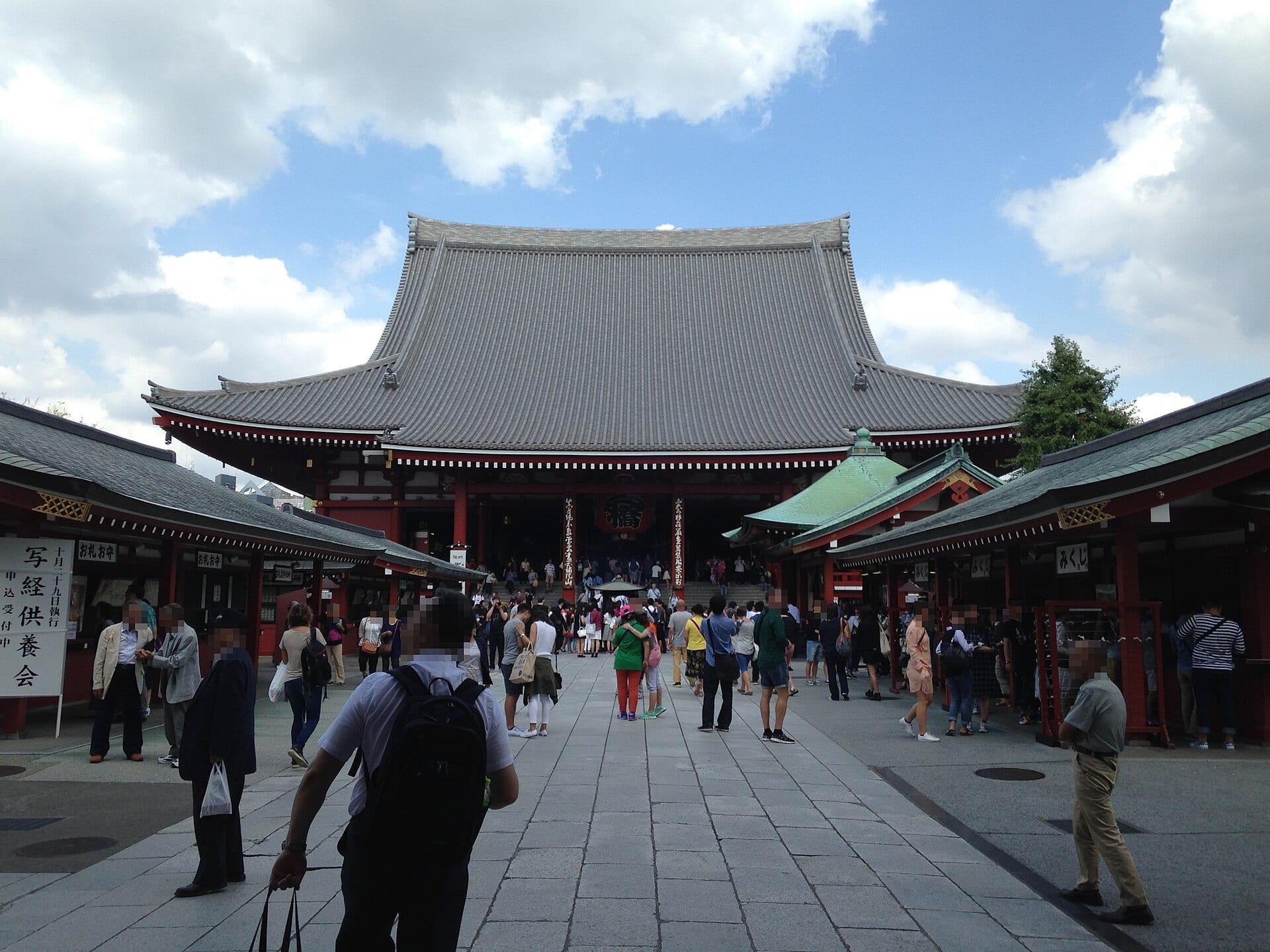
Featured photo: Visitors walking toward the main hall of Senso-ji in Asakusa, Tokyo. Photo: そらみみ (Soramimi) / Wikimedia Commons (CC BY-SA 4.0).
TopicsTemplesWhat to WearEtiquetteJapan Travel TipsKyoto
Frequently Asked Questions
Most temples in Japan have no strict dress code, and normal travel clothes like T-shirts, jeans, and summer dresses are fine for sightseeing. Neat clothing that is not too revealing is a courtesy, not a rule. Dress more formally only if you join a prayer ceremony or memorial service, and follow any sign a hall posts.
Yes. Shorts are not banned at Japanese temples, and many visitors wear them in summer. Knee-length shorts look a little tidier, and a light scarf or overshirt is handy if you want to cover up more inside a hall.
Often, yes. Many temple buildings have wooden or tatami floors, and you remove your shoes before stepping up inside, leaving them on shelves or carrying them in a plastic bag the temple provides. Wear clean socks, since walking on tatami in bare feet is frowned upon.
Sleeveless tops are not forbidden, but bare shoulders get more attention inside a quiet hall than outside. Many visitors carry a thin scarf or shirt to put on in the halls and take off again outdoors. It is also polite to take off your hat inside halls and when praying.
There is no set amount. A few coins, anywhere from 5 to 500 yen, is normal. Many Japanese people include a 5-yen coin because go-en sounds like the word for a fortunate connection. Carry cash, since many smaller temples do not take cards for entrance fees either.
A goshuincho is a book for collecting goshuin, the red seals and brushed calligraphy that temples and shrines give as a record of your visit. Pray at the main hall first, then hand your book open to a blank page at the temple office and pay the offering in cash, usually 300 to 500 yen. If you have no book, many temples give the goshuin on a paper sheet.