
Japan etiquette for tourists mostly comes down to one idea: try not to make things harder for the people around you. Osaka is a good place to learn it, because the city is friendly, loud in a cheerful way, and a little more relaxed than Tokyo. Locals will forgive small mistakes, especially from visitors who are clearly trying. This guide covers the habits that matter most on a trip to Osaka, from the escalator rule that surprises almost everyone to how to pray at a shrine, eat street food, and pay at a shop counter.
Cultural Insights9 min read1 views
Japan Etiquette for Tourists: Osaka Dos and Don'ts
Japan etiquette for tourists, explained for Osaka: why people stand on the right of escalators, how to pray at shrines and temples, street food manners, smoking rules, and tipping.
By MickyEdited by Talha Nabeel
Japan etiquette for tourists: the basics that apply everywhere
A few habits work in every Japanese city, Osaka included. Get these right and you will be fine in most situations.
Keep your voice down on public transport. Osaka people love to chat and joke, but trains are quiet here too.
Wait in line. People queue for almost everything here, from train doors to popular takoyaki stands. If you see a line, join the back of it.
Carry your trash with you. Public trash cans are rare on the street. Most train stations and convenience stores have bins, and they are sorted into burnable trash, cans, and PET bottles. If you buy food from a stall, the stall often has its own bin for its own packaging.
Ask before you photograph people, and look for no photo signs in shops and restaurants.
Take your shoes off when you see a raised floor at an entrance, a row of slippers, or tatami mats. This applies in homes, ryokan, some restaurants, and inside many temple halls. Never step onto tatami in slippers. If you will stay in a traditional inn, our guide to ryokan stays in Japan explains the shoe and slipper routine in more detail.
Escalators in Osaka: stand on the right
This is the one Osaka custom that really is different from the rest of the country. In Tokyo and most of Japan, people stand on the left side of an escalator and leave the right side open. In Osaka, it is the opposite. People stand on the right and leave the left side for anyone walking.
The habit is usually traced to Hankyu Railway. When Hankyu moved its Umeda terminal in 1967, the station put in long escalators and started announcements asking riders to leave the left side open for people walking. The custom spread from there, and the 1970 Osaka Expo is often credited with helping it stick.
There is a twist. Railway companies across Japan, including Osaka Metro, now ask people not to walk on escalators at all, because walking causes falls. They want everyone to stand still and hold the handrail. In practice, most Osaka locals still stand on the right. The polite move is simple: stand on the right, hold the rail, and do not walk up the left side yourself.
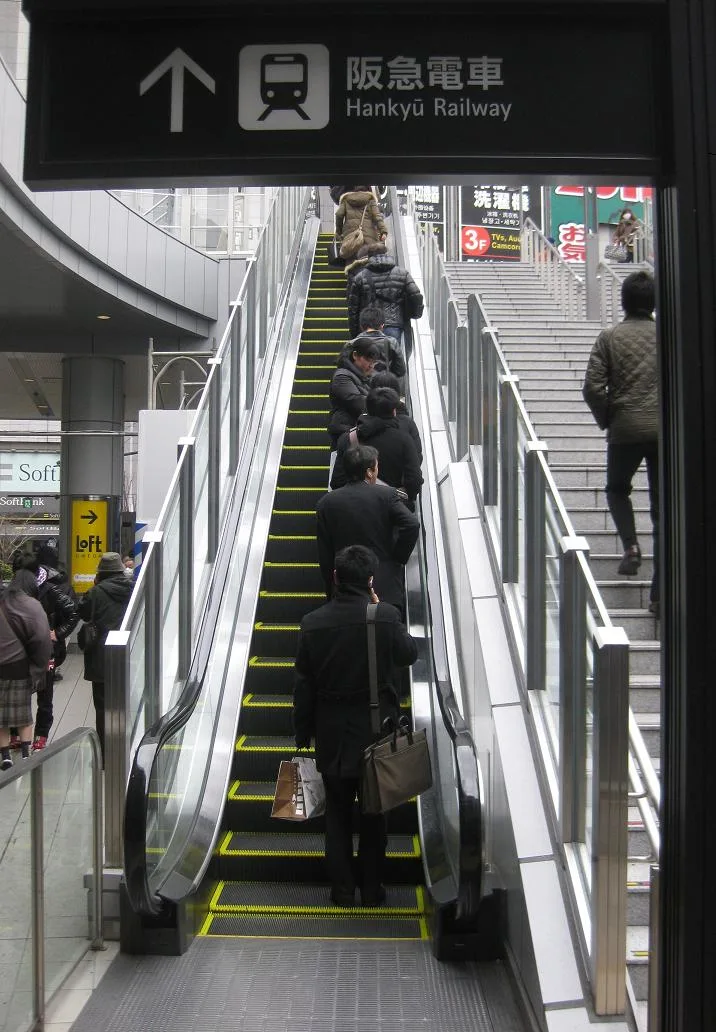
People standing in single file on a long escalator leading up to the Hankyu Railway station in Umeda, Osaka
Riders standing in line on an escalator toward the Hankyu Railway station in Umeda, Osaka. Photo: Kyoww / Wikimedia Commons (CC0).
Trains and subways in Osaka
Osaka Metro and the private railways are easy to use, and a few manners will make your rides smoother.
Line up at the platform marks, let people off first, and set your phone to silent.
Priority seats near the ends of each car are for older people, pregnant women, and people with disabilities or small children. Give the seat up if someone who needs it gets on.
Eating on commuter trains and the subway is considered bad manners, although it is normal on the shinkansen.
Watch for women-only cars. On the Midosuji Line, the main north to south subway line that runs through Umeda, Shinsaibashi, and Namba, car number 6 is women only all day on weekdays. On the Tanimachi Line, car number 3 is women only on weekday mornings until 9:00. Pink signs on the platform show where these cars stop.
For more on seating, phone use, and the unspoken rules commuters follow, read our guide to public transport etiquette in Japan.
Street food in Dotonbori and the markets
Osaka is the city of kuidaore, which roughly means eating until you drop. You will want to eat your way through Dotonbori, Shinsekai, and Kuromon Market, and the etiquette here is more relaxed than the warnings you may have read online.
Across Japan, eating while you walk down a busy street is frowned upon, though it is not against the law. The better habit is to eat where you bought the food. Takoyaki and other street food stands usually have a counter, a small standing area, or a few seats next to them. Step out of the flow of people, finish your food, and drop the tray or skewer in the stall's own bin.
Kuromon Market asks visitors to do the same thing. Eat at the shop where you bought the food rather than walking with it, and hand back or throw away your trash at that shop. The market also has a free rest area with seats near its information center.
If you want to sit on the steps by the Dotonbori canal at night, take your cans and wrappers with you when you leave. Our guide to Osaka nightlife districts covers where to go after dark.
Dining etiquette with an Osaka twist
Restaurant manners in Osaka are the same as in the rest of Japan, so we will keep this short and point you to our Japanese restaurant etiquette guide for the full list.
A few points come up the most. Do not stand your chopsticks upright in a bowl of rice, and do not pass food from your chopsticks to someone else's chopsticks. Both look like rituals at a Buddhist funeral.
When you share dishes, use the serving chopsticks or spoon that comes with the plate. Some people flip their own chopsticks around and use the other end, but many Japanese people find that less clean, not more, so it is better to ask for serving chopsticks (toribashi) or a small plate.
At okonomiyaki restaurants, staff often cook for you or show you how. Let them do the first flip, and follow the people around you on whether to eat straight from the griddle with the small spatula.
When you pay, look for a small tray by the register. Put your cash or card on the tray rather than handing it over directly, and wait for your change to come back on the same tray.
Visiting shrines and temples in Osaka
Osaka has hundreds of places to pray, from Sumiyoshi Taisha and Osaka Tenmangu to Shitennoji, one of the oldest Buddhist temples in Japan. Shrines and temples are not the same thing, and the way you pray is a little different at each.
At a Shinto shrine
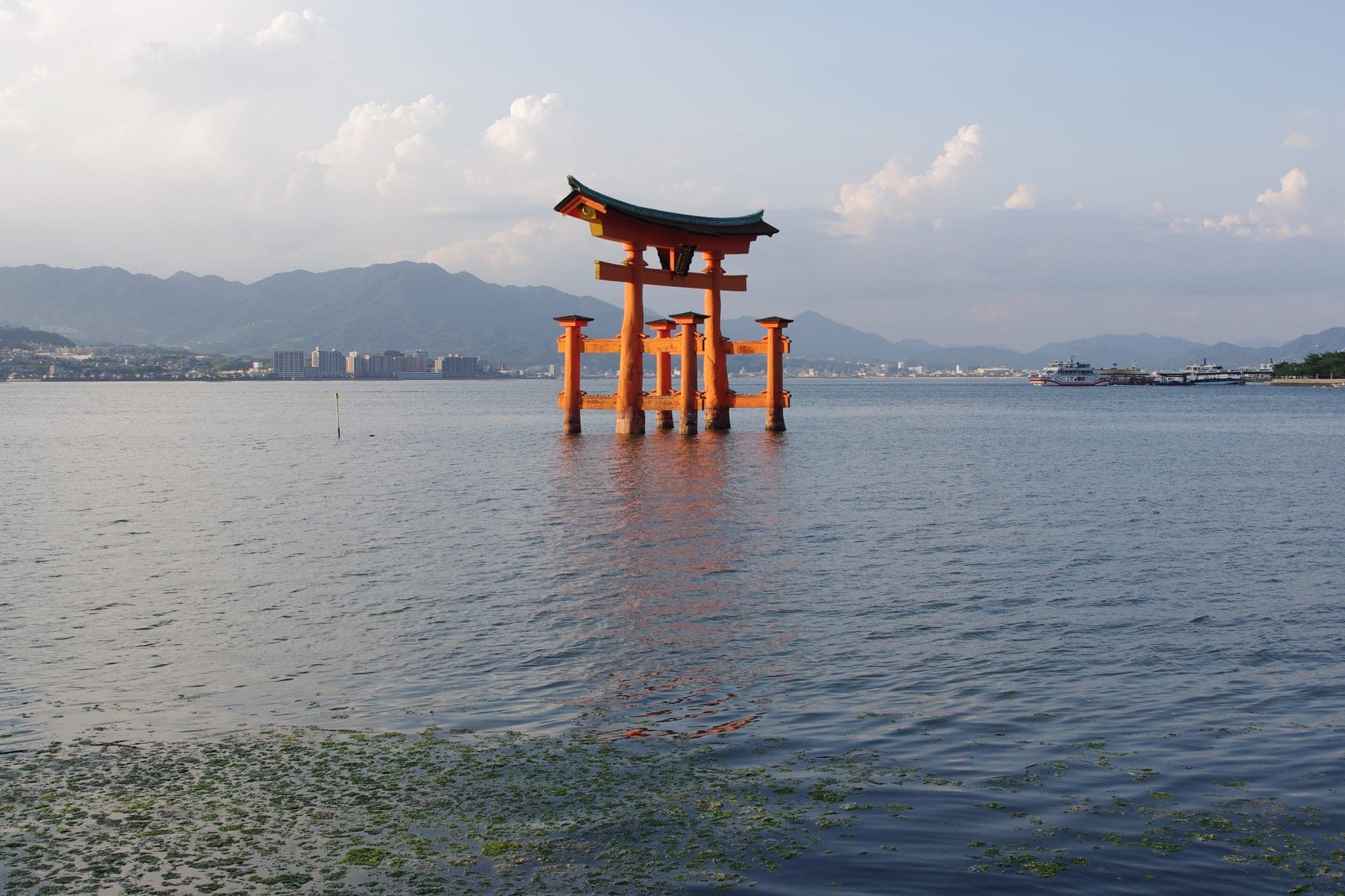
Shrines have torii gates at the entrance. Bow once before you walk through the gate, and walk slightly to one side of the center path, which is traditionally kept for the god of the shrine.
Stop at the temizuya, the water basin near the entrance. Take the ladle in your right hand and pour water over your left hand, then switch hands and rinse your right hand. Pour a little water into your cupped left hand, rinse your mouth, and spit it out quietly beside the basin, not back into it. Do not touch the ladle to your lips.
At the main hall, drop a coin in the offering box and ring the bell if there is one. Then bow twice, clap twice, put your hands together for your prayer, and finish with one more bow. This two bows, two claps, one bow pattern is for shrines.
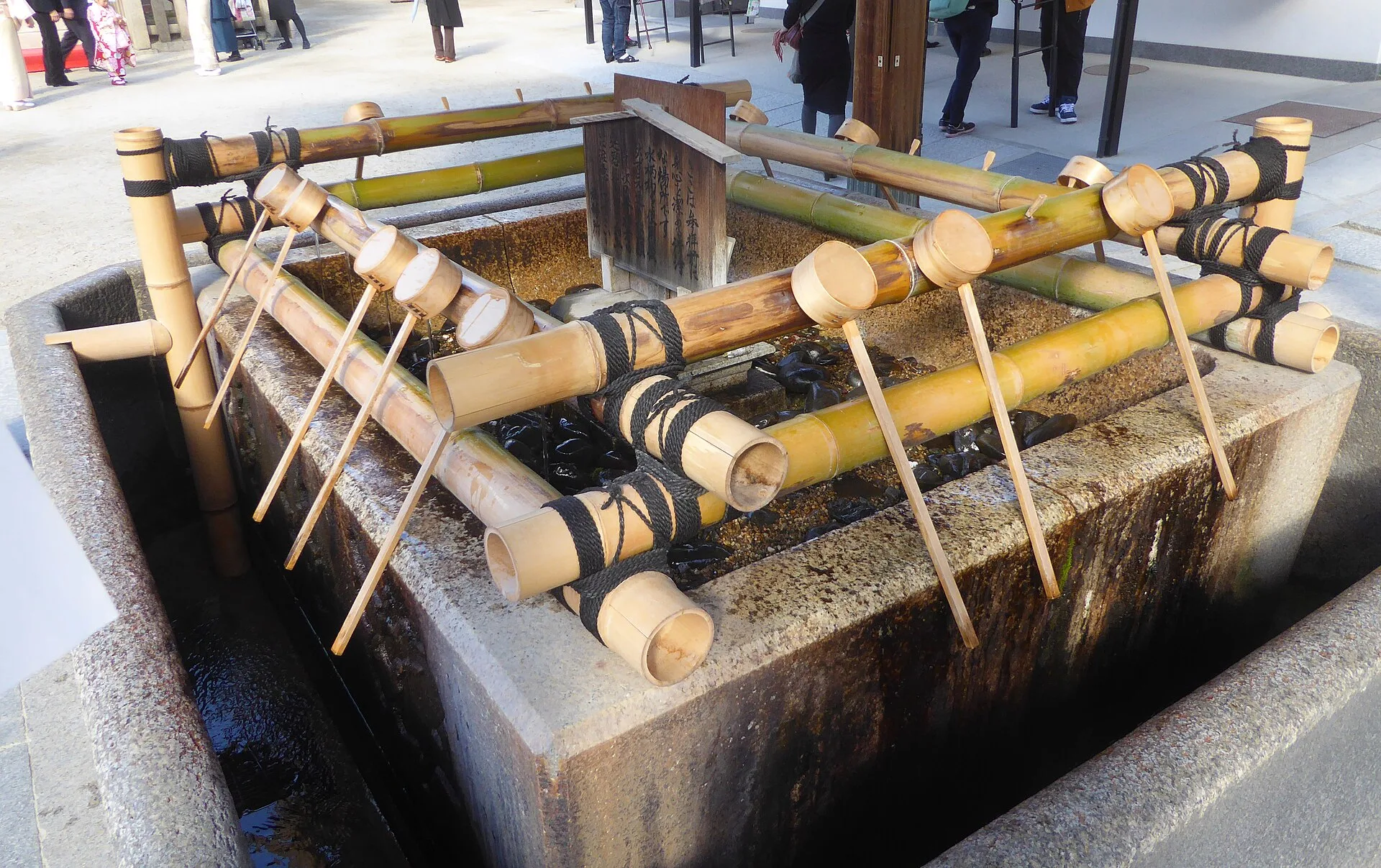
Bamboo ladles resting across the stone temizuya water basin at Osaka Tenmangu shrine
The temizuya water basin with bamboo ladles at Osaka Tenmangu shrine. Photo: Ethan Doyle White / Wikimedia Commons (CC BY-SA 4.0).
At a Buddhist temple
Temples usually have a large gate called a sanmon instead of a torii. If there is a water basin, you can purify your hands the same way. At the hall, make your offering, put your hands together, and pray silently with a bow. Do not clap at a temple. If there is an incense burner, put the flame out by waving your hand rather than blowing on it.
Clothing, food, and photos
Most shrines and temples have no strict dress code. Normal travel clothes are fine, and you should take your hat off inside a hall. Eating is fine at festival stalls on shrine grounds and in rest areas, but do not eat in front of a hall or while you are lining up to pray. Many halls do not allow photos inside, so look for signs.
Our guide to Japanese temple etiquette goes into more detail, including offerings, photography, and festival visits.
Smoking rules in Osaka
Smokers need to know this one. Since January 27, 2025, smoking on the street has been banned across the whole of Osaka City. The ban covers roads, parks, plazas, and other public places, and it includes heated tobacco. Patrol officers can collect a fine of 1,000 yen on the spot.
You can still smoke at designated smoking areas, which Osaka City lists on its online smoking area map. About 300 were open when the citywide ban started.
Tipping, money, and taxis
Tipping is not part of the culture in Japan, and Osaka is no different. You do not tip in restaurants, bars, cafes, taxis, or hotels. A sincere "arigato gozaimasu" is the best way to say thanks.
The one exception is a private guide or interpreter who works with overseas visitors. A tip is never expected, but if you want to give one, put the money in a small envelope and hand it over discreetly. You can buy envelopes at convenience stores and 100 yen shops.
Taxi rear doors open and close automatically, so let the driver handle them, and carry some cash for market stalls.
Talking to people in Osaka
Osaka people have a reputation for being warm and direct, and many shopkeepers will greet you with a cheerful "maido," a classic merchant's hello. You may also hear "ookini," an old Osaka way of saying thank you that is still used in shops.
You do not need to learn Osaka dialect, called Osaka-ben. "Konnichiwa" for hello, "sumimasen" for excuse me or sorry, and "arigato gozaimasu" for thank you will cover most of your day. A small nod when you say thank you is a nice touch.
Japan dos and don'ts for Osaka: a quick list
Do these:
-
Stand on the right side of escalators in Osaka and hold the handrail.
-
Line up at train doors and food stalls.
-
Eat your street food at or near the stall where you bought it.
-
Bow twice, clap twice, and bow once at a shrine, and pray silently at a temple.
-
Use serving chopsticks for shared dishes.
-
Put cash on the tray at the register.
-
Carry a small bag for your trash.
Avoid these:
-
Smoking on the street anywhere in Osaka City.
-
Phone calls on trains and the subway.
-
Eating on commuter trains.
-
Tipping in restaurants and taxis.
-
Walking on tatami in shoes or slippers.
-
Clapping at a Buddhist temple.
See Osaka with a local guide
The easiest way to pick up these habits is to watch the people around you, and it helps to have someone local nearby who can explain what is going on. On our Osaka private day tour by car, an English speaking guide takes you to Osaka Castle, Shitennoji, Kuromon Market, and Dotonbori at your own pace, and you can ask about anything that seems confusing along the way. If you plan to see more of the region, our guide to day tours from Osaka covers Kyoto, Nara, Himeji, and Kobe. Planning something different? Contact us and we will help you build a day around your interests.
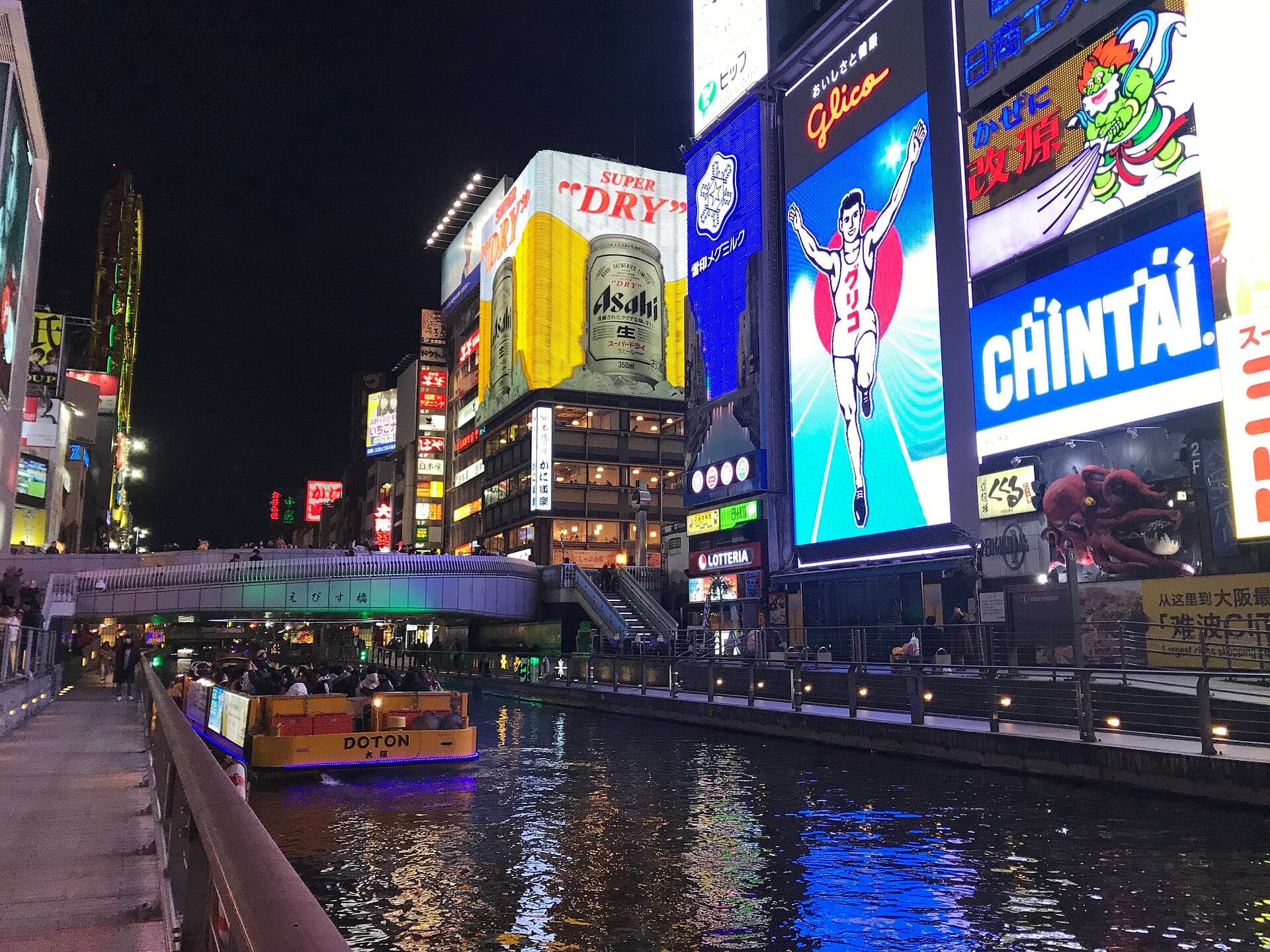
Featured photo: The Glico sign and Ebisubashi Bridge in Dotonbori, Osaka, at night. Photo: そらみみ / Wikimedia Commons (CC BY-SA 4.0).
TopicsOsakaEtiquetteJapanese CustomsTravel TipsKansai
Frequently Asked Questions
Private tours for this destination
Ready to see it in person? These private tours cover the places in this guide.
Related posts
Ready to explore Japan?
Book a private tour with OHAYO TRAVEL JAPAN.
View all private tours · Browse by category · Destinations · Contact us