
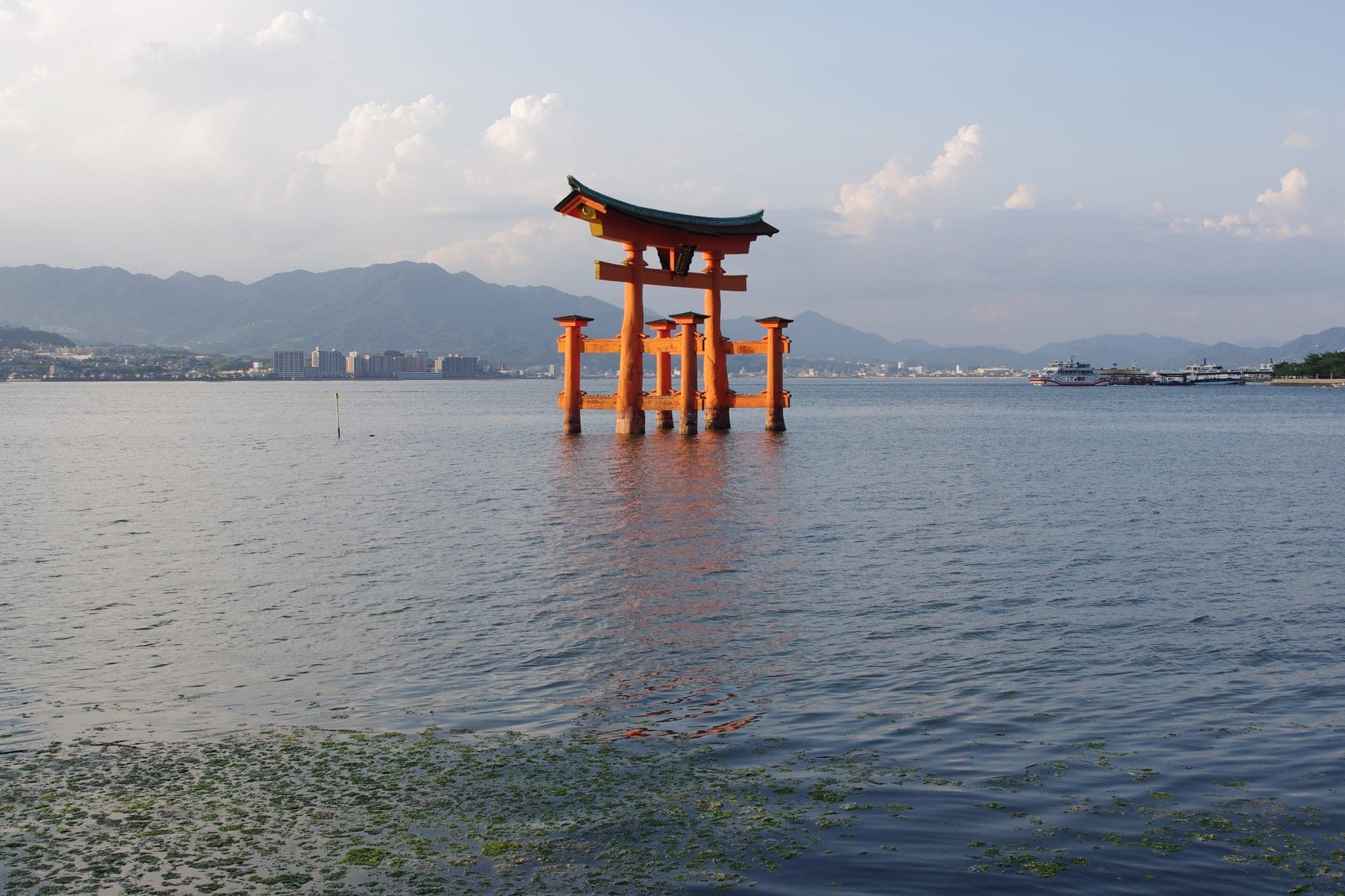
Itsukushima shrine is the reason most people take the short ferry ride from Hiroshima to Miyajima, and it earns the trip. The red halls sit on stilts over a tidal bay, and the great torii gate stands out in the bay in front of them. What surprises a lot of first-time visitors is how much the experience changes with the tide. Come at the wrong hour and the "floating" gate is sitting in a wide stretch of mud. Come at the right one and the whole shrine looks like it's resting on the sea. This guide covers how to read the tide table, how to get there from Hiroshima, what tickets cost in 2026, and a few small things we wish someone had told us before our first visit.
Cultural Insights8 min read
Itsukushima Shrine Guide: Tide Times, Ferry Tips and Tickets
How to time your Itsukushima Shrine visit with the tides, walk to the torii at low tide, catch the ferry that passes the gate, and what tickets cost in 2026.
By MickyEdited by Talha Nabeel
Why Itsukushima Shrine is worth the trip
According to the shrine, it was founded in 593 and is dedicated to three sea goddesses: Ichikishimahime, Tagorihime and Tagitsuhime. The buildings you walk through today follow the layout that the samurai leader Taira no Kiyomori gave the shrine when he rebuilt it in 1168, borrowing the style of Heian era noble mansions. Because the island itself was considered sacred, the halls were built out over the water instead of on the land.
The shrine was added to the UNESCO World Heritage list in 1996, and Miyajima has long been counted as one of the Three Views of Japan. None of that history is required reading, though. Most visitors simply remember the feeling of walking along a corridor with the sea moving under their feet.
How to read the Miyajima tide table
The Miyajima Tourist Association publishes a free tide table online, and it's the single most useful thing to look at before you pick a date. Two numbers matter more than the words "high tide" and "low tide."
When the shrine looks like it's floating
The tourist association says the shrine and gate appear to float once the tide is above roughly 250 cm. On a day when high tide peaks around 300 cm, you'll get the classic view of water lapping under the corridors and around the legs of the torii. If the peak only reaches 200 cm or so, the effect is much weaker.
At high tide you can also see the torii from the water. Small hand-rowed boats take visitors out during the day, and sightseeing boats go out after dark.
Walking out to the torii at low tide
Here's the part many guides get wrong. You can walk out to the base of the torii when the tide level drops below about 100 cm, not just at any low tide. Some days the low point never gets that far down, so the sand stays wet and the gate stays surrounded by water. Look for a low tide under 100 cm in the table and plan to be on the beach about an hour before it.
Wear shoes you don't mind getting muddy, watch for small crabs and shells, and keep an eye on the water as it turns. One more detail from the tourist association: their table is based on Hiroshima Port, and the tide at Itsukushima runs slightly earlier, so give yourself a cushion.
If you can, choose a day where low tide and high tide both fall in daylight. Then you can walk to the gate in the morning, have lunch on Omotesando shopping street, and come back to see it in the water later in the afternoon.
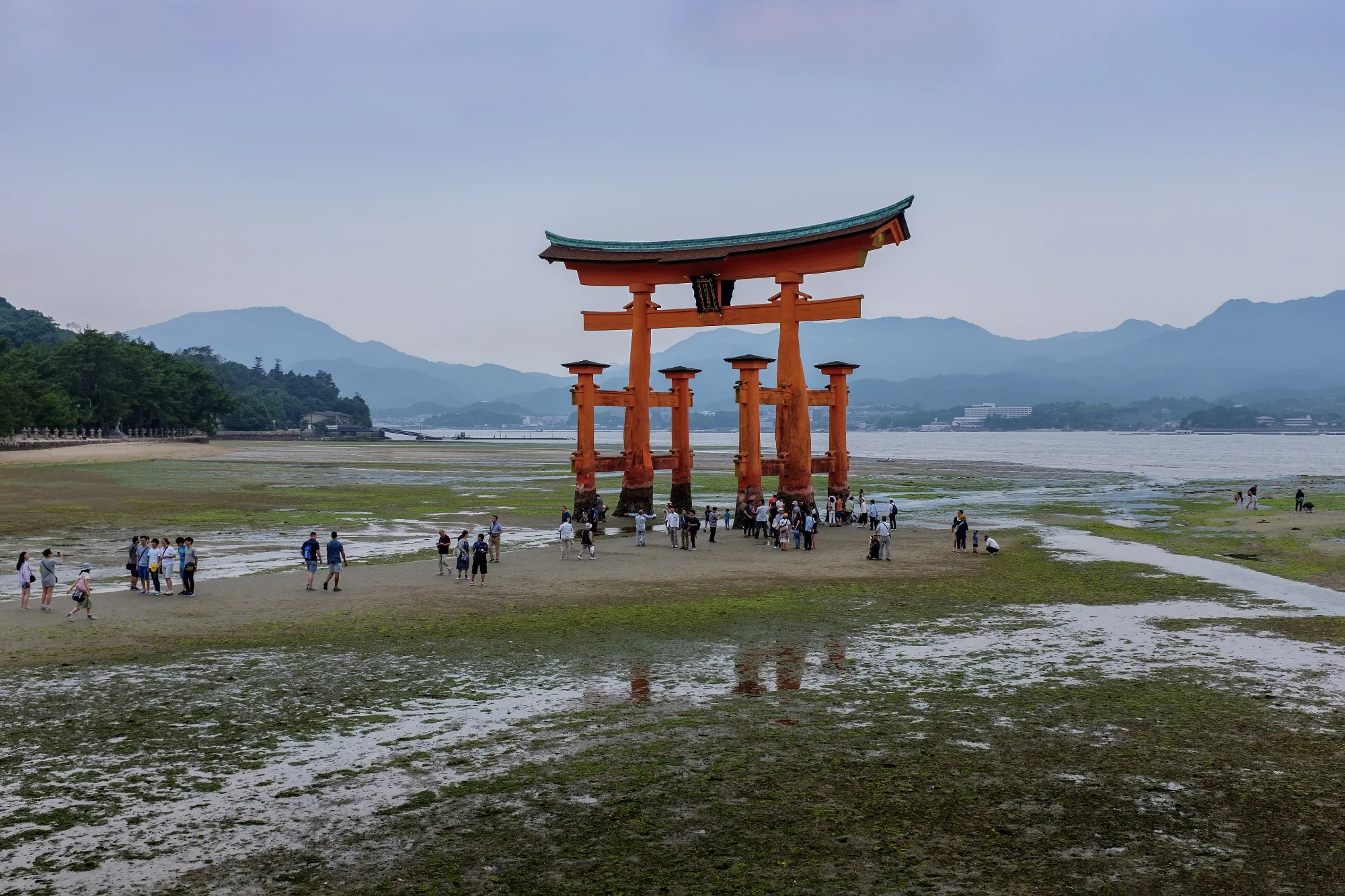
Low tide at Itsukushima Shrine, when you can walk out toward the torii. Photo: Kristoffer Trolle / Wikimedia Commons (CC BY 2.0).
How to get to Itsukushima Shrine from Hiroshima
JR train and ferry
The most common route is the JR Sanyo Line from Hiroshima Station to Miyajimaguchi, which costs 420 yen and takes about 26 to 32 minutes. From Miyajimaguchi Station, the ferry piers are a short walk away.
Two companies run ferries to Miyajima: JR Miyajima Ferry and Miyajima Matsudai Kisen. Both charge the same fare, the crossing takes about 10 minutes, and boats leave roughly every 15 minutes. An adult ticket on JR Miyajima Ferry is 200 yen one way or 400 yen round trip, and children pay 100 yen. On top of the fare, Hatsukaichi City collects a 100 yen Miyajima Visitor Tax each time you go to the island, usually added when you buy your ferry ticket. Preschool children are exempt, and frequent visitors can buy a 500 yen annual pass instead.
If you have a Japan Rail Pass, it covers the JR Miyajima Ferry. You'll still need to pay the 100 yen visitor tax separately.
The ferry that passes close to the torii
This is one of our favorite small tricks. On departures from Miyajimaguchi between 9:10 and 16:10, JR Miyajima Ferry runs a route that swings close to the great torii before docking. It costs the same as the regular crossing. Grab a spot by the window or on deck, and have your camera ready a few minutes after you leave the pier. When the tide is very high, the route can change, so don't be surprised if the boat stays farther out on some days.
The World Heritage Sea Route from Peace Park
If you're spending the morning at the Hiroshima Peace Memorial Park, the Aqua Net Hiroshima boat leaves from the park and reaches Miyajima in about 45 minutes. An adult one way ticket is 2,400 yen plus the 100 yen visitor tax, and a round trip is 4,400 yen. Children pay half. Sailings can be canceled because of the tide, so it's worth booking ahead and having the train as a backup.
Itsukushima Shrine hours and entrance fees
The shrine's opening time is 6:30 for most of the year, but the closing time changes by season:
-
January 1: midnight to 18:30
-
January 2 and 3: 6:30 to 18:30
-
January 4 through February: 6:30 to 17:30
-
March 1 through October 14: 6:30 to 18:00
-
October 15 through November 30: 6:30 to 17:30
-
December: 6:30 to 17:00
Admission is 300 yen for adults, 200 yen for high school students, and 100 yen for elementary and junior high school students. The Treasure Hall across the road charges the same prices and is open from 8:00 to 17:00. A combined ticket for the shrine and Treasure Hall costs 500 yen for adults, 300 yen for high school students and 150 yen for younger students, and it's only sold at the shrine entrance. Bring cash, since cards aren't accepted at the Treasure Hall.
Walking the corridors
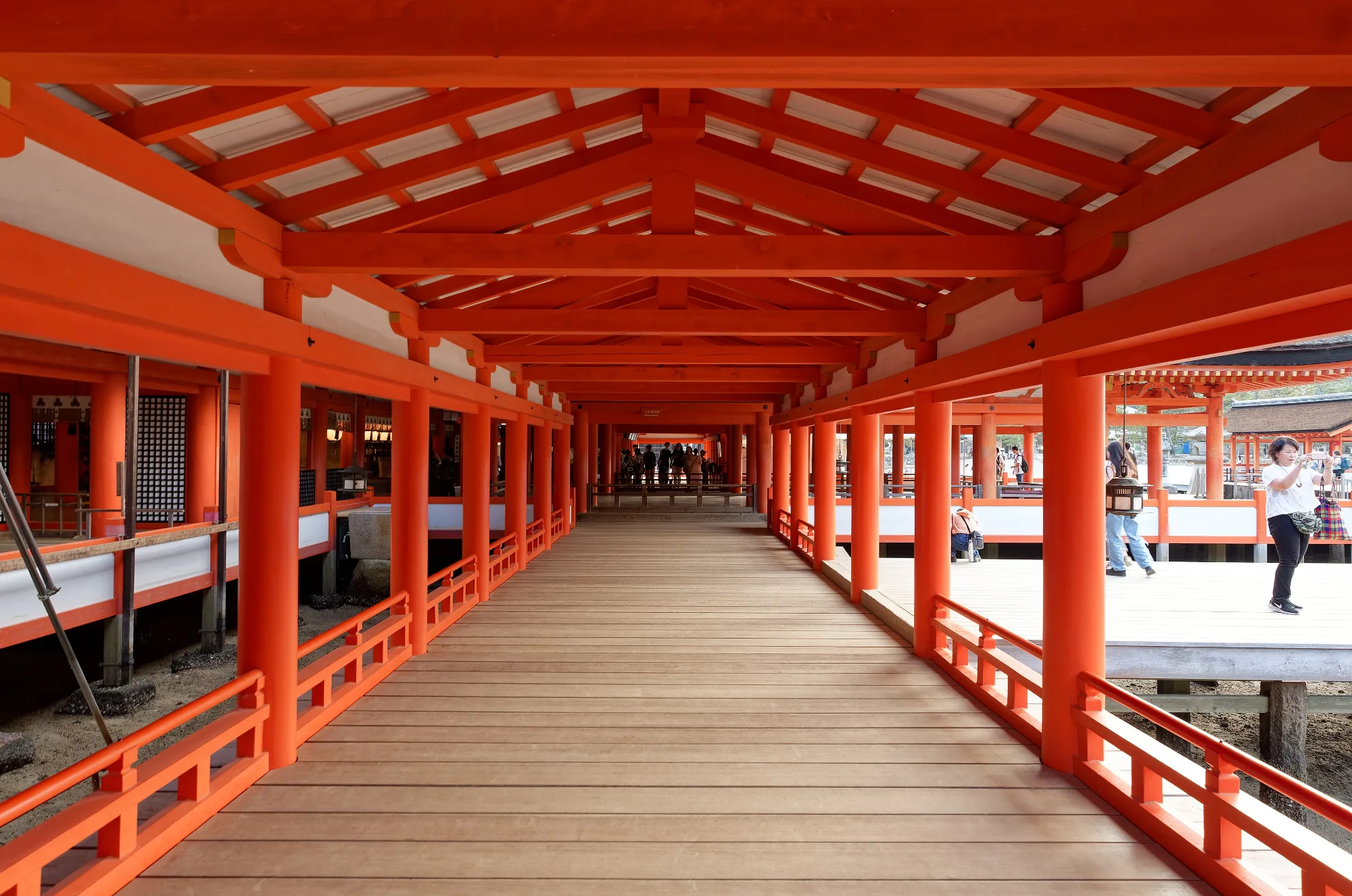
The East Corridor, where the floorboards have small gaps. Photo: Jakub Hałun / Wikimedia Commons (CC BY 4.0).
The route through the shrine runs in one direction. You enter through the East Corridor, pass the Marodo Shrine and the main sanctuary, cross the open Hirabutai platform that faces the torii, and continue along the West Corridor past the Noh stage and the arched Sorihashi bridge to the exit.
Watch your footing as you go. The floorboards in the corridors are laid with small gaps between them so that seawater can push up through the floor at high tide instead of lifting the boards away. It's clever engineering, but it also means thin heels can catch between the planks. Flat shoes or sneakers are a much better idea, especially if you're planning to walk on the beach later.
The Hirabutai platform is the best spot for a photo of the torii through the shrine itself. Mornings tend to be quieter, so if you only have one chance to get a clean shot, go early.
More to see near the shrine
Right behind the shrine on the hill is Senjokaku, also called Toyokuni Shrine, a huge hall that Toyotomi Hideyoshi ordered but never finished. It's open from 8:30 to 16:30, costs 100 yen for adults and 50 yen for students, and has a breezy wooden floor with a good view of the five story pagoda next door.
If you collect goshuin, the handwritten seals and calligraphy that visitors gather in a special book, you can get one at Itsukushima Shrine. Keep some coins handy and be patient if there's a line.
For something hands on, the Miyajima Traditional Industry Hall, about a minute's walk from the ferry pier, runs craft workshops. You can bake your own momiji manju (the maple leaf shaped cakes sold all over the island) for 1,000 yen, make and brand a wooden rice scoop for 660 yen, or try Miyajima wood carving for 3,300 yen. Workshops need a phone booking at least a day ahead, payment is cash only, and the hall is closed on Mondays.
Deer, food and etiquette
The deer on Miyajima wander freely through the streets and along the beach. They're used to people, but they're still wild animals, and feeding them is not allowed. Keep paper maps and snacks out of reach, because the deer will happily eat both.
Omotesando shopping street, between the pier and the shrine, is where most people eat. Grilled oysters and anago (conger eel) over rice are the local specialties, and momiji manju is the classic snack to take home.
At the shrine itself, follow the same manners you would at any Shinto shrine: bow at the torii, rinse your hands at the purification basin if it's open, and keep your voice low near the main sanctuary. Our Japanese temple etiquette guide covers the basics in more detail.
A simple half day plan
-
Check the tide table and pick your times.
-
Take the JR train to Miyajimaguchi and ride the ferry route that passes the torii.
-
Walk to the shrine along the seafront and enter when the tide is high.
-
Visit Senjokaku and the pagoda, then have lunch on Omotesando.
-
If a low tide under 100 cm falls in the afternoon, walk out to the torii before heading back.
Planning the rest of your Hiroshima trip
Most travelers pair Miyajima with a day in the city. Our guide to planning a private Hiroshima tour explains costs and timing, and Hiroshima's historic landmarks covers Hiroshima Castle and other sights worth adding. For a full itinerary, see our Hiroshima and Miyajima day trip guide.
If you're continuing on to Kyoto after Hiroshima, our Kyoto private tour is an easy next step. Want help building a custom day around the tides? Contact us and we'll help you plan it.
Featured photo: Jakub Hałun / Wikimedia Commons (CC BY-SA 4.0).
TopicsItsukushima ShrineMiyajimaHiroshimaJapan TravelCultural Sites
Frequently Asked Questions
Related posts
Ready to explore Japan?
Book a private tour with OHAYO TRAVEL JAPAN.
View all private tours · Browse by category · Destinations · Contact us