A Kamakura itinerary from Tokyo can fit into one full day if you keep the route short and walk it in a sensible order. The usual mix is the Great Buddha at Kotoku-in, Hasedera Temple a few minutes away, and Tsurugaoka Hachimangu back near Kamakura Station.
I checked official pages from Kotoku-in, Hasedera, and JR East (including the fare revision that took effect on March 14, 2026) on November 22, 2026. Hours and fares can change, so confirm the day's figures on those sites before you go.
This article is a practical one-day route, not a complete list of everything in the city. For a wider menu of walks, temples, and side trips, see Things to Do in Kamakura. For zazen times and temple fees beyond the stops below, use our Kamakura temples and zazen guide.
A simple one-day Kamakura itinerary
Start at JR Kamakura Station, then go west to the Hase area first, while your energy is highest. Take the Enoshima Electric Railway (Enoden) from Kamakura Station to Hase Station. Kotoku-in's official access page says Hase is the third stop from Kamakura, about seven minutes, and that the temple is a seven-minute walk from the station. Buses from the East Exit of Kamakura Station also run to the Daibutsu-mae stop, about ten minutes.
See the Great Buddha first, then walk to Hasedera. Kotoku-in lists Hasedera as about a five-minute walk. After those two temples, ride the Enoden back to Kamakura Station and walk the shrine approach and Komachi-dori. That order avoids a long backtrack and keeps the two paid temple visits together.
You do not need a clock-by-clock plan. Give the Great Buddha enough time to walk the grounds and, if you want, step inside the statue. Give Hasedera enough time for the halls, the hillside, and the view toward the coast. Leave the shrine and shopping street for later, when those areas are busier anyway.
A comfortable pace for this loop is a full day, not a half day squeezed around other plans. Build in time for ticket lines, a sit-down lunch, and a slow walk on Komachi-dori. If you race through both temples and then try to add Enoshima, the hiking trails, and a long shopping stretch, the day starts to feel like a commute. It is better to do the three core stops well than to collect extra stamps you barely remember.
Weekdays are usually quieter than weekends. Cherry blossom season and autumn leaf days are the most crowded. If you are coming in November for color, our Kamakura in November autumn leaves guide is the better place for viewing spots. For an evening extension toward Enoshima after a day in town, see Enoshima Sea Candle at night.
Bring comfortable walking shoes. The station-to-shrine stretch is mostly flat, but Hasedera has stairs and hillside paths. A hat and water help in summer. In winter the open-air Great Buddha can feel colder than Tokyo's streets, so a layer you can add after the train ride is useful. Temples generally expect you to pay admission in cash, so keep yen ready even if you travel with an IC card.
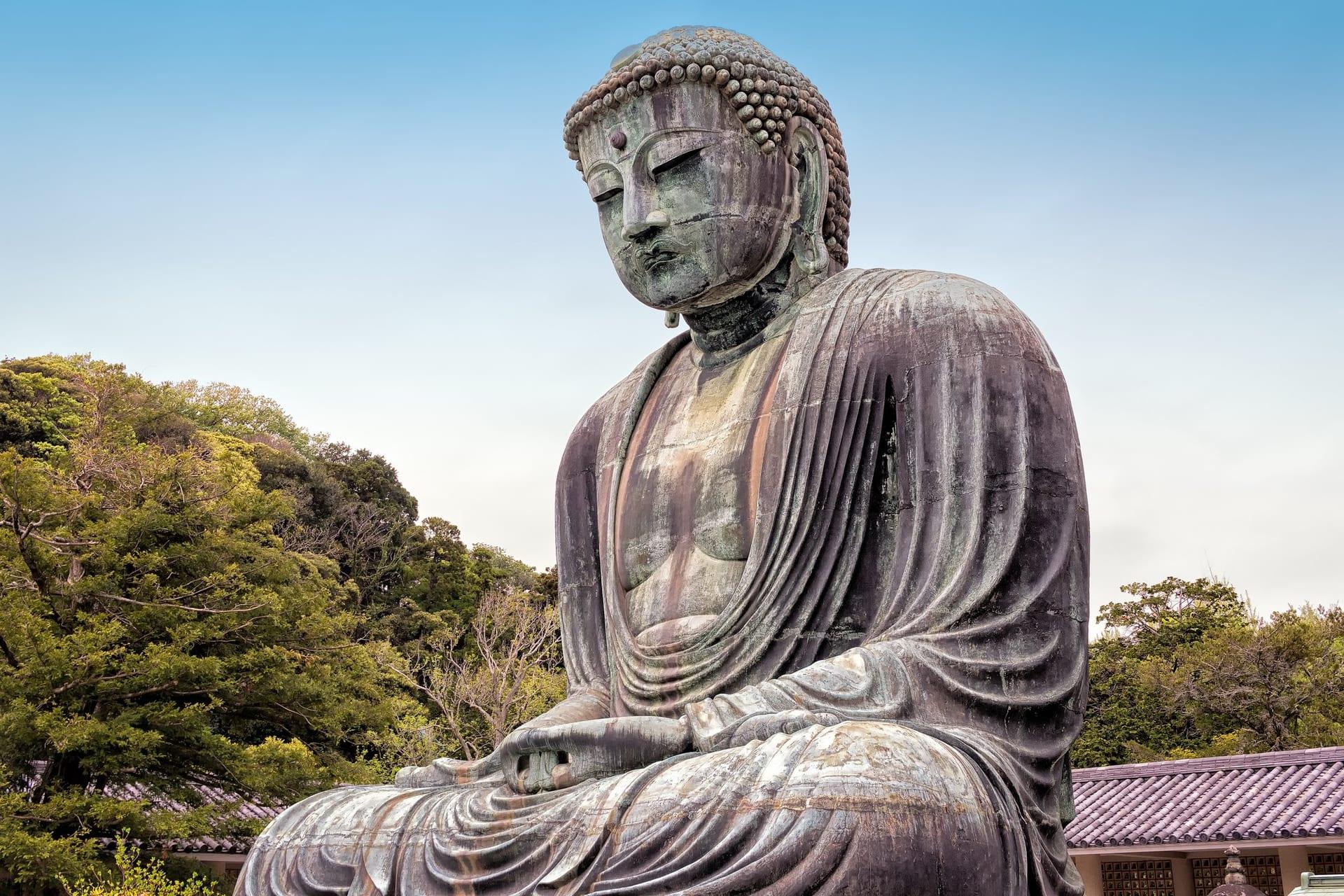
Kotoku-in's official English pages describe the Kamakura Daibutsu as a copper image of Amida-butsu (Amitabha Buddha) that sits in the open air. The temple says the statue is about 11.3 meters tall and weighs around 121 tons. The same official measurements list the height including the platform as 13.35 meters, and the statue height as 11.312 meters. It is a National Treasure. According to the Azumakagami, as cited by the temple, construction began in 1252. The hall that once covered the statue was later lost to storms and an earthquake, and the figure has sat outdoors since.
Official admission, from the temple's visiting guide, is ¥300 for general entry and ¥150 for children ages 6 to 12. Children under six enter free. Entering the interior of the statue is an additional ¥50 per person. Hours are 8:00 a.m. to 5:30 p.m. from April through September, and 8:00 a.m. to 5:00 p.m. from October through March. Visitors may enter up to 15 minutes before closing. Interior entry ends at 4:30 p.m., with last entry ten minutes before that. The temple has no public parking of its own.
Personal photography is allowed on the grounds. The official page asks visitors not to fly drones in the precincts and not to use selfie sticks inside the statue. Eating and drinking rules are posted on the temple site. There is a bicycle parking area, but no car lot.
The interior visit is short, and you walk up a tight passage into the hollow bronze. If stairs or close spaces are difficult, you can skip it and still see the full figure from the courtyard. Many first-time visitors spend most of their time outside anyway, walking around the statue and looking at the face and the surrounding trees. Go earlier in the day if you want a quieter courtyard. Late afternoon light can be pleasant, but you then have less time left for Hasedera before last entry.
Hasedera Temple
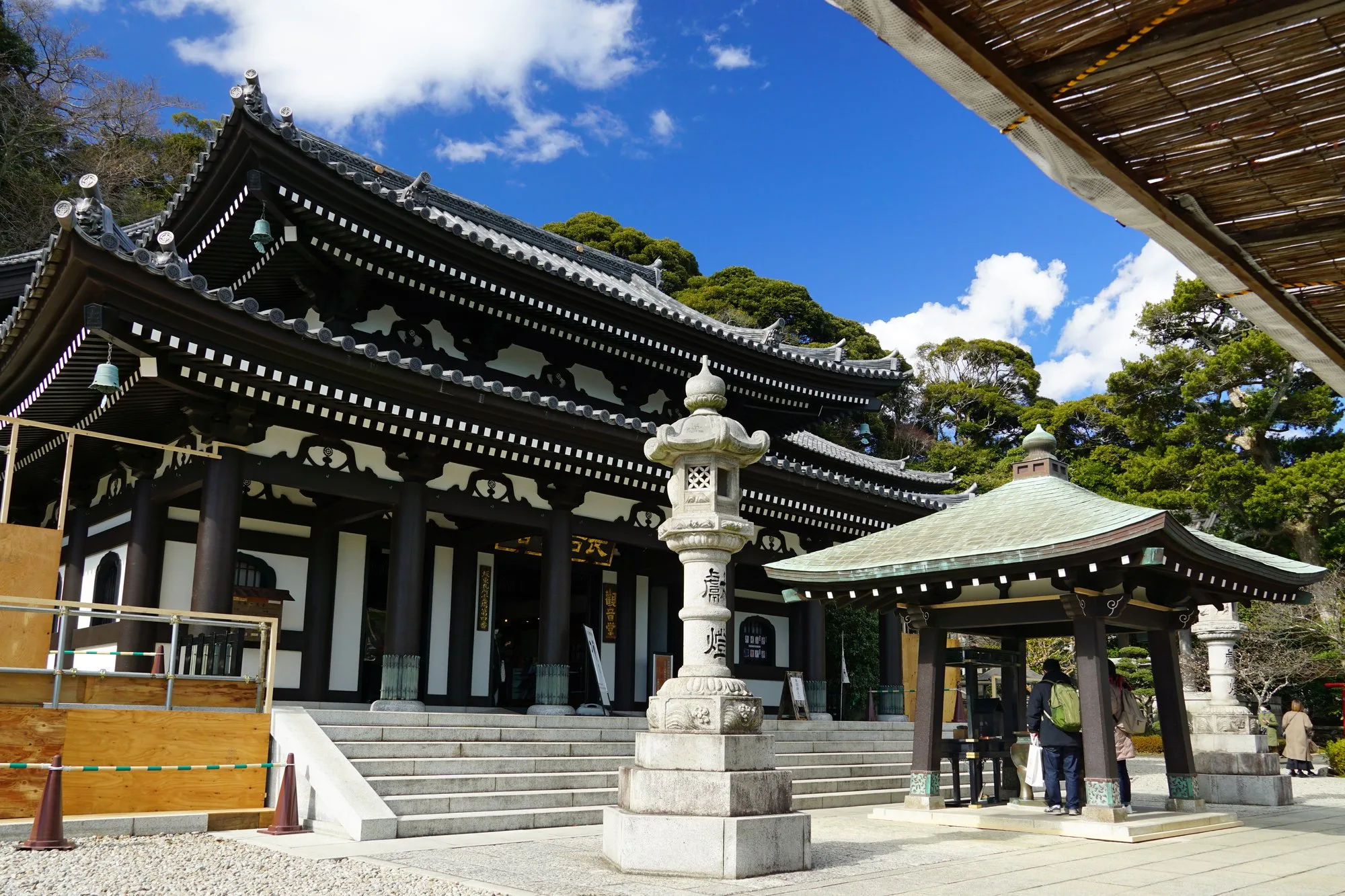
Hasedera is the next stop on this route. The official admission page lists ¥400 for adults and ¥200 for children ages 6 to 11. Opening times are 8:00 a.m. to 5:00 p.m. from July through March, with last entry at 4:30 p.m., and 8:00 a.m. to 5:30 p.m. from April through June, with last entry at 5:00 p.m.
The hillside precinct looks out over the Hase neighborhood and the coast. If you want the temple museum (Kannon Museum) as well, note that it is a separate ticket. Hasedera announced a museum fee change from April 1, 2025: adults (junior high and older) ¥500, and elementary-school children ¥200, on top of the temple admission. Confirm the museum hours on the official site if that stop matters to you.
You do not need a second long train ride between these two temples. The walk is short, and both sit in Hase, which is why they belong together on a one-day Kamakura itinerary. Signs in the neighborhood point the way, and the walk itself is part of the visit rather than dead time between attractions.
Give Hasedera more time than a quick photo stop. The grounds are spread across a slope, with halls, gardens, and lookout points. If you only budget a few minutes, you will see the gate and miss the view. The same is true if you arrive close to last entry. Plan to be through the ticket office with a comfortable margin, especially on weekends and national holidays, when lines form.
The English-language admission page lists children's tickets for ages 6 to 11. The Japanese page refers to elementary-school students. If you are buying tickets for a child near those ages, it is worth confirming at the window rather than assuming the two wordings match in every case.
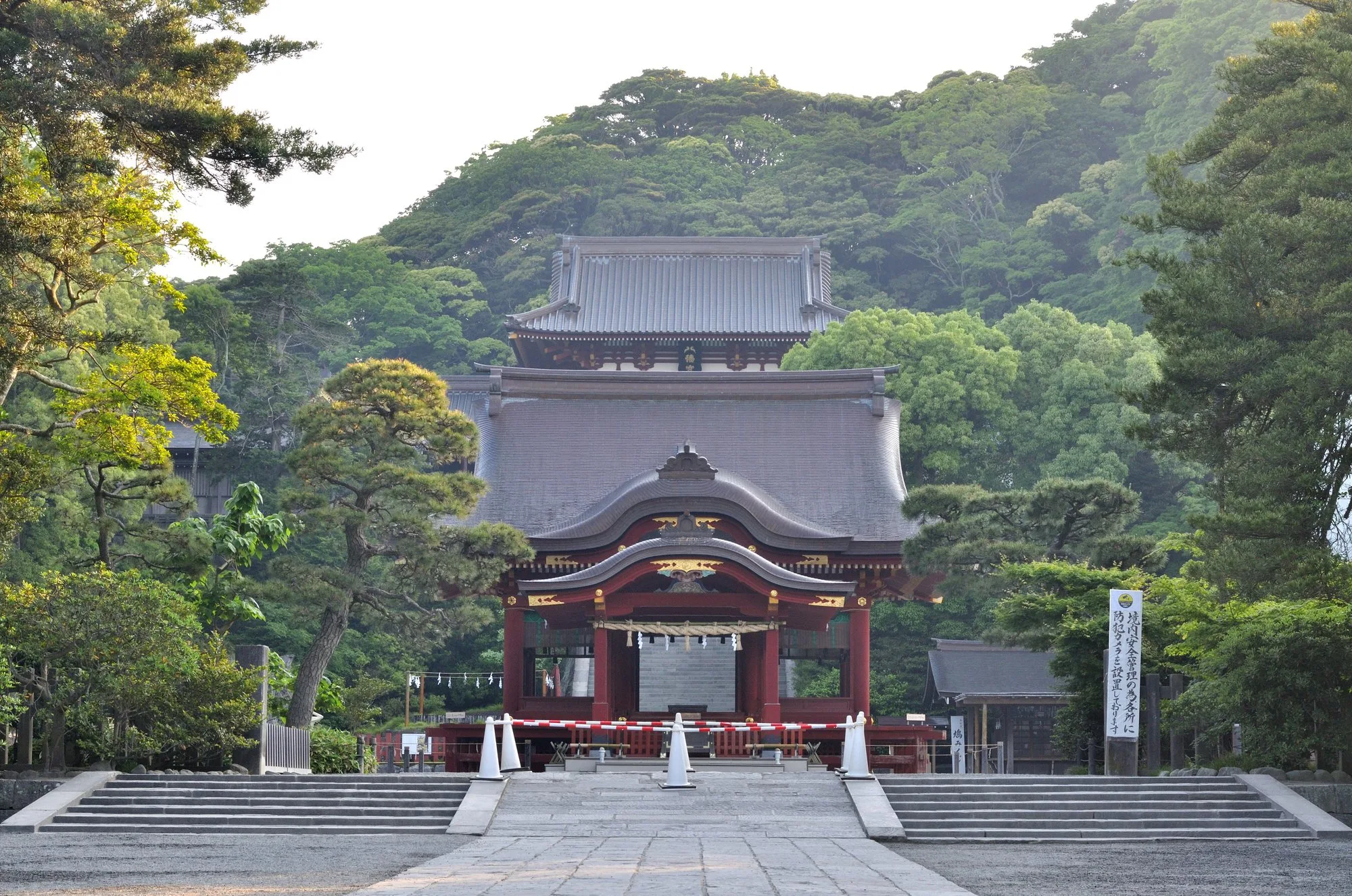
The romon gate of Tsurugaoka Hachimangu in Kamakura
Ride the Enoden back to Kamakura Station, then walk to Tsurugaoka Hachimangu, the city's main Hachiman shrine, and along Komachi-dori for snacks and small shops. I am not listing restaurant names or meal prices here, because those figures were not posted on official temple or city pages I could verify. If you want a simple local lunch, look at current menus near the station or in Hase, and confirm prices on the day.
The shrine sits close enough to the station that you can visit it without another train. The approach and the grounds are a natural last stop, and Komachi-dori runs parallel to that walk. Special exhibitions or festival days may have their own fees or crowd controls. Confirm those on site, or on a current official notice, rather than relying on an old blog figure. I am not quoting a founding year or an admission price for the shrine here, because the official shrine site was not available to recheck when I wrote this.
If you are hoping to sit for zazen, do not count on a walk-in session being available at a random hour. Conditions and fees are set by each temple. Our Kamakura temples and zazen guide is the place to start, and then confirm with the temple itself. The same caution applies to tea gatherings and craft workshops. Those programs change, and unofficial price lists go stale quickly.
Kotoku-in also notes the Daibutsu hiking trails (Kuzuharagaoka-Daibutsu Hiking Trails), with the Daibutsu-zaka entrance about a ten-minute walk from the temple and the Oyato entrance about 15 minutes away. That walk is a good addition if you have a long summer day and want a wooded stretch, but it will crowd out the shrine if you try to do everything at a rush. On a standard day, the two Hase temples plus the shrine are enough.
If you still have energy after the shrine, wander Komachi-dori and then head back to the station. There is no need to force a second temple cluster north of the station unless you already know which one you want and have checked its hours. Save those for a return visit, or for a longer stay that is not built around a same-day trip back to Tokyo.
How to get to Kamakura from Tokyo
The straightforward rail route is the JR Yokosuka Line from Tokyo Station to Kamakura Station, with no change, in about 55 to 60 minutes. JR East revised ordinary fares on March 14, 2026. On the official trunk-line table, the 51 to 60 kilometer band is ¥1,040 for a paper ticket and ¥1,034 with an IC card such as Suica. Tokyo Station to Kamakura Station falls in that band. Confirm the day's fare on JR East's official fare search. Older figures of ¥920, or even ¥950 and ¥945, are from before that revision.
You can also board Yokosuka Line trains at other JR stations in Tokyo, including Shinagawa, depending on where you are staying. Check the official route and fare for your actual starting station rather than assuming the Tokyo Station figure applies everywhere. The ride itself is a regular commuter train, not a reserved-seat limited express, so you do not need to book a ticket in advance. On weekend mornings and during peak sightseeing seasons, cars can be standing-room only.
An IC card is the easiest way to pay. The same card can usually cover the Enoden ride to Hase as well, but confirm at the gate or a ticket machine if you are unsure. Trains run often, so you do not need to copy a timetable into your plan. If you prefer a paper ticket, buy it at a JR machine or window for the outbound ride, and do the same for the return.
If you would rather skip the station changes and keep the day in a private car, our Kamakura Private Day Tour from Tokyo: Cultural Escape is a 10-hour day with an English-speaking driver guide. It starts at $500 for two people in a sedan, with hotel pickup and drop-off in Tokyo's 23 wards. Fuel, expressway tolls, and parking are included. Lunch, drinks, and temple admission tickets are not. Time beyond 10 hours is ¥5,000 per 30 minutes, paid by card. You can also get in touch if you want the route adjusted.
Walk the Hase pair first, then return to the shrine, and you will have a complete one-day Kamakura itinerary without filling the day with unsourced extras. If you want help arranging the private-car version, get in touch or browse our custom tours.
TopicsKamakuraKamakura itineraryKotoku-inHasederaday trip from Tokyo
Frequently Asked Questions
Plan a full day, not a rushed half day. The JR Yokosuka Line from Tokyo Station to Kamakura Station takes about 55 to 60 minutes each way. Seeing Kotoku-in and Hasedera in Hase, then returning to Tsurugaoka Hachimangu and Komachi-dori, fills the remaining hours once you include walking, tickets, and lunch.
JR East revised ordinary fares on March 14, 2026. On the official trunk-line table, the 51 to 60 kilometer band is ¥1,040 for a paper ticket and ¥1,034 with an IC card. Tokyo Station to Kamakura Station falls in that band. Confirm the day's fare on JR East's official fare search, because older figures of ¥920 or ¥950 are out of date.
Kotoku-in's official visiting guide lists general admission at ¥300 and children's admission (ages 6 to 12) at ¥150. Entering the interior of the statue is an additional ¥50 per person, and children under six enter free. Hasedera's official page lists ¥400 for adults and ¥200 for children ages 6 to 11. The Kannon Museum is a separate ticket, with an official adult museum fee of ¥500 from April 1, 2025, plus temple admission. Confirm both sites on the day you go.
Go to Hase first. Ride the Enoden from Kamakura Station to Hase Station, see the Great Buddha at Kotoku-in, then walk about five minutes to Hasedera. Ride back to Kamakura Station for Tsurugaoka Hachimangu and Komachi-dori. That order keeps the two paid temples together and avoids a long backtrack.
You can, but it will crowd out the shrine and make the day feel rushed if you also want a proper visit to both Hase temples. A calmer option is to keep this route to the three core stops, then use a later evening or a second visit for Enoshima. Our Enoshima Sea Candle guide covers that extension.
Yes. Ohayo Travels runs a Kamakura Private Day Tour from Tokyo: Cultural Escape. It is a 10-hour day with an English-speaking driver guide, starting at $500 for two people in a sedan, with hotel pickup and drop-off in Tokyo's 23 wards. Fuel, expressway tolls, and parking are included. Lunch, drinks, and temple admission tickets are not. Time beyond 10 hours is ¥5,000 per 30 minutes.
Private tours for this destination
Ready to see it in person? These private tours cover the places in this guide.