
Kamakura sits about an hour south of Tokyo on the JR Yokosuka Line, and it is one of the easiest places near the capital for temples, short hikes, and a seaside side trip. If you are looking for things to do in Kamakura, start with the Great Buddha at Kotoku-in, walk the hillside paths at Hase-dera, visit Tsurugaoka Hachimangu, and ride the Enoden out toward Enoshima when you want ocean air. This guide covers fees and hours from official sources, how to move between stops, and a simple day plan that does not try to do everything at once.
Japan Guide7 min read
Things to Do in Kamakura: Temples, Hikes and Enoshima
A practical guide to things to do in Kamakura: the Great Buddha, Hase-dera, bamboo at Hokokuji, Enoshima by Enoden, and how to get there from Tokyo.
By MickyEdited by Talha Nabeel
How to get to Kamakura from Tokyo
The most direct route is the JR Yokosuka Line from Tokyo Station or Shinagawa Station to JR Kamakura Station. From Tokyo Station the ride takes about an hour. Shinagawa cuts a little time off that. The Japan Rail Pass covers the Yokosuka Line, so you do not need a separate ticket if you are already using the pass.
JR Kita-Kamakura Station is one stop before Kamakura and sits right beside Engakuji. If your first stop is a Kita-Kamakura temple, get off there instead of riding into the main station.
Once you are in town, most visitors mix walking with the Enoshima Electric Railway (Enoden) and the local buses that leave from the east exit of Kamakura Station. The Enoden is a short coastal line between Kamakura and Fujisawa. Adult fare from Kamakura Station to Hase Station is 200 yen (about 5 minutes). From Kamakura Station to Enoshima Station it is 260 yen and about 23 minutes, according to Enoden.
The Great Buddha at Kotoku-in
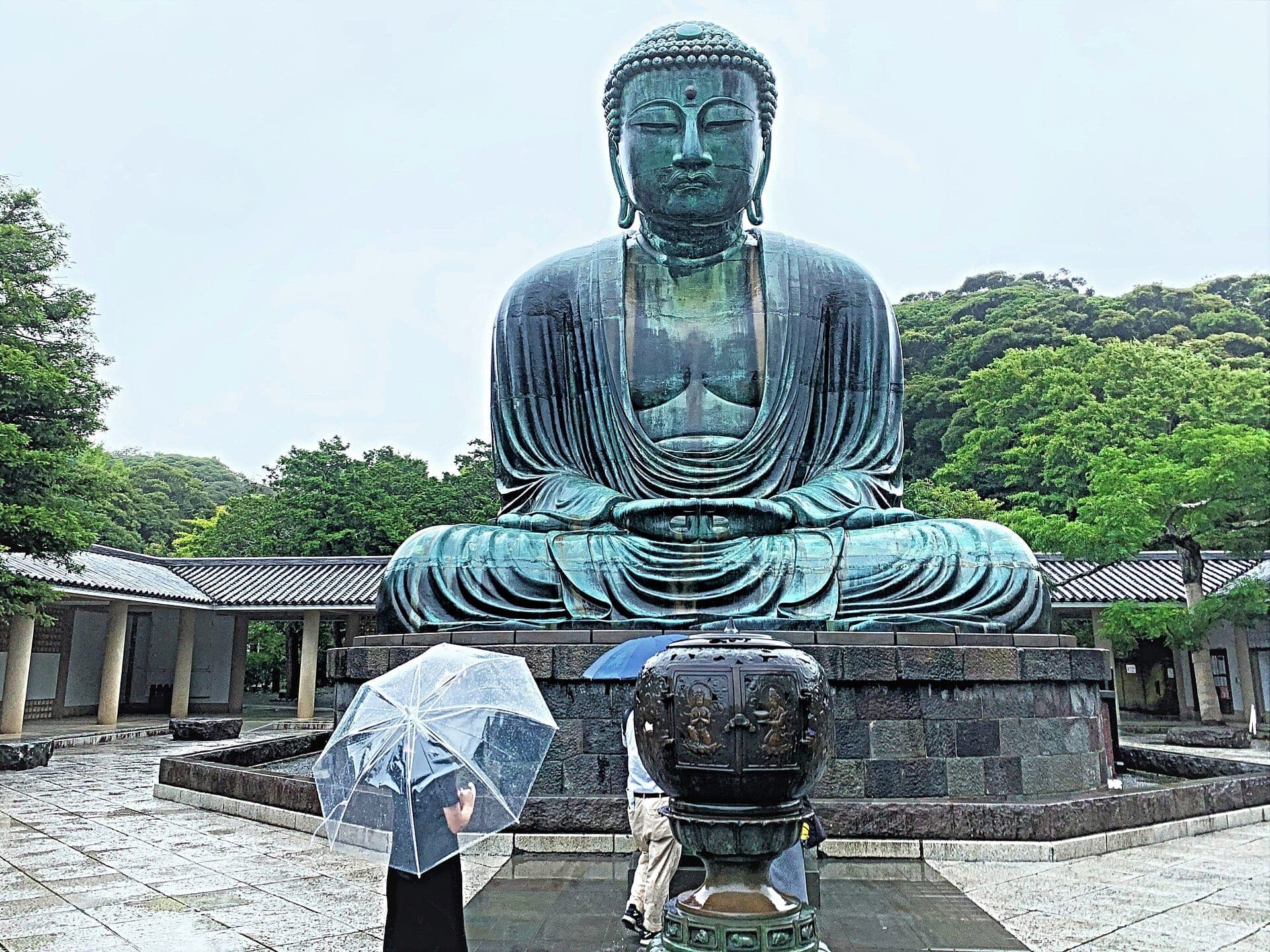
The bronze Amida Buddha at Kotoku-in is the sight most people come for. The statue sits outdoors, which is unusual for a Buddha of this size in Japan, and you can walk right up to it.
According to the temple, admission is 300 yen for adults and 150 yen for children ages 6 to 12. Children under six enter free. For an extra 50 yen you can step inside the statue. Opening hours are 8:00 to 17:30 from April through September and 8:00 to 17:00 from October through March. You should enter at least 15 minutes before closing. Interior entry runs until 16:30 year round.
Kotoku-in has no visitor parking of its own, so arrive by train or bus. From Enoden Hase Station it is about a 7 minute walk. From the east exit of JR Kamakura Station, buses bound for Daibutsu stop at Daibutsu-mae. Food and drink are not allowed on the grounds, aside from sealed water bottles.
Hase-dera
A short walk from Hase Station, Hase-dera climbs a hillside with gardens, jizo statues, and views over Yuigahama beach on clear days. The main hall holds a tall Kannon image, and the Kannon Museum is a separate ticket if you want to go deeper.
Official admission is 400 yen for adults and 200 yen for children ages 6 to 11. Hours are 8:00 to 17:00 from July through March, with last entry at 16:30. From April through June the temple stays open until 17:30, with last entry at 17:00. Ticket machines accept Suica and Pasmo.
Many people pair Hase-dera with the Great Buddha because both sit on the Enoden. Doing them together in the morning keeps the afternoon free for the shrine or Enoshima.
Tsurugaoka Hachimangu
Tsurugaoka Hachimangu is Kamakura's main Shinto shrine, about a 10 minute walk from the east exit of JR Kamakura Station. The long approach from the station area, with its arched bridge and gingko trees, is part of the visit.
The shrine grounds are free. According to the shrine, the main gate is open from 6:00 to 20:00 year round. The Treasure Hall is a separate paid exhibit open 9:00 to 16:00. If you only want the outdoor grounds, you can walk through without buying a ticket.
Early morning is quieter. Weekends and holidays draw more local visitors, especially around festivals.
Hokokuji bamboo garden
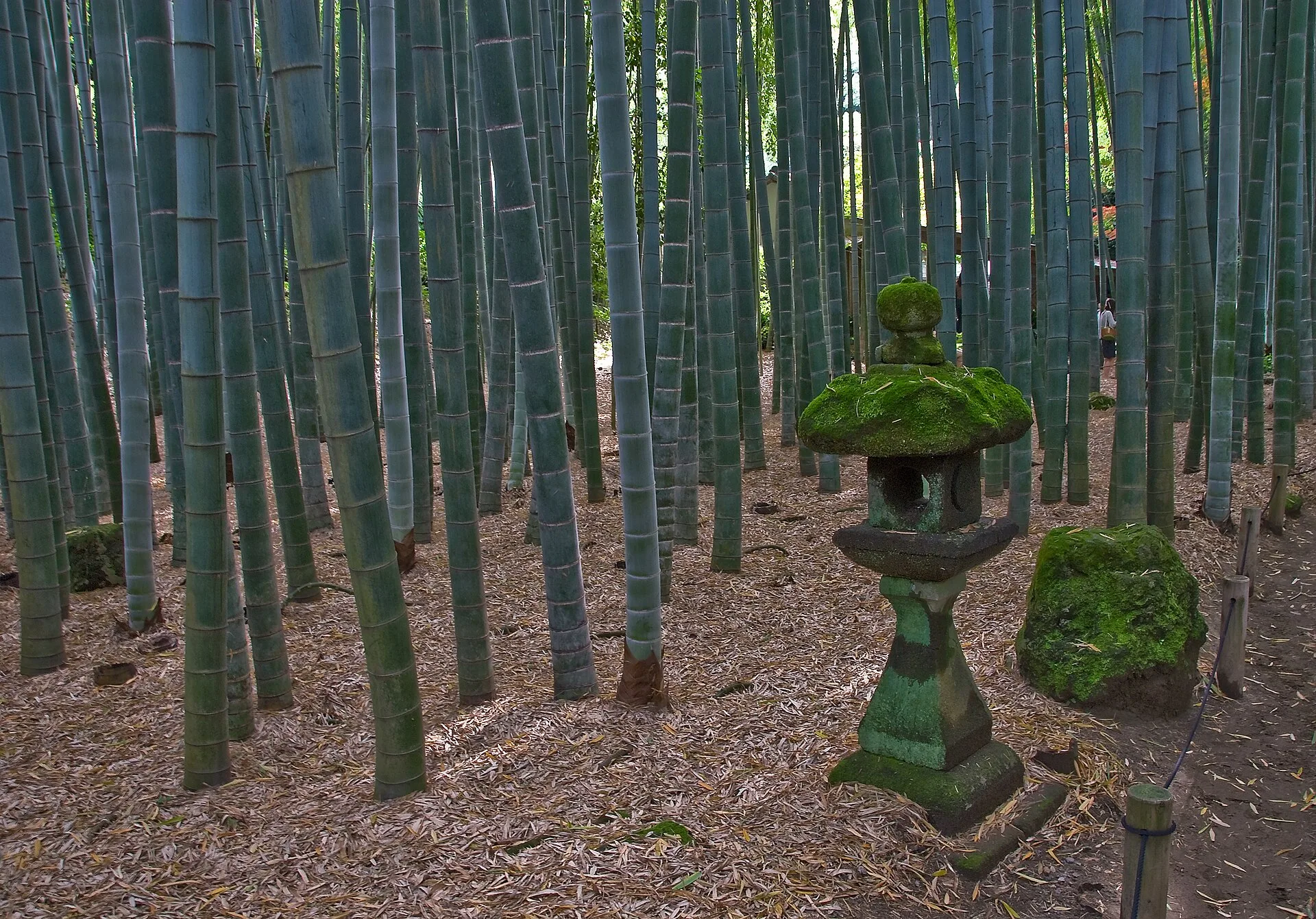
The bamboo grove at Hokokuji, often called the Bamboo Temple. Photo: Urashimataro / Wikimedia Commons (Public domain).
Hokokuji, on the east side of Kamakura, is known for a grove of about 2,000 moso bamboo stalks behind the main hall. Paths wind through the bamboo, and a small tea house serves matcha looking into the grove.
The temple's English page lists opening hours as 9:00 to 16:00. Admission is 400 yen for high school students and adults, and 200 yen for elementary and junior high students. The grounds close from December 29 through January 3, and may close in bad weather. Matcha with dried sweets costs an extra 600 yen, with last order at 15:30.
From JR Kamakura Station east exit, take a Keikyu bus toward Jomyoji and get off at Jomyoji, then walk about 3 minutes. The walk from the station without a bus takes roughly 30 to 40 minutes. Tripods and selfie sticks are not allowed.
Engakuji and Kenchoji in Kita-Kamakura
If you want Zen temples with more space to walk, get off at Kita-Kamakura Station.
Engakuji sits about a one minute walk from the station. Official admission is 500 yen for adults (high school and above) and 200 yen for elementary and junior high students. Hours are 8:30 to 16:30 from March through November, with a final exit by 17:00. From December through February it closes earlier, at 16:00, with a final exit by 16:30.
Kenchoji, ranked first among the Kamakura Gozan, is a short walk or bus ride from there. Admission is also 500 yen for adults and 200 yen for elementary and junior high students. Hours are 8:30 to 16:30. Payment is cash only. The temple notes that hikers who pass through the grounds still need to pay admission.
These two work well at the start or end of the day because you can step on or off the Yokosuka Line without backtracking into central Kamakura.
Komachi Street food and shopping
Komachi Street runs from near Kamakura Station toward Tsurugaoka Hachimangu. It is packed with snack stalls, small restaurants, and souvenir shops. Shirasu (whitebait) over rice is a local favorite, and you will see soft serve, dango, and pickled vegetables as you walk.
It gets busy at lunch. If you want a sit-down meal without a long wait, try a little earlier or later than noon. For more on how to behave in temples before you eat and shop, see our Japanese temple etiquette guide.
A short hike between the sights
The Daibutsu Hiking Course links the Kita-Kamakura temple area with the Great Buddha side of town. It is a forest path with stairs and roots, not a paved sidewalk, so wear shoes with grip. In wet weather the trail can be slippery. Many travelers skip the full hike and use the Enoden or bus instead, which is fine if you are short on time or traveling with kids.
Side trip to Enoshima
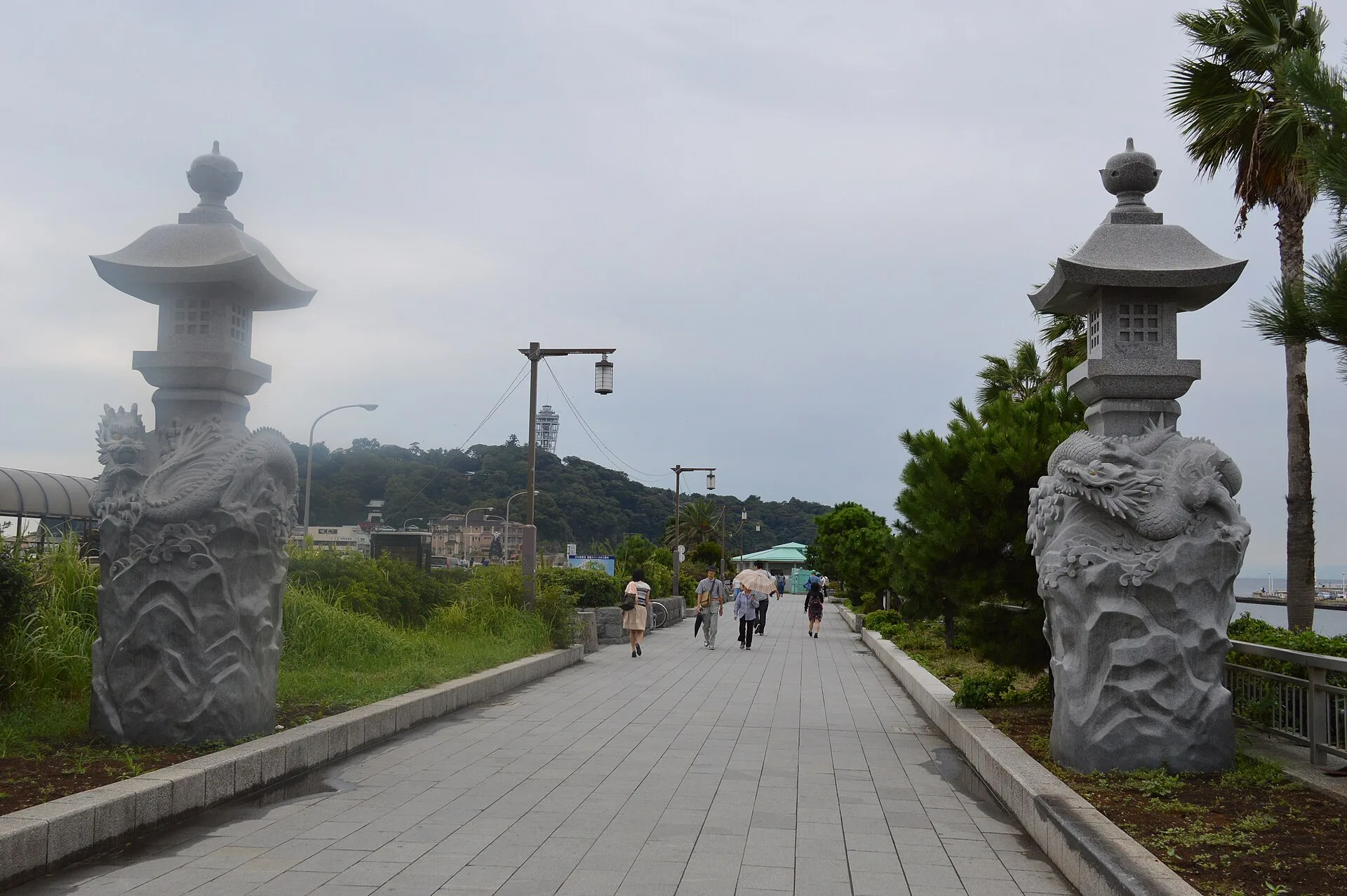
Benten Bridge from Katase in Fujisawa to Enoshima. Photo: Nandaro / Wikimedia Commons (CC BY-SA 3.0).
Enoshima is a small island just west of Kamakura, connected to the Katase shore in Fujisawa by the pedestrian Benten Bridge. It is not linked to Kamakura by a bridge. The usual way from Kamakura is the Enoden to Enoshima Station (about 23 minutes, 260 yen for adults), then a walk to Katase and across Benten Bridge onto the island.
On the island you will find Enoshima Shrine, hillside paths, and coastal views. In summer the nearby beaches draw crowds. Two to three hours is enough for a first look if you already spent the morning in Kamakura. For a longer Enoshima-focused plan, see our Kamakura and Enoshima day trip guide.
A simple one day plan
Here is one way to fit the main things to do in Kamakura into a single day without racing:
-
Ride the Yokosuka Line to Kita-Kamakura and visit Engakuji, or go straight to Kamakura Station if you want to start in the center.
-
Walk or take the Enoden to Hase for Hase-dera and the Great Buddha.
-
Return toward the station for lunch on Komachi Street and a walk through Tsurugaoka Hachimangu.
-
If you still have energy, ride the Enoden to Enoshima, cross Benten Bridge, and walk the shrine paths before heading back to Tokyo.
If that feels tight, drop Enoshima or save Hokokuji for a second day. Rushing every temple in one afternoon usually means more queue time than quiet time.
When a private car helps
Kamakura rewards slow walking, but the gaps between Hokokuji, the Hase area, and Enoshima add up, especially with older relatives or luggage. Our Kamakura private day tour from Tokyo covers the main stops without train transfers. If you want more time and a second day that includes Yokohama, see the Kamakura and Yokohama 2-day private tour. For cost planning, our Kamakura private tour tips and costs guide walks through what affects the price.
Want a custom day built around your pace? Contact us and we will help you map it.
Featured photo: Dandy1022 / Wikimedia Commons (CC BY-SA 4.0).
TopicsKamakuraEnoshimaJapan TravelTemplesDay Trips
Frequently Asked Questions
Private tours for this destination
Ready to see it in person? These private tours cover the places in this guide.
Related posts
Ready to explore Japan?
Book a private tour with OHAYO TRAVEL JAPAN.
View all private tours · Browse by category · Destinations · Contact us