If you want Osaka historical sites without turning the day into a museum slog, three stops carry most of the story: Osaka Castle, Shitenno-ji, and Sumiyoshi Taisha. They sit in different corners of the city, so you need a clear order and honest transit time. This guide lays out a one-day plan you can walk and ride on your own, plus when a private car makes the same loop feel like a real day out instead of a transfer puzzle.
Osaka gets sold as street food and neon. Fair enough — but the castle town and merchant-city layers are still easy to read if you start early and leave slack between stops. Fees below are the usual ranges; verify before travel because hours and tickets do shift.
Osaka history in brief
Osaka history runs through water, trade, and power. Long before the modern skyline, the area around the Yodo River delta was a port and political hub. In the late 16th century Toyotomi Hideyoshi built a massive castle here and used Osaka as a base while he tried to unify Japan. After his death, Tokugawa forces took the castle in the early 1600s; the keep you climb today is a 20th-century reconstruction, but the stone walls and moats still mark that fight for control.
Under the Tokugawa shogunate, Osaka grew into Japan's merchant city — the place rice and goods moved through while Edo held the shogun's court and Kyoto kept imperial ceremony. That merchant energy still shows in markets, food culture, and a practical, street-level pace. Visiting Osaka Castle, Shitenno-ji, and Sumiyoshi Taisha in one day is a quick way to feel that mix: warlord architecture, early Buddhism, and an old shrine that sailors and traders leaned on for safe passage.
Osaka Castle
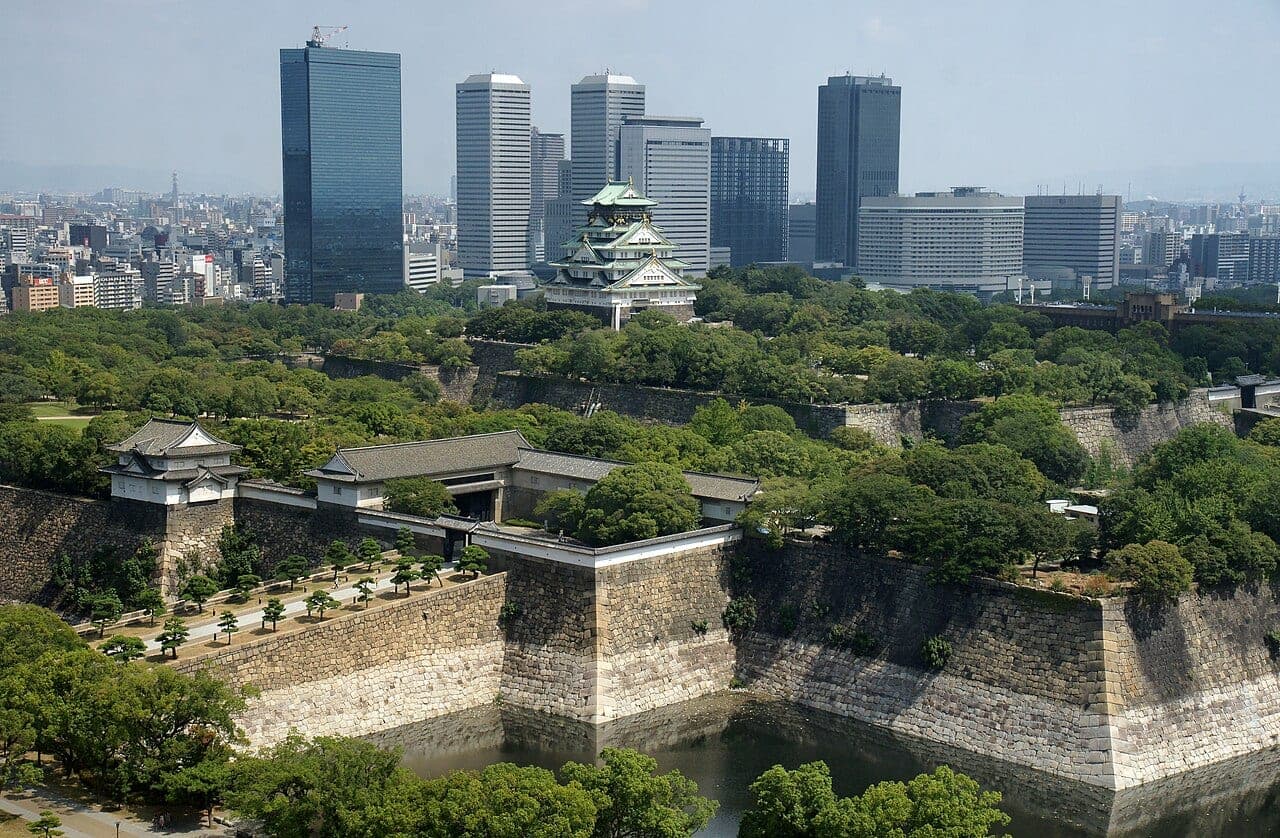
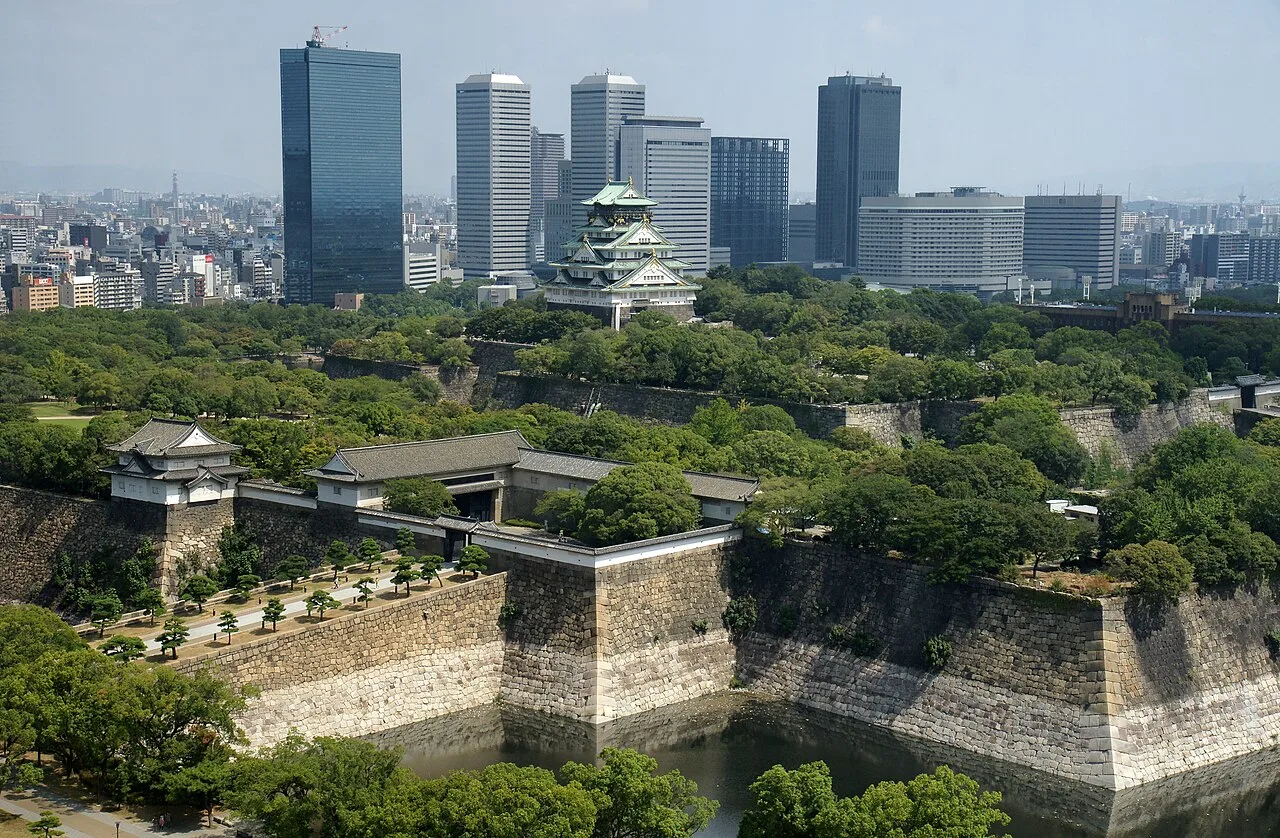
Osaka Castle is the obvious first stop for most people. The park is free and large enough for a slow walk along the moat and stone walls. The main keep (tenshukaku) holds museum floors and an observation deck with city views. Adult admission to the keep is often around ¥1,200 (verify before travel); junior-high age and under are typically free with proof of age. Hours commonly run 9:00–18:00 with last entry about 30 minutes before close; the keep usually closes for the New Year holiday stretch.
Osaka Castle
Osaka Castle. Photo: 663highland / Wikimedia Commons (CC BY 2.5).
Give yourself 90 minutes if you want both the park paths and the keep. Crowds build mid-morning, especially on weekends and during cherry blossom season. Arrive near opening if photos without shoulder-to-shoulder lines matter to you. Audio guides are often available for rent inside; useful if you want the Hideyoshi and Tokugawa timeline without reading every panel.
Nearest stations include Osakajokoen on the JR Loop Line and Tanimachi Yonchome on the subway. From either, expect a 10–15 minute walk to the keep through the park. Wear shoes you can walk in — the grounds stretch farther than a quick selfie stop.
Shitenno-ji
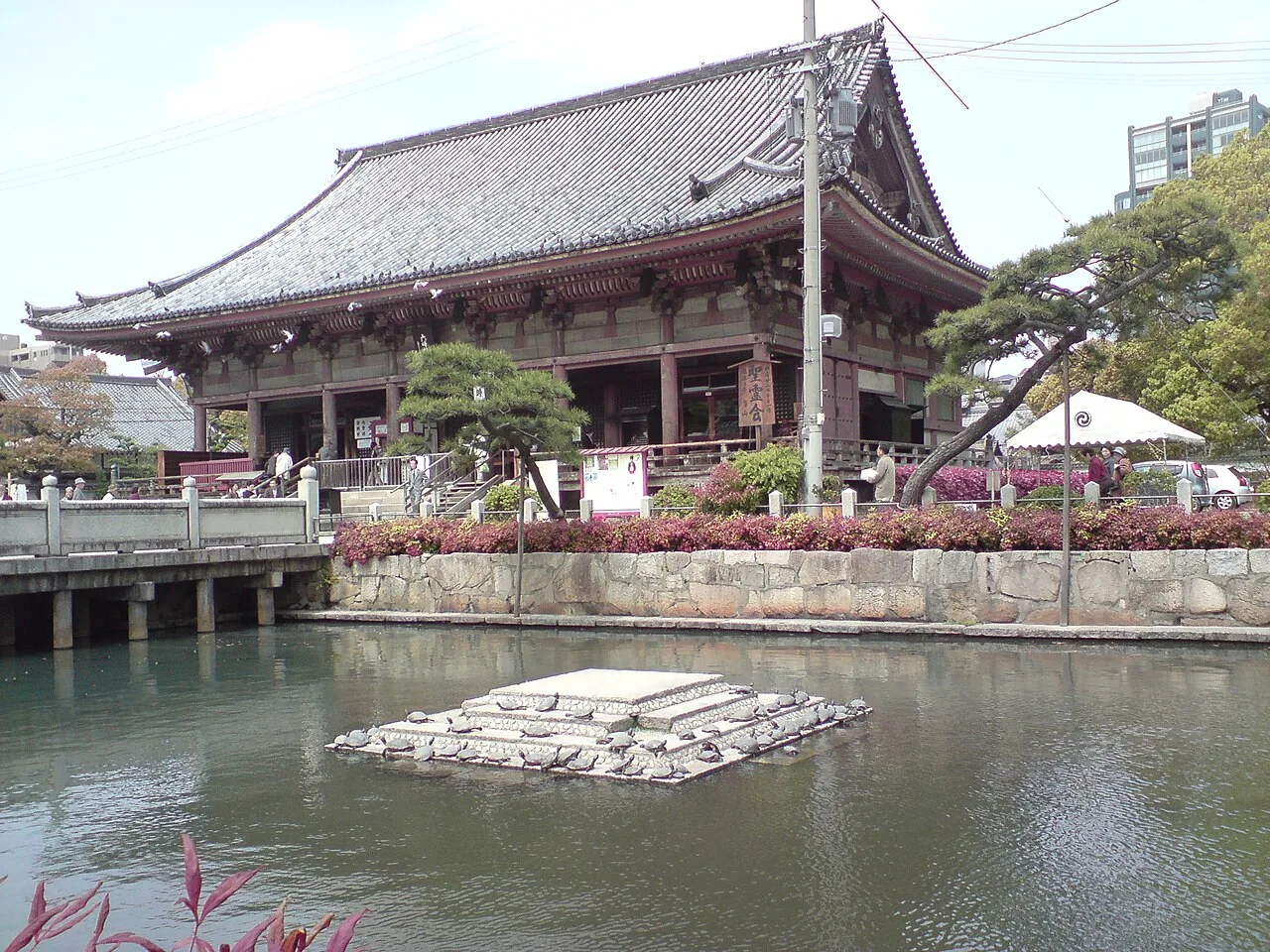
Shitenno-ji is often called Japan's oldest officially administered Buddhist temple, traditionally linked to Prince Shotoku in the late 6th century. Fires and rebuilds mean what you see is not original timber from that era, but the layout still follows an early, ordered plan: gate, pagoda, main hall, lecture hall in a clear north–south line.
Outer grounds are free to walk. The Central Garan (inner compound) is the paid core; adult entry is often around ¥300 (verify before travel). A separate treasure house ticket may run a bit more if you want sculpture and ritual objects. Plan 45–75 minutes depending on whether you enter the paid compound or stick to the free paths and market stalls that sometimes set up nearby.
The temple sits near Tennoji. Shitennoji-mae Yuhigaoka on the Tanimachi Line is a short walk; JR Tennoji and Osaka Metro Tennoji also work if you are already on that side of town. It pairs well after Osaka Castle: you leave the fortress park, ride south, and land in a quieter religious precinct before the afternoon shrine stop.
Sumiyoshi Taisha
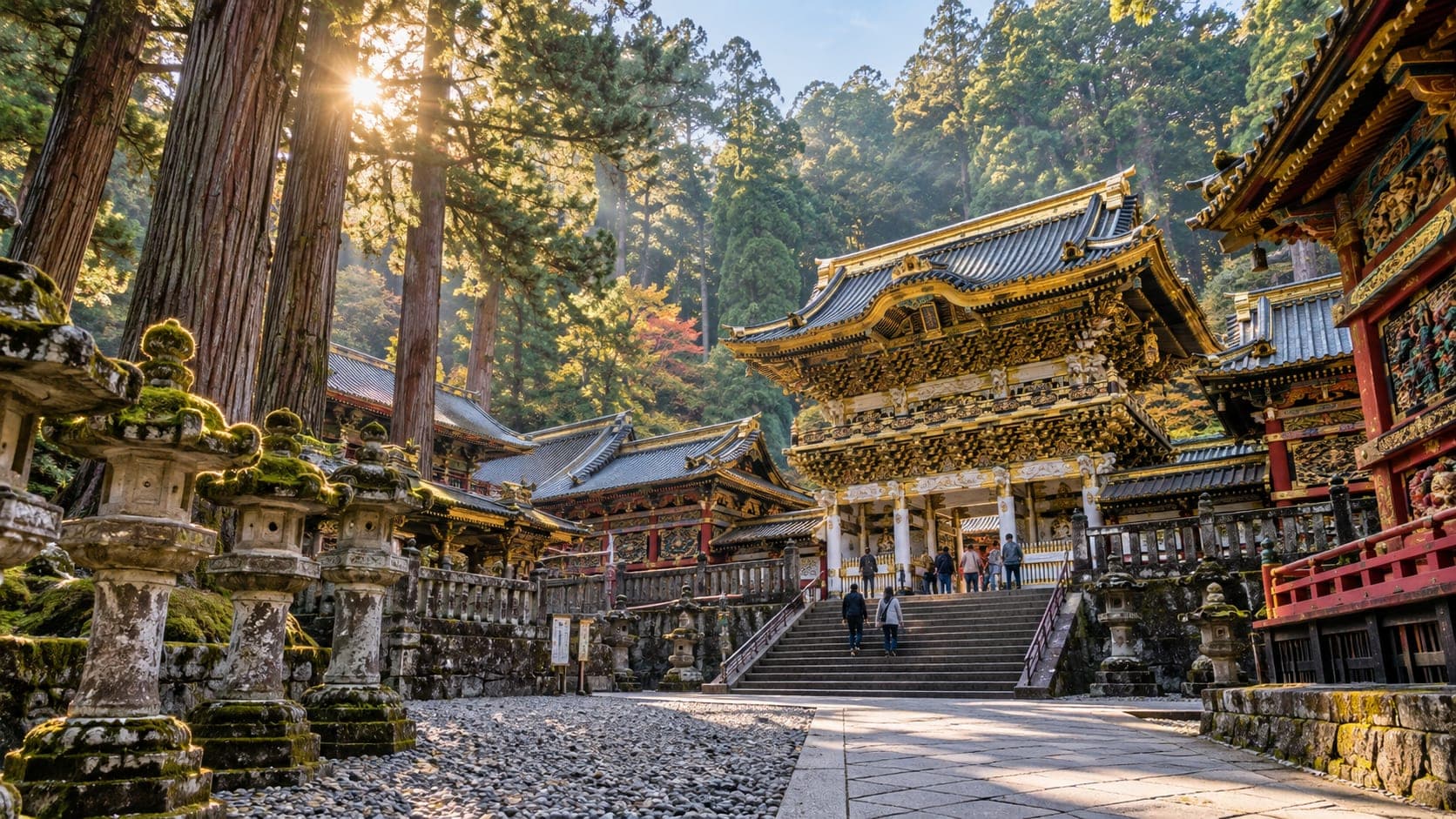
Sumiyoshi Taisha is one of Osaka's oldest and most important Shinto shrines, known as a head shrine for Sumiyoshi worship and long tied to safe sea travel. The architecture is distinctive: straight roofs and an older shrine style that feels different from the curved lines you see at many later shrines. The arched Sorihashi bridge over the pond is the photo most people take; go early or late if you want it without a queue of phones.
Shitenno-ji, Osaka
Shitenno-ji, Osaka. Photo: via Wikimedia Commons.
Shrine grounds are free. Hours for the precinct often start early morning and run into late afternoon; check the day's closing time if you arrive after 4 p.m. Plan 45–60 minutes for the main halls, bridge, and a slow circuit. If you collect goshuin (shrine stamps), budget a little cash and patience at the stamp office.
Access is straightforward on the Nankai line to Sumiyoshi Taisha Station, or via the Hankai tram to Sumiyoshi-Torii-mae — Osaka's remaining streetcar line, and worth the ride if you like local transit for its own sake. The shrine sits farther south than the castle and Shitenno-ji, so put it last on a DIY day unless you are staying nearby.
One-day order and how to move around
A realistic DIY order for these Osaka historical sites:
1. Osaka Castle (morning). Start at opening. Walk the park, climb the keep if that is on your list, then exit toward a Loop Line or subway station.
2. Shitenno-ji (late morning to midday). Ride south toward Tennoji. Enter the paid compound if you want the classic axis of halls; otherwise enjoy the free grounds and move on.
3. Lunch near Tennoji or on the way south. Keep it short so Sumiyoshi still gets daylight.
4. Sumiyoshi Taisha (afternoon). Nankai or Hankai tram from the Tennoji / southern Osaka area. Finish with the bridge and main halls, then ride back toward your hotel base (Namba / Umeda / Kyoto connections depending on where you sleep).
Rail and subway with an IC card (ICOCA, Suica, and similar) is enough for this loop. Expect several transfers and 20–40 minutes between major hops, plus walking. Total walking for the day can easily hit 8–12 km if you explore each park and precinct fully. On a hot or rainy day that adds up fast.
If you prefer door-to-door pacing with an English-speaking driver-guide, the Osaka private day tour by car covers castle, shrine, and city food stops without the station shuffle. That matters when you are traveling with kids, mixed walking ability, or limited time in Osaka.
Food stops near these sites
Keep food practical and close to the route so you do not burn an hour hunting the "perfect" bowl.
Near Osaka Castle: Convenience stores and casual spots around Osakajokoen / Morinomiya work for a quick bite before or after the keep. For a sit-down meal, many people save appetite for later and only grab coffee or a snack in the park area.
Near Shitenno-ji / Tennoji: Tennoji and Shinsekai are dense with kushikatsu (breaded skewers), curry, and casual chains. Useful midday stop before heading south. If you want market grazing instead, Kuromon Ichiba is a detour toward Namba — only add it if you cut time at one of the three main sites.
Near Sumiyoshi Taisha: Smaller local restaurants and cafes sit around the shrine approaches. Expect quieter options than Dotonbori. Save Dotonbori takoyaki and neon for after the history loop if you still have energy; it is easy to reach from Namba once you ride back north.
Carry water. Summer humidity around the castle park and shrine grounds is no joke, and shaded seating is uneven.
When a private tour helps
DIY works if you like transit apps and do not mind pacing yourselves between three separated sites. A private tour helps when:
You want Osaka Castle, Shitenno-ji, and Sumiyoshi Taisha in one day without watching the clock at every transfer.
Someone in the group has limited mobility, or you are traveling with young kids and strollers.
You want context at each stop — Hideyoshi and the castle wars, Shotoku and early Buddhism, Sumiyoshi and sea routes — without reading every plaque.
You are based in Kyoto or a suburban hotel and want pickup rather than luggage lockers and multiple IC-card taps.
Ohayo's Osaka Private Day Tour by Car runs about 10 hours with hotel pickup in the Osaka / Kyoto area, a private vehicle, and an English-speaking guide. Itineraries flex; castle and Sumiyoshi are natural fits, and markets or Dotonbori can fill the gaps. Confirm inclusions (meals, entry fees, overtime) when you book so the quote matches what you expect at the gate.
When you are ready to go
Lock the three names: Osaka Castle in the morning, Shitenno-ji around midday, Sumiyoshi Taisha in the afternoon. Verify keep tickets, temple compound fees, and shrine hours the week you travel. Wear walking shoes, use an IC card if you DIY, and leave room for one food stop instead of chasing every side hall.
If you want the same Osaka historical sites with less transit math and more time on the grounds, book the Osaka private day tour by car through Ohayo Travels and spend the day on walls, halls, and shrine paths — not on platform transfers.
Osaka Castle, Shitenno-ji, and Sumiyoshi Taisha cover castle, early Buddhist temple, and major shrine history without forcing a second day. Put the castle first, then Shitenno-ji near Tennoji, and finish at Sumiyoshi farther south.
Start at Osaka Castle near opening, ride south to Shitenno-ji late morning, take a short lunch near Tennoji, then continue to Sumiyoshi Taisha in the afternoon. DIY needs IC-card subway and rail hops; a private car skips most transfers.
Osaka Castle Park is free; the keep museum is often around ¥1,200 for adults. Shitenno-ji outer grounds are free; the Central Garan is often about ¥300. Sumiyoshi Taisha grounds are free. Always verify fees before travel.
Use JR Loop Line or subway near the castle, Tanimachi Line or Tennoji stations for Shitenno-ji, then Nankai or the Hankai tram to Sumiyoshi Taisha. Expect 20–40 minutes between major hops plus walking. An IC card (ICOCA, Suica, and similar) covers the rides.
Keep lunch near Tennoji or Shinsekai after Shitenno-ji — kushikatsu and casual spots are dense there. Grab only a snack by the castle if you want more time on the grounds. Near Sumiyoshi, expect quieter local restaurants; save Dotonbori for after you ride back north.
Book a private car when you want all three sites in one day without transfer stress, need pickup from an Osaka or Kyoto hotel, travel with kids or limited mobility, or want English context at each stop. Ohayo’s Osaka private day tour by car runs about 10 hours with a flexible itinerary.
Private tours for this destination
Ready to see it in person? These private tours cover the places in this guide.