Osaka Castle Tickets: Prices, Hours and Visit Tips
Osaka castle tickets cost ¥1,200 for adults. Check student and child prices, official hours, Nishinomaru Garden fees, and a short history before you go.
Osaka castle tickets cost ¥1,200 for adults, and that one price covers the main keep and the Toyotomi Stone Wall Museum next to it. The castle is open every day except December 28 to January 1, so it is one of the easier big sights in Osaka to fit into a trip. This guide covers current prices, who pays less, opening hours, the Osaka Amazing Pass, and the history behind what you will see inside. All figures were checked against official pages on November 10, 2026.
How much are Osaka castle tickets?
You buy admission at the ticket counter by the keep. The prices have been the same since April 2025.
VisitorPriceWhat to carryAdult¥1,200Nothing extraUniversity or high school student¥600Student ID. Visitors from abroad should carry an ISIC cardAge 15 and underFreeProof of age. A passport works for visitors from abroad
Without a student ID you will be charged the adult price, so keep the card handy. The official visitor guide from the castle keep lists these rates. Groups of 15 or more paying guests get a lower rate of ¥1,080 per adult, according to Osaka Info.
The Toyotomi Stone Wall Museum opened in 2025 and is included in the same ticket. It shows sections of the castle's original stone walls, which the Tokugawa family buried under new earth when they rebuilt the castle after 1615. They were not rediscovered until the 1950s, as japan-guide explains.
If you plan a full day of sightseeing, the Osaka Amazing Pass can be worth a look. A one-day pass is ¥3,500 and includes entry to the castle keep along with subway and bus rides. Add up what you plan to visit first. If the castle is your only paid stop, the pass will not save you money. The official pass site lists every included sight.
On busy days the ticket line can run past 30 minutes. Go early in the morning, or look at advance e-tickets from a reseller if you want to skip the counter. Compare the reseller's price with ¥1,200 first.
Opening hours and the best time to go
The keep opens at 9:00 and closes at 18:00, with last entry at 17:30. On crowded days the staff may close the ticket line a little before 17:30, so do not arrive at the last minute. The only closure is December 28 to January 1.
Weekday mornings are usually the quietest. Late afternoon is a good second choice, since the light turns softer on the gold decorations and the crowds thin before closing.
Getting to the castle
The keep sits inside a very large park, so the walk is longer than most people expect. Osaka Info gives a 15 to 20 minute walk from JR Morinomiya Station or Osakajokoen Station on the loop line. Tanimachi 4-chome Station on the Metro and Tenmabashi Station are also close options. Wear comfortable shoes.
Allow about an hour for the keep itself. If you also want the stone wall museum, the moat and Nishinomaru Garden, plan for three hours.
A short history of Osaka Castle
Toyotomi Hideyoshi began building the castle in 1583 on the former site of the Ishiyama Hongan-ji temple. He wanted a fortress that suited the ruler of a unified Japan, and at the time it was the largest castle in the country. The Toyotomi family lost it in 1615, when Tokugawa forces took the castle during the Siege of Osaka.
The Tokugawa shogunate rebuilt it from 1620, and the work took about ten years. Lightning destroyed the new main tower in 1665, and the keep was not rebuilt for more than 260 years. Most of the other buildings burned during the upheaval at the end of the Edo period.
The tower you climb today dates from 1931, when citizens of Osaka raised donations to rebuild it in reinforced concrete. It survived the wartime air raids, and a major renovation finished in 1997. The outside follows the earlier design, but the inside is a modern museum with an elevator.
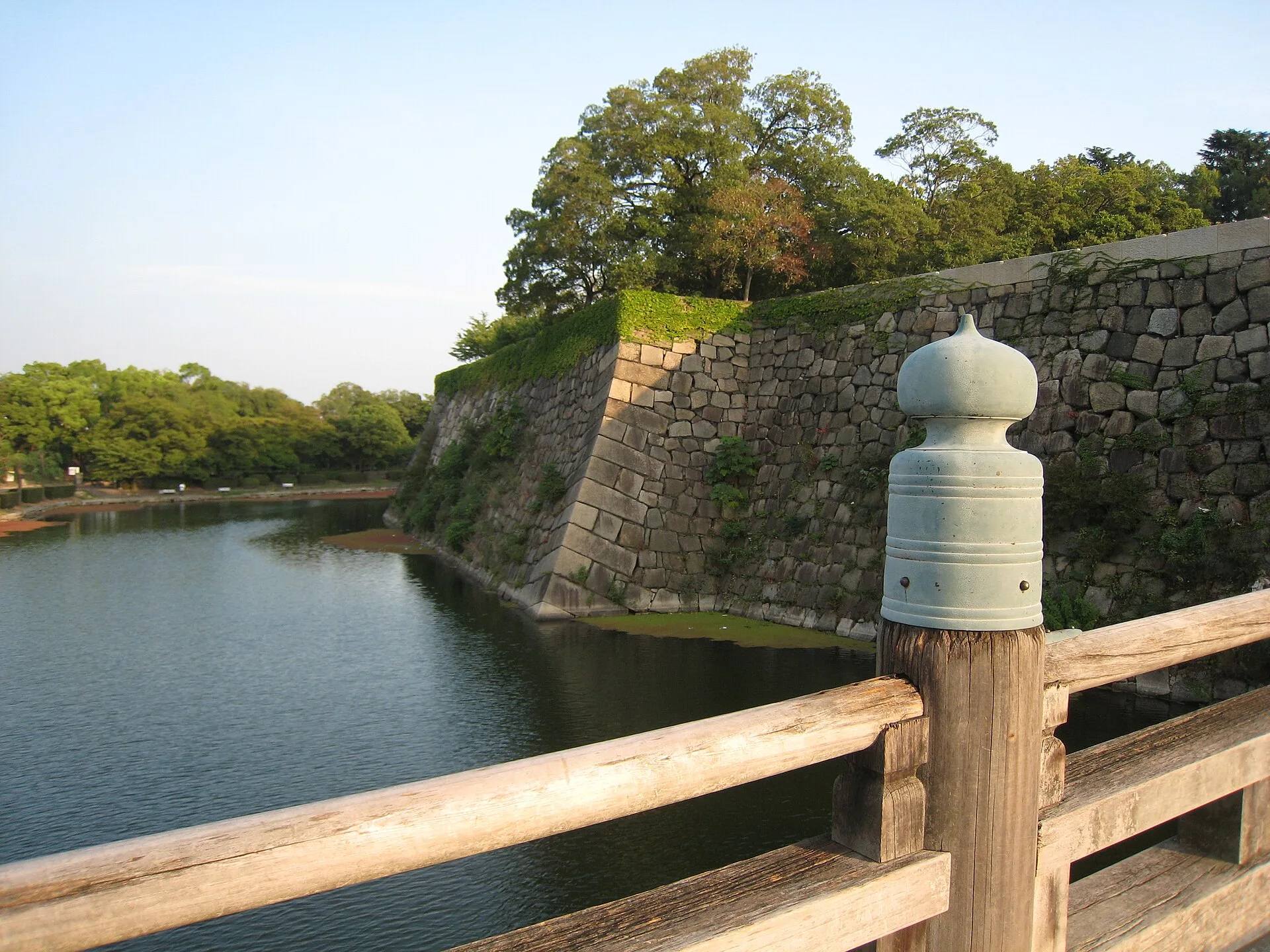
The stone walls and moats around it come from the Tokugawa rebuilding, not from Hideyoshi's time. The Osaka prefecture historic site guide says the walls run for about 12 km and used an estimated one million stones. That is why walking the outer paths can be as interesting as going inside.
Stone walls and moat beside a wooden bridge in Osaka Castle Park
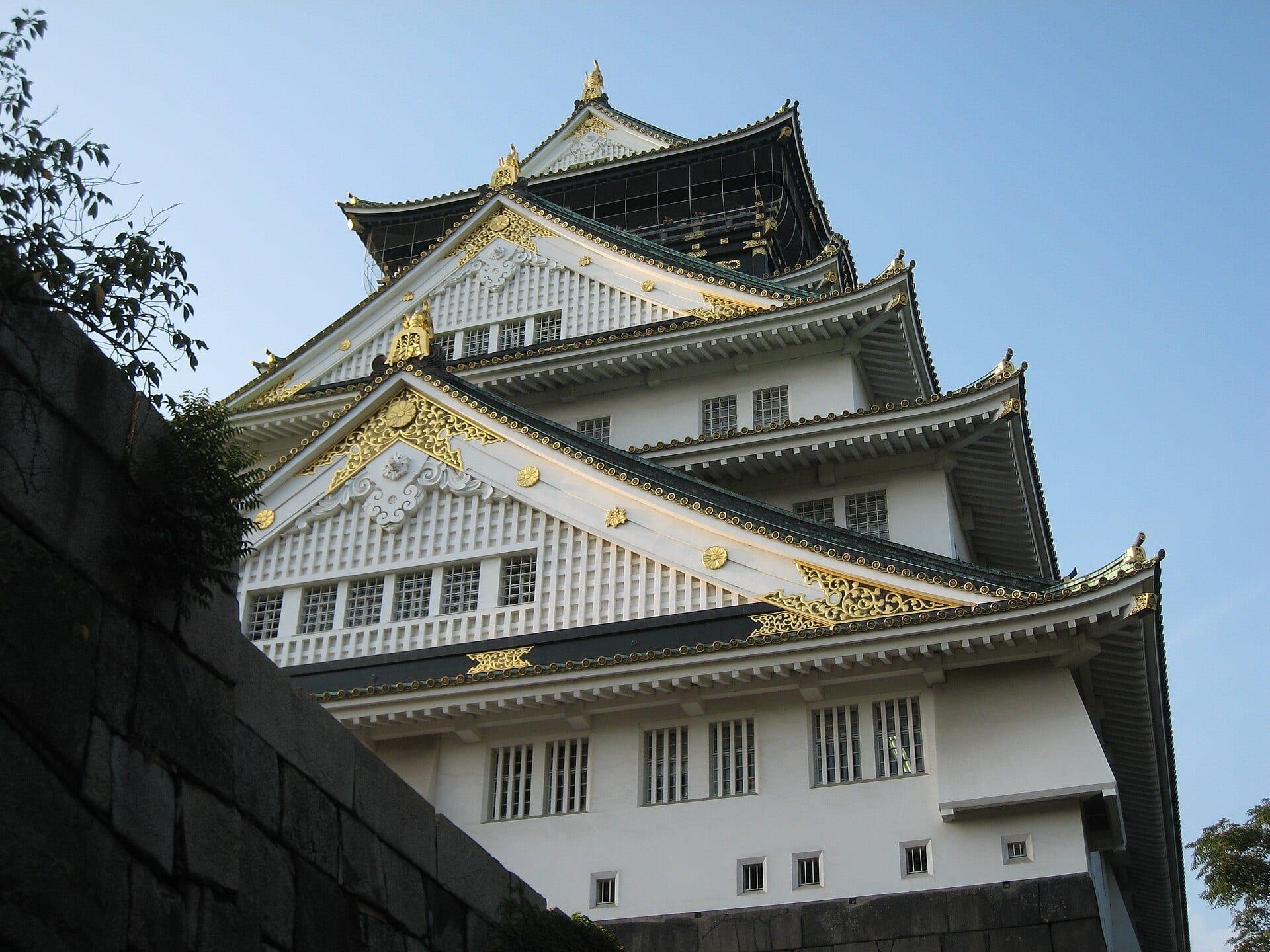
The main tower is 55 meters tall, with five floors visible outside and eight levels inside. The exhibits cover Hideyoshi, the building of the castle and the battles of 1614 and 1615, with items such as folding screens and scrolls. The top floor is the observation deck, with views across the city and the park below.
Outside, look for the golden shachihoko, the fish-shaped roof ornaments, and the tigers under the upper balconies. Then walk the moat and study how the huge stone blocks are fitted together.
The park covers 105.6 hectares, so a stroll beyond the keep is easy to add. Otemon Gate, Sakuramon Gate and the Sengan Turret are among the Important Cultural Properties in the grounds, and you can see them from outside without a ticket.
Timing your visit around the seasons
Late March and early April are the busiest weeks, because the park is one of Osaka's most popular cherry blossom spots. Expect longer lines at the ticket counter and more people on the paths, and plan your day so the keep comes first thing in the morning. The gardens are the place to spend the afternoon, not the other way around.
Outside blossom season the park is calmer, and the stone walls and moats are worth a slower walk. The keep's regular hours can change on special days, so check the official guide a few days before you travel. The keep has an elevator, which helps if anyone in your group finds the stairs difficult.
Quick checklist before you buy
Carry student ID or a passport if anyone qualifies for a reduced or free ticket.
Plan to arrive well before 17:30, and earlier than that on weekends.
Decide whether Nishinomaru Garden is worth a second ticket, and avoid Mondays if it is.
Compare the ¥3,500 Amazing Pass with your real plans for the day.
Nishinomaru Garden is a separate ticket
The lawn garden on the west side of the castle has its own gate and its own admission, so your keep ticket does not cover it. Adults pay ¥300 as of April 1, 2026, according to the Osaka Amazing Pass attraction list, with a slightly higher price during the evening cherry blossom event. The garden opens at 9:00 and closes at 17:00 from March to October, or at 16:30 from November to February. Last entry is 30 minutes before closing, and it is closed on Mondays and over the New Year holiday.
The garden has about 300 cherry trees and is one of the best places in Osaka to see the keep across the moat. If your visit falls on a Monday, plan your walk around the closed gate. The Osaka Info garden page has the hours and access details.
Pair it with the Osaka Museum of History
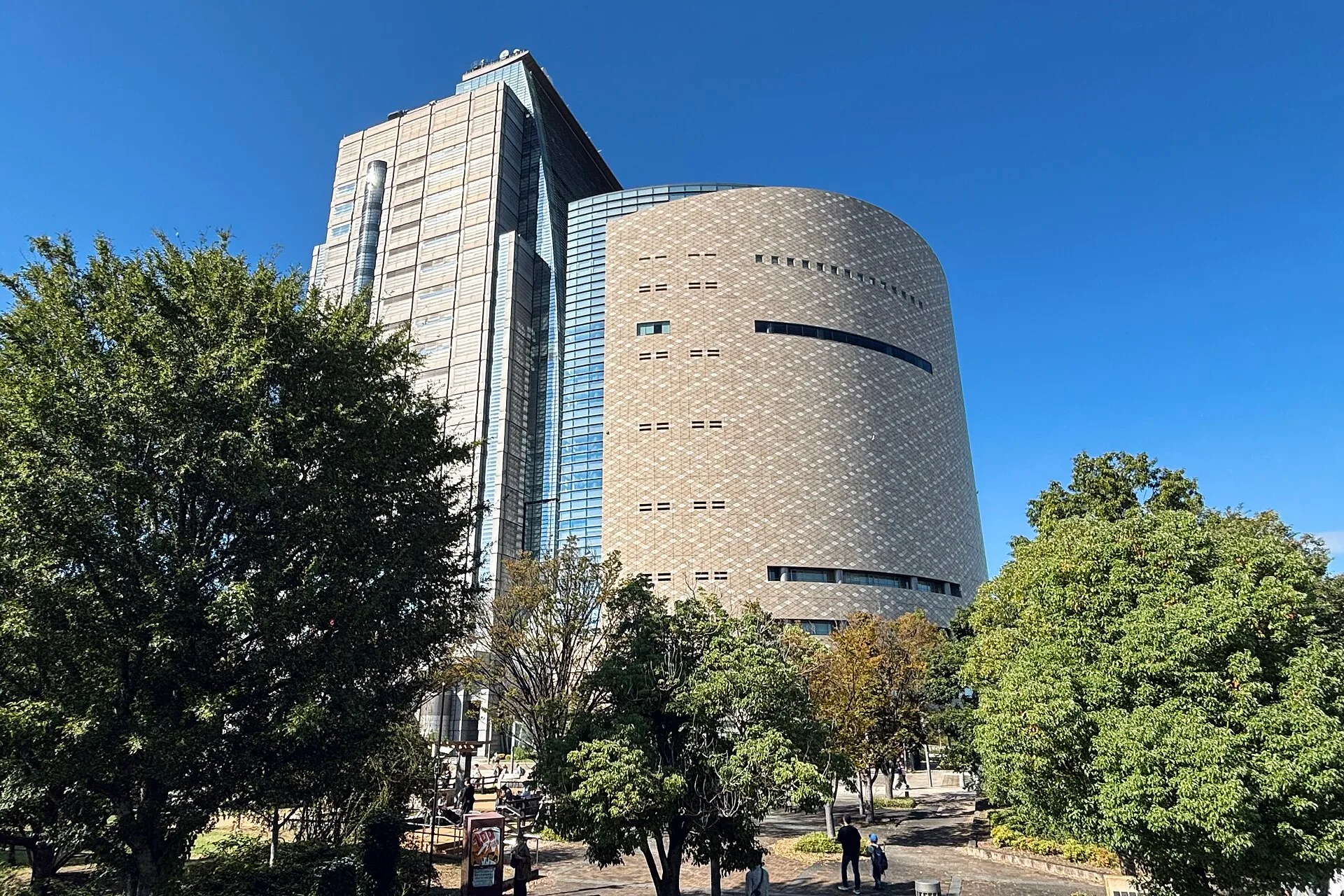
Osaka Museum of History building beside Osaka Castle Park under a blue sky
The Osaka Museum of History stands beside the park and next to the NHK Osaka building, a short walk from Tanimachi 4-chome Station. Its highlights are a full-sized recreation of the Naniwa no Miya Palace hall and a street from the Taisho period. Adults pay ¥600, and high school and university students pay ¥400. The museum is open 9:30 to 17:00 with last entry at 16:30. It is closed on Tuesdays, or on Wednesday if Tuesday is a national holiday, and from December 28 to January 4.
The museum's own FAQ says the permanent exhibition takes one to one and a half hours on average. Special exhibitions cost extra, so check the museum's official visitor page before you go.
If you would rather skip the train changes and the long walk through the park, our Osaka Private Day Tour by Car: Castle, Markets & Dotonbori is a 10 hour private day with a driver guide that includes the castle, Shitenno-ji, Shinsekai, Kuromon Market and Dotonbori. Castle admission is not on the tour's included list, so plan to buy your tickets on the day.
TopicsOsaka CastleOsaka TravelCastlesTickets and Passes
Frequently Asked Questions
Adults pay ¥1,200. University and high school students pay ¥600 with a student ID (visitors from abroad should carry an ISIC card), and visitors age 15 and under enter free with proof of age. The ticket includes the Toyotomi Stone Wall Museum.
The keep is open daily from 9:00 a.m. to 6:00 p.m., with last entry at 5:30 p.m. It is closed only from December 28 to January 1. On crowded days the ticket line can close a little before 5:30 p.m.
No. Nishinomaru Garden has its own gate and a separate ticket, ¥300 for adults as of April 1, 2026. It closes at 5:00 p.m. from March to October and at 4:30 p.m. from November to February, and it is closed on Mondays.
Only if you visit several included sights. A one-day pass costs ¥3,500 and covers the castle keep plus subway and bus rides, while the castle alone is ¥1,200. Add up your planned stops and train fares before you buy.
Plan about an hour for the keep. If you also want the Toyotomi Stone Wall Museum, a walk along the moat and Nishinomaru Garden, allow about three hours.
The keep is a 15 to 20 minute walk from JR Morinomiya Station or Osakajokoen Station. Tanimachi 4-chome Station on the Metro and Tenmabashi Station are also close. The park is large, so wear comfortable shoes.
Private tours for this destination
Ready to see it in person? These private tours cover the places in this guide.