Nara Cherry Blossoms: When to Go and Where to See Them
Nara cherry blossoms usually open in late March and early April. This guide covers typical bloom windows, Nara Park, Himuro Shrine, Koriyama Castle, Mount Yoshino, and trains from Kyoto and Osaka.
Nara cherry blossoms are one of the easier spring trips from Kyoto or Osaka, because the main park, the early weeping cherries at Himuro Shrine, and a short ride to Koriyama Castle all sit close together. If this post reaches you in late 2026, the next season you can actually visit is spring 2027. Bloom dates move from year to year, so treat what follows as typical windows, not a promise of exact days.
I checked official pages from the Japan Meteorological Agency's Nara office, Nara City tourism, Yamatokoriyama City, Visit Nara, Himuro Shrine, Todai-ji, Isuien Garden, Nara Kotsu, Kintetsu, and the Yoshino ropeway operator in mid-November 2026.
The Japan Meteorological Agency's Nara Local Meteorological Office tracks a Somei-Yoshino specimen tree. Its long-term average, listed as the normal date on the official Nara office page, is March 28 for first bloom and April 4 for full bloom. First bloom means about five or six flowers have opened. Full bloom means about 80 percent of the flowers on that tree are open. These dates describe that observation tree, not every hillside in the prefecture.
Official Nara City tourism says blossoms in the city typically start in late March, beginning with the weeping cherry trees at Himuro Shrine, and reach their peak around early April. Later varieties last longer. The prefectural flower, Naranoyaezakura, a double-flowered cherry, usually opens from late April to early May around Todai-ji, Nara Park, and Kohfukuji, according to the same official guide. Mount Yoshino, farther south and higher, is a different calendar: Visit Nara says the mountain turns pink from early April into May, with bloom moving from the lower slopes to the upper ones.
The 2026 season is already over. At the Nara meteorological office, Somei-Yoshino first bloom was March 24 and full bloom was March 31, a few days earlier than the average. Use that only as a reminder that a single warm or cold spell can shift the window. The 2027 forecast will not be useful until early in that year. Before you travel, look at the bloom updates on official Nara tourism pages and at the JMA Nara observations.
Nara Park
Start in Nara Park if you have one day in the city. Official Nara tourism points to Kasugano Enchi Garden and the Ukimido pavilion as the main blossom areas in the park, where Somei-Yoshino and double-flowered cherries open over open lawn and water. Deer wander the same lawns. The park itself does not charge admission.
Kintetsu Nara Station is the closer rail stop, a short walk to the western edge of the park. JR Nara Station sits farther west, so budget a longer walk or a local bus if you arrive on JR.
Kasugano Enchi looks toward Mt. Wakakusa and, to the northwest, the Great Buddha Hall of Todai-ji. If you want a temple stop in the same area, Todai-ji's official site lists adult admission to the Great Buddha Hall at ¥800, and ¥400 for children ages 6 to 12. Hours for April through October are 7:30 a.m. to 5:30 p.m. The grounds around the hall also have cherry trees, but you do not need a ticket to walk the public park paths.
Isuien Garden is close to Todai-ji if you want a quieter, ticketed garden. The official garden site lists adult admission at ¥1,200, which includes the Neiraku Museum, with hours from 9:30 a.m. to 4:30 p.m. and last entry at 4:00 p.m. It is closed on Tuesdays, except when Tuesday is a national holiday, in which case it closes the next day. Food is not allowed in the garden, so this is not a picnic stop.
A few hours in the park is enough for many visitors. Keep the order loose: walk the lawns at Kasugano Enchi, continue toward Ukimido if you want the pond, and add Todai-ji only if the line looks reasonable. On weekends the lawns fill early.
Himuro Shrine, where the season often starts
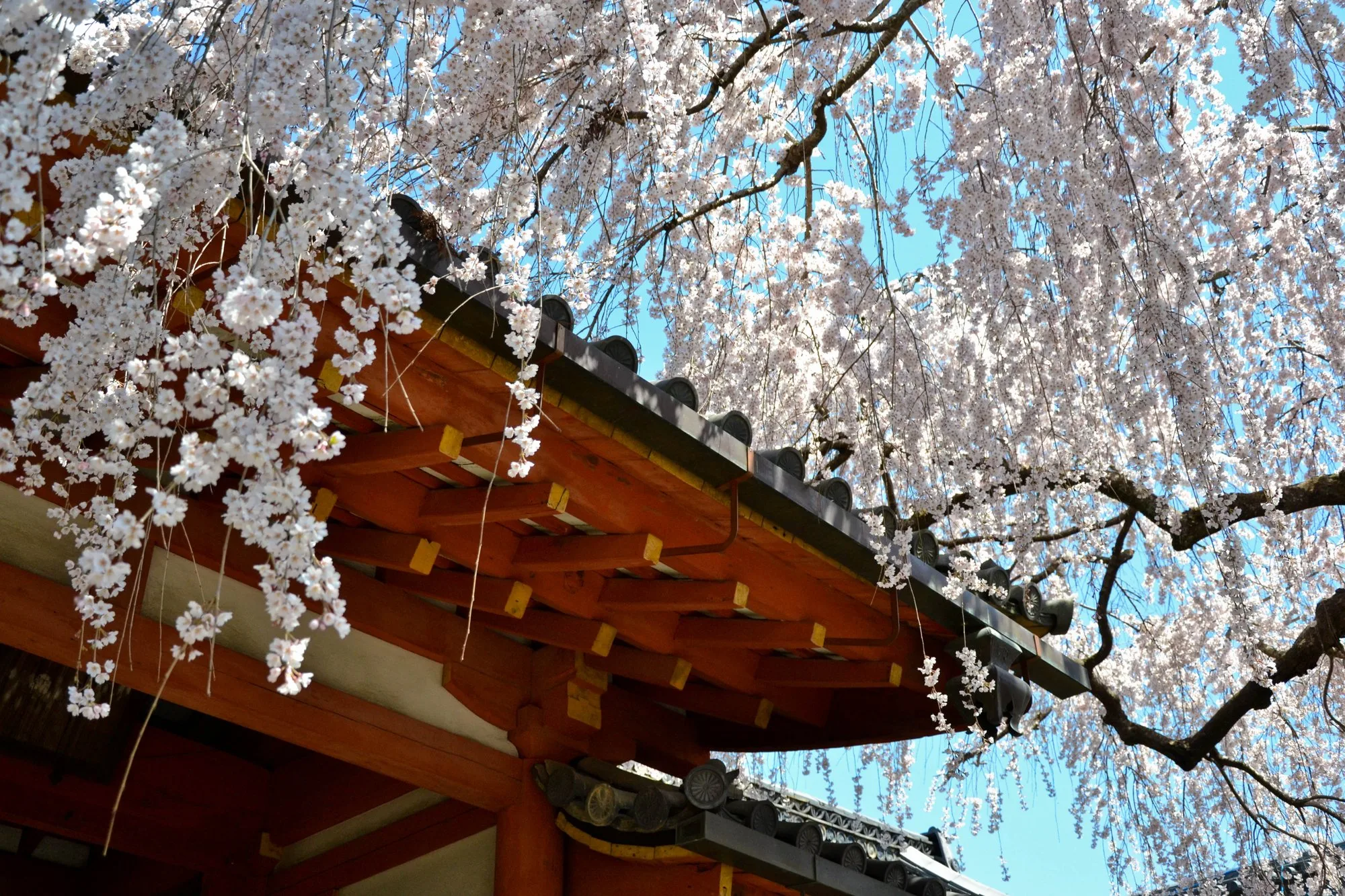
Official Nara prefecture tourism describes the weeping cherries at Himuro Shrine as the first to open in Nara, a sign that spring has arrived, with a usual window of late March to early April. The shrine sits just by Nara Park, at 1-4 Kasuganocho. Official Nara City tourism and the shrine list admission as free. Opening hours are 6:00 a.m. to 6:00 p.m. from April through October, and 6:30 a.m. to 5:30 p.m. from November through March.
It is about a 15-minute walk from Kintetsu Nara Station, or a short city-bus ride to the Himuro-jinja / National Museum stop. The grounds are small compared with the park, which makes them a good first or last stop on the same day, especially if you are trying to catch the early weeping cherries before the Somei-Yoshino in the park reach full bloom.
Weeping cherry blossoms hanging over a wooden shrine roof at Himuro Shrine in Nara
Koriyama Castle, in Yamatokoriyama, is a short hop south of central Nara and is worth a separate visit if you want blossoms against stone walls and a moat. Yamatokoriyama City says about 600 Somei-Yoshino and other cherry trees, known as Goten-zakura, were planted around the moat. The site is one of the Japan Sakura Association's 100 Famous Cherry Blossom Spots. The castle keep is gone, but restored gates and turrets, the stone walls, and a keep-platform observation deck remain. The grounds are free and open. City listings give observation-deck hours as 7:00 a.m. to 7:00 p.m. from April through September, and 7:00 a.m. to 5:00 p.m. from October through March.
The official city access is about a 7-minute walk from Kintetsu Koriyama Station on the Kashihara Line, or about 15 minutes from JR Koriyama Station. From Kintetsu Nara, you change at Yamato-Saidaiji for the Kashihara Line.
The Yamato Koriyama Castle Festival is usually held around bloom and has included night viewing, a historical procession, and goldfish displays, according to the city. Dates change each year. The 2026 festival ran from March 24 to April 7. 2027 dates had not been posted when I wrote this, so use the official Yamatokoriyama tourism pages for that year.
Heijo Palace Site and the Saho River
If you want a flatter walk away from the park crowds, official Nara tourism recommends Nara Palace Site Historical Park, the remains of the Nara-period capital. Locals call the cherry rows around the Nara Palace Site Museum and Saekimon Gate "Sakura Road." The national park's official FAQ says admission to the facilities inside the site is free. The nearest rail station is Kintetsu Yamato-Saidaiji; the official park access notes about a 20-minute walk to Suzakumon Plaza, or a city bus to the Suzakumon-hiroba-mae stop.
The Saho River, a little west of central Nara, has an official tourism listing for a row of cherries about 5 kilometers long, usually from late March to early April. One shorter stretch runs from Daibutsu Railway Memorial Park, about a 10-minute walk from Kintetsu Nara Station, toward Shin-Omiya. It is a good add-on if you still have light at the end of a park day.
Mount Yoshino
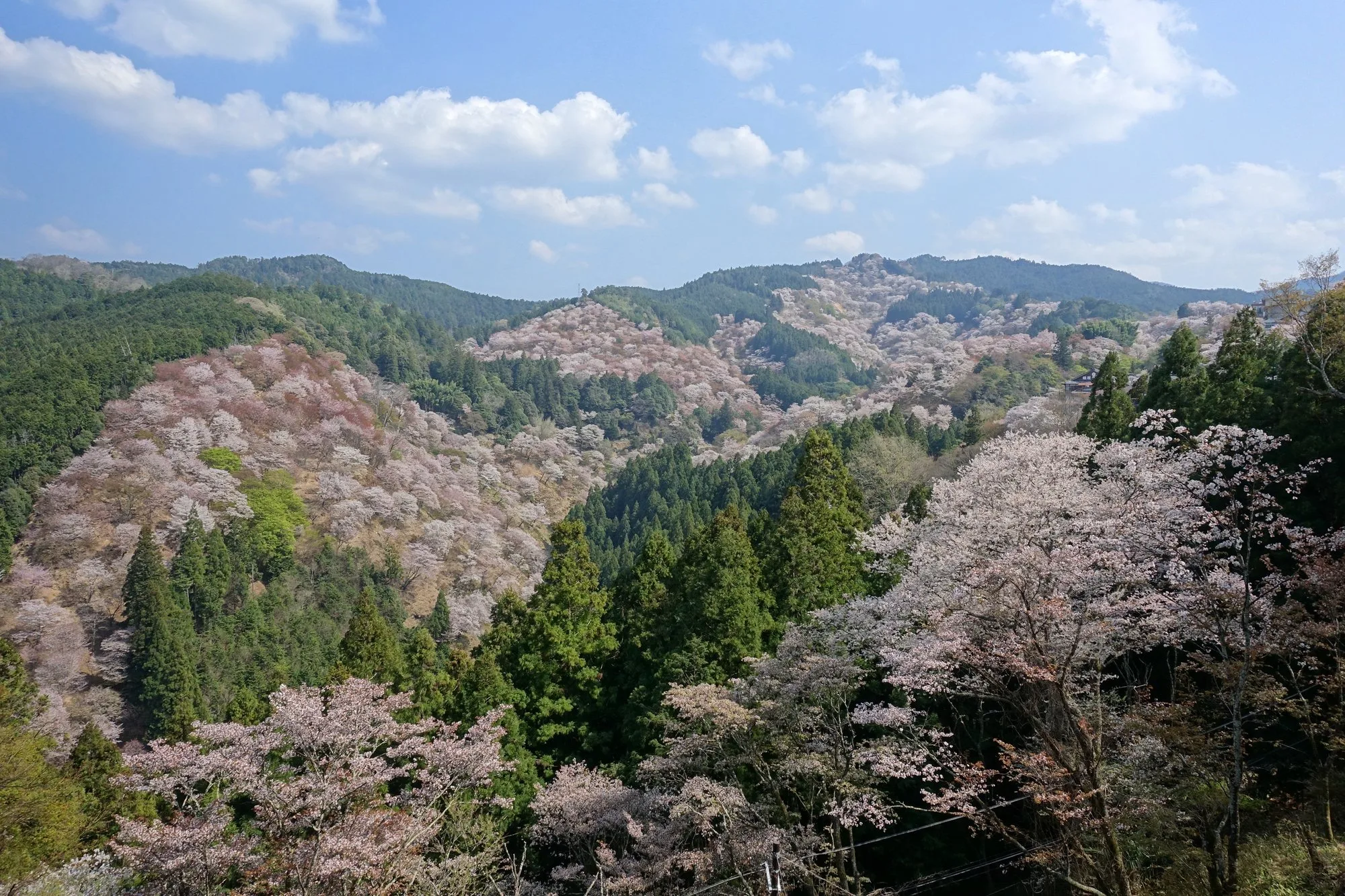
Mount Yoshino is in southern Nara Prefecture, not in Nara City, and it is a different trip from a park day. Visit Nara describes about 30,000 cherry trees in some 200 varieties, divided into four areas: Shimo Senbon, Naka Senbon, Kami Senbon, and Oku Senbon, the lower, middle, upper, and inner thousand trees. Because of the change in elevation, bloom usually starts lower on the mountain and moves upward, which can stretch viewing from early April into May. The Japan National Tourism Organization similarly describes early to mid-April as the usual time to go, with each area peaking a few days apart.
Visit Nara says the train journey is a little over 90 minutes south of Nara Park, and that an overnight stay is the better way to see more than the lower slopes. You can still go as a long day trip if you start early and stay on Shimo and Naka Senbon. From Osaka, the official Kintetsu fare table for a regular adult ticket from Osaka-Abenobashi Station to Yoshino Station is ¥1,170 one way. Limited Express trains, including the sightseeing Blue Symphony, add a limited-express charge. Confirm the Nara City to Yoshino fare on Kintetsu's route search, because that trip involves a change of lines.
From Kintetsu Yoshino Station, the official Yoshino ropeway runs from Senbonguchi, a few minutes on foot, to Yoshinoyama Station in about three minutes. The operator lists adult fares at ¥500 one way and ¥900 round trip, and child fares at ¥250 one way and ¥450 round trip. You can also walk up in under 20 minutes, according to Visit Nara, or use the seasonal bus. The ropeway's regular off-peak timetable is limited by day of the week, and spring dates change each year, so confirm the day's hours on the operator's site.
Hillsides of cherry blossoms around Mount Yoshino in Nara Prefecture
For Nara Park, Himuro Shrine, and a city day, you want Kintetsu Nara Station or JR Nara Station, not Yoshino.
From Osaka-Namba (Kintetsu) to Kintetsu Nara Station, the official Kintetsu adult basic fare is ¥680 one way. Direct Rapid Express trains often take about 35 to 40 minutes. A limited express is faster but adds a limited-express charge, listed at ¥520 on the same official fare table.
From Kyoto Station, Kintetsu also runs to Kintetsu Nara Station. Fare tables list the adult basic fare at ¥760 one way, or ¥1,280 if you add the limited-express charge. Express trains usually take about 45 minutes, and limited expresses about 35 minutes. Confirm both the fare and the day's timetable on Kintetsu's official route search.
JR West runs the Nara Line from Kyoto Station to JR Nara Station. Current fare listings for the adult basic fare are ¥720 one way, with Miyakoji Rapid trains taking about 45 minutes. Confirm the price on JR-West's Odekake Net before you travel, because fares can change. A Japan Rail Pass covers this JR ride. It does not cover Kintetsu.
If you would rather skip the transfers and move between the park, the shrine, and a temple at your own pace, our Nara private day tour covers those stops by private car with a guide. It starts at $500 for two people in a sedan, and it works well in spring if you match the day to the bloom.
Buses, picnics, and a loose plan
Nara Kotsu, the city bus operator, sells a Nara Park and Nishinokyo World Heritage 1-Day Pass for ¥600 for adults and ¥300 for children. Official pages say it covers unlimited local-bus rides in the Nara Park and Nishinokyo area, including stops for Todai-ji, Kasuga Taisha, Kohfukuji, Naramachi, and the Heijo Palace site. It does not cover Mount Yoshino, and the standard pass is not the way to reach Koriyama Castle; use the Kintetsu Kashihara Line for that. A wider 1-Day Pass at ¥1,100 for adults adds the Horyu-ji area. Buy the pass at the official Nara Kotsu information desks, including those at JR Nara and Kintetsu Nara.
For a picnic, stay in Nara Park, not in a ticketed garden. Bring a cloth, a convenience-store bento, and a bag for your trash. The park's deer are used to visitors, but feed them only the official deer crackers sold in the park, and keep ordinary snacks out of reach.
A simple, untimed order for a city day is Himuro Shrine first if the early weeping cherries are the goal, then Kasugano Enchi and the rest of Nara Park, then Todai-ji if you still have energy. Leave Koriyama Castle or the Heijo Palace site for a second outing, or swap the park afternoon for one of those if the lawns are too crowded. Mount Yoshino needs its own day. Times above are venue hours, not a fixed itinerary, so stay flexible if a shower passes or a line at the Great Buddha Hall is longer than you want.
Ohayo Travels can also arrange a custom private day if you want to combine Nara Park with Mount Yoshino or start from Kyoto or Osaka with pickup. Contact us if you want to talk through a spring date, or see our custom private tours.
The Japan Meteorological Agency's Nara office lists average Somei-Yoshino dates of March 28 for first bloom and April 4 for full bloom. Official Nara tourism says the city typically starts in late March with the weeping cherries at Himuro Shrine and peaks around early April. Later double-flowered cherries can last into early May, and Mount Yoshino often runs from early April into May. Exact 2027 dates will only be clear closer to spring.
Yes. The park paths, the lawns at Kasugano Enchi, and the area around Ukimido do not charge admission. Todai-ji's Great Buddha Hall is a separate ticket at ¥800 for adults and ¥400 for children ages 6 to 12. Isuien Garden charges ¥1,200 for adults and does not allow food, so it is not a picnic site.
From Osaka-Namba, Kintetsu lists an adult basic fare of ¥680 to Kintetsu Nara Station, and Rapid Express trains often take about 35 to 40 minutes. From Kyoto, Kintetsu fare tables list ¥760 to the same station, or you can take a JR Nara Line Miyakoji Rapid to JR Nara Station, where listings show ¥720. Confirm JR prices on JR-West's Odekake Net before you travel. Kintetsu Nara is the closer station to the park.
It can be, if you start early and stay on the lower and middle slopes. Visit Nara lists the train at a little over 90 minutes from Nara Park and recommends an overnight stay to see more of the mountain. The official Yoshino ropeway from Senbonguchi is ¥500 one way or ¥900 round trip for adults.
Official Nara prefecture tourism says the weeping cherries at Himuro Shrine are the first to open in Nara, usually from late March to early April. The shrine is free and sits next to Nara Park, about a 15-minute walk from Kintetsu Nara Station.
Yes, in Nara Park, which is the usual place for a hanami picnic. Bring your own food and take trash with you. Isuien Garden does not allow food. At Heijo Palace Site, boxed lunches are allowed outdoors, but not in every building. Feed the deer only the official crackers sold in the park.