Onomichi Day Trip from Hiroshima: Temples, Ramen and the Ropeway
Onomichi makes a good day trip from Hiroshima. This guide covers official train and bus access, the Senkoji ropeway, the temple walk, Cat Alley, ramen and a short Shimanami Kaido ride.
Onomichi is a port town on the Seto Inland Sea, east of Hiroshima, and it works well as a day trip. You can reach it on the Sanyo Shinkansen plus a short bus, or on the slower JR Sanyo Line, which drops you at the waterfront station. Once you are there, the hillside is the main draw: Senkoji Temple, a three-minute ropeway, a temple walk, and the narrow lane known as Cat Alley. I checked official Onomichi, Hiroshima tourism, temple, ropeway, bus, ferry and JR sources on November 13, 2026.
If you are still mapping a Hiroshima base, our guides to a Hiroshima and Miyajima day and to Hiroshima's historic landmarks cover the city and the island. Onomichi is a separate outing. Give it a full day, and keep the plan loose so you can linger on the slope or cut the cycling short if the weather turns.
How to get to Onomichi from Hiroshima
Onomichi has two rail stations, and they are not interchangeable. JR Onomichi Station sits at the west end of the downtown waterfront, close to the shopping arcade, the ferry piers and the rental-cycle terminal. Shin-Onomichi Station is the Shinkansen stop, about three kilometers north of that waterfront. If your goal is the town itself, you want to end up at JR Onomichi Station.
The fastest rail option is a Kodama train on the Sanyo Shinkansen from Hiroshima Station to Shin-Onomichi Station, which takes about 30 to 40 minutes. Current published fares for an adult unreserved seat are ¥3,280 one way, made up of a ¥1,520 base fare and a ¥1,760 unreserved express surcharge. Reserved seats cost more. Confirm the price on JR-West's Odekake Net before you travel, because fares can change. From Shin-Onomichi, an Onomichi Bus local bus to JR Onomichi Station takes about 15 minutes. Official Onomichi City pages and the current Onomichi Bus fare tables list this ride at ¥190 for adults and ¥100 for children.
The cheaper rail option is the JR Sanyo Line all the way to Onomichi Station. Official Hiroshima tourism lists the trip at about 90 minutes, usually with a transfer at Itozaki Station. The regular adult base fare is ¥1,520 one way, the same base fare as the Shinkansen ticket, and this route leaves you at the waterfront. Official Hiroshima tourism also lists a Shinkansen ride to Fukuyama or a bus-and-train combination via Mihara if you would rather change and still arrive at Onomichi Station.
A highway bus from Hiroshima Bus Center to Onomichi Station takes about 90 minutes, according to the same official Hiroshima tourism guide. Check the operator for the current fare and the day's departures.
Japan Rail Pass covers the JR trains on these routes, including the Kodama to Shin-Onomichi and the Sanyo Line to Onomichi Station. It does not cover the local city bus between Shin-Onomichi and Onomichi Station.
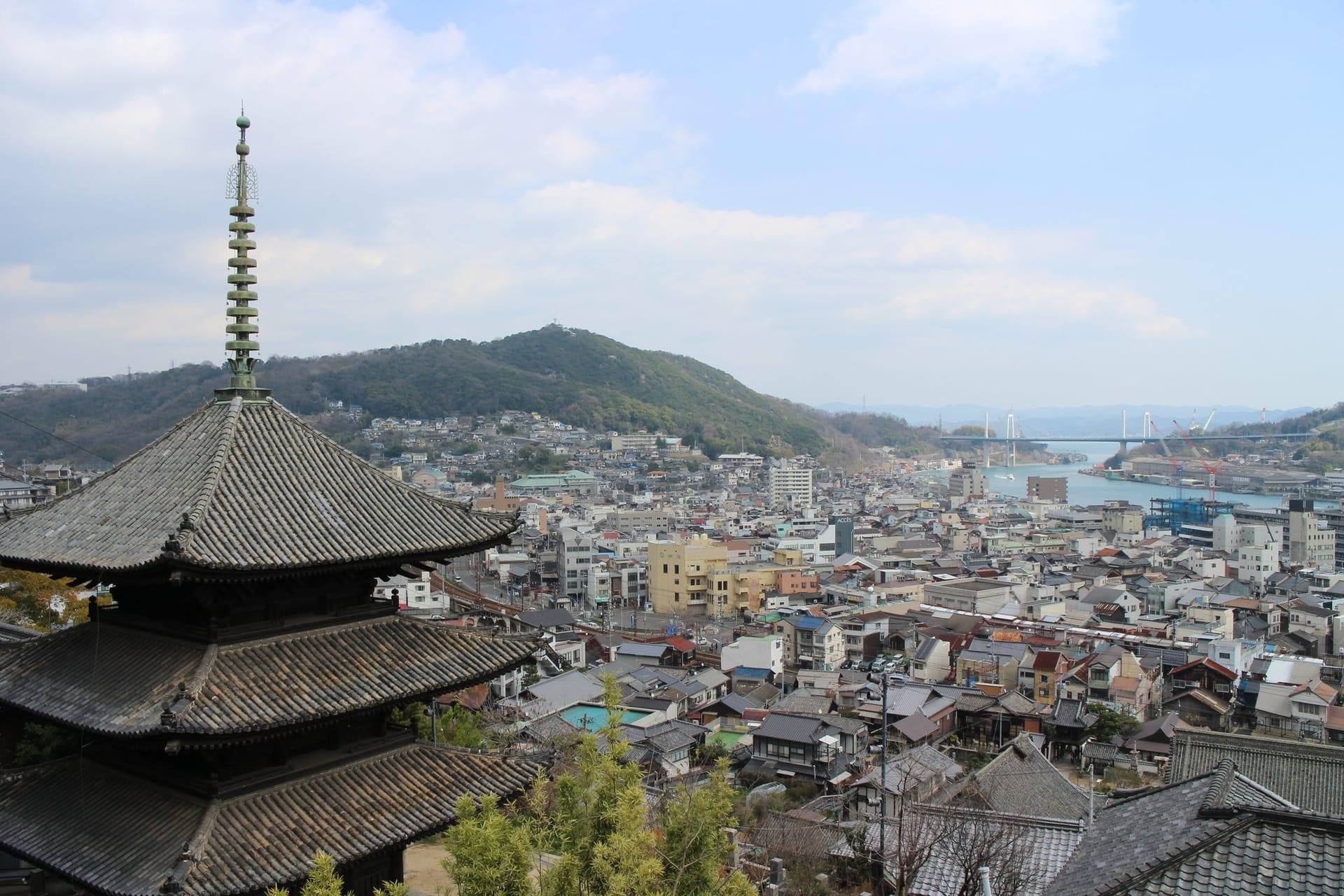
Senkoji Temple stands on the mid-slope of Mt. Daiho, about 140 meters above the port. The official temple site says it was founded in 806 by Kobo Daishi (Kukai) and later restored by Tada Mitsunaka. The vermilion main hall, built in 1686 in an unusual stage style, is also called the Red Hall. Official worship hours are 9:00 a.m. to 5:00 p.m. The temple site does not post a grounds admission fee. As of April 1, 2026, a goshuin stamp is ¥500.
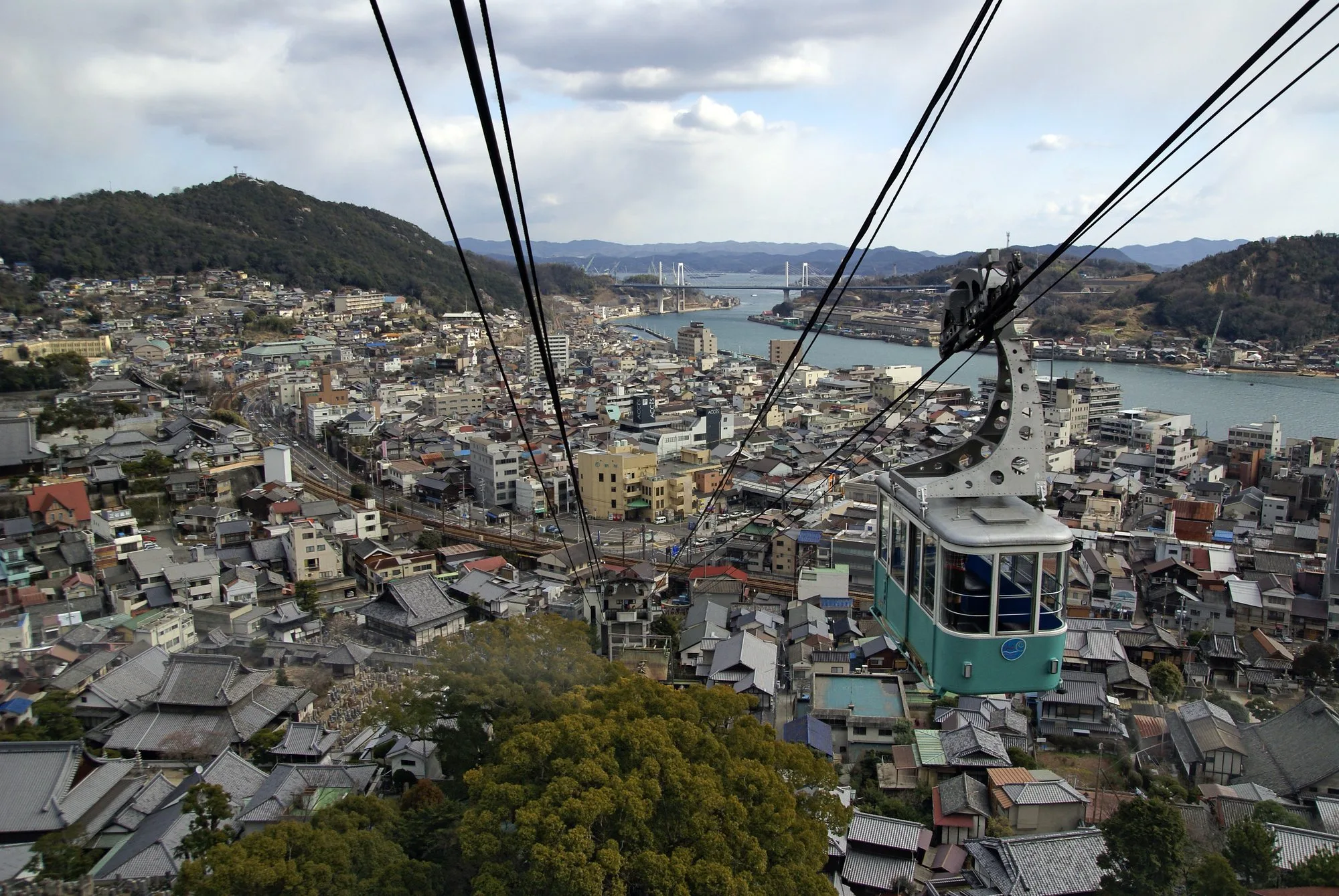
The Mt. Senkoji Ropeway is the easiest way up. The official operator and Onomichi City list these details:
Hours: 9:00 a.m. to 5:15 p.m., daily, about every 15 minutes
Ride time: about 3 minutes from the foot station to the summit station
Adult fare: ¥500 one way, ¥700 round trip
Child fare: ¥250 one way, ¥350 round trip
Service can pause in bad weather or during inspections, and hours may run longer during cherry blossom season or the Sumiyoshi fireworks
The foot station is about a 15-minute walk from JR Onomichi Station, or about five minutes by eastbound bus to the Nagaeguchi stop. Official Onomichi City pages list that short bus at ¥150 for adults and ¥80 for children. At the top you can walk to the PEAK observation deck, which is connected to the summit station, then continue to the temple in a few minutes. Senkoji Park around the summit is also a well-known cherry blossom spot in spring.
A Senkoji mountain ropeway car above the rooftops of Onomichi and the Onomichi Channel
You can also walk up or down on the stone paths. Walking down is the more common choice after the ropeway, because it leads naturally into the temple walk and Cat Alley.
The Onomichi temple walk and Cat Alley
Official Hiroshima tourism describes Onomichi as a hillside of temples and old houses. Within about two kilometers of Mt. Senkoji, it says, there are 25 temples that date from the Middle Ages. The Onomichi Seven Buddha Pilgrimage is the usual walking route, visiting seven of them:
Senkoji Temple
Jikoji Temple
Oyama-dera Temple
Tenneiji Temple
Saikokuji Temple
Jodoji Temple
Kairyuji Temple
You do not have to collect every stamp. Even a shorter walk from Senkoji down past Tenneiji's three-story pagoda gives you the slope, the roofs and a view back to the channel. The paths are steep and often uneven, so wear shoes with a grip and take the ropeway if stairs are hard on your knees.
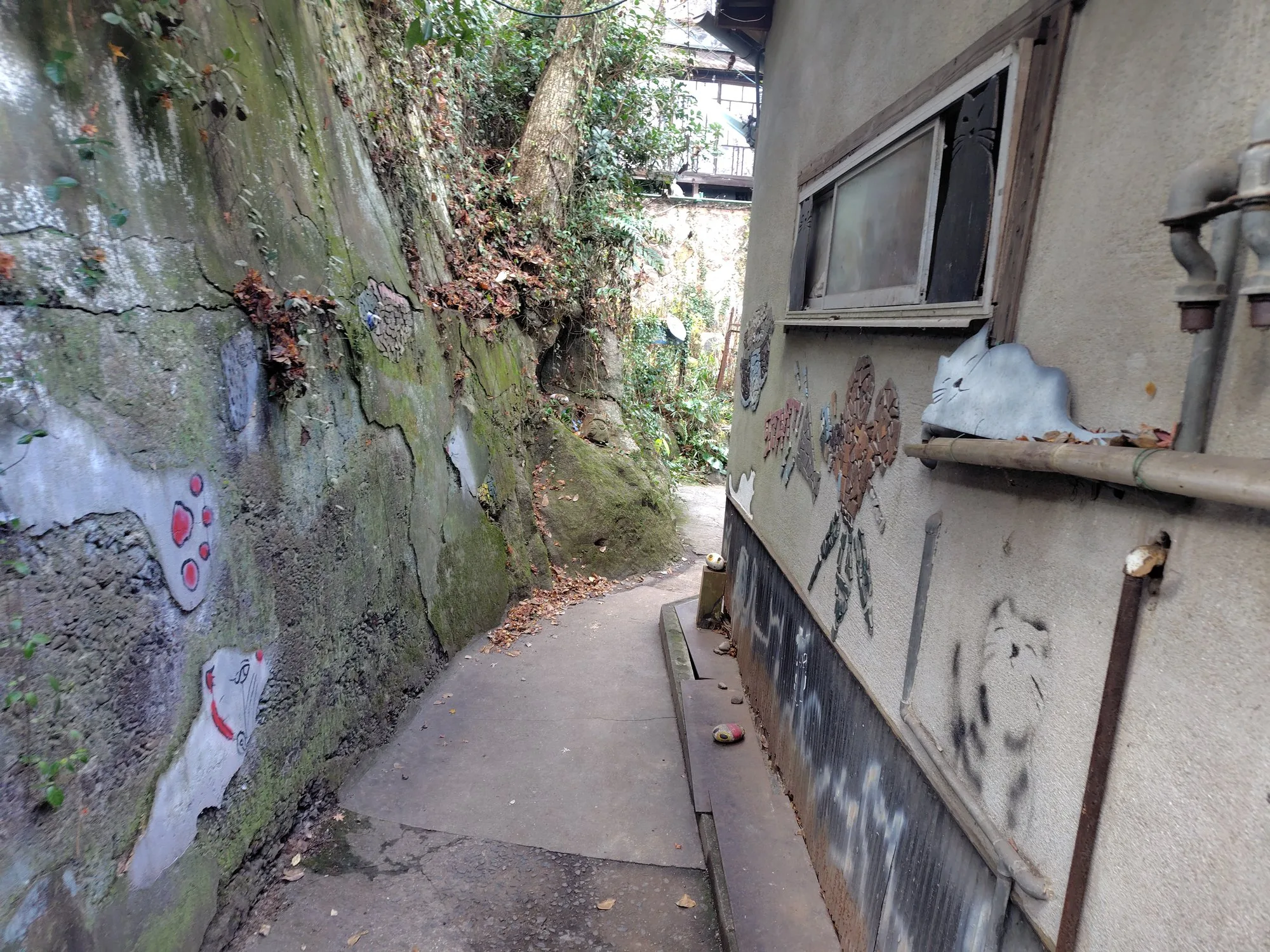
Cat Alley, or Neko-no-Hosomichi, sits on that same hillside. The official Hiroshima tourism guide describes it as a narrow path of about 300 meters, from Ushitora Shrine to the Kaiun Pagoda at Tenneiji Temple, with lucky-cat statues and a Maneki-neko museum. Onomichi's Japan Heritage site gives the length as about 200 meters and dates the name to 1998, when artist Shunji Sonoyama began placing painted lucky-cat stones along the path. Both descriptions point to the same lane. Keep to the path, watch your step, and leave the resident cats alone if they do not approach you.
Painted cats and cat artwork along the narrow Cat Alley path in Onomichi
A simple order for the hillside, with no fixed clock times, is to ride the ropeway up, walk the temple and the park, then descend through Cat Alley toward the shopping street. If the ropeway is paused, start from the foot of the hill and walk up only as far as you want.
Shimanami Kaido cycling from Onomichi
Onomichi is the Hiroshima-side start of the Setouchi Shimanami Kaido, the roughly 60-kilometer cycling route that links Onomichi to Imabari in Ehime Prefecture. Official Hiroshima tourism describes well-marked cycle paths and rental terminals along the way. You do not have to ride the whole distance on a day trip from Hiroshima. A short crossing to Mukaishima is enough if you only want a taste of the islands.
The main official rental hub is now on the first floor of the JR Onomichi Station building. Visit Shimanami, the official Shimanami Japan site, says this terminal opened in early October 2025 and replaced the older port terminal. Current official rental prices, tax included, per calendar day, are:
City bike or cross bike: ¥3,000 for adults, ¥1,000 for children 12 and under
Battery-assisted bicycle: ¥4,000
E-bike: ¥8,000, with a height minimum of 145 centimeters
Helmets: free for rental customers, and they are required
Reservations are not required, but the official site recommends them in spring, autumn, Golden Week and Obon, because popular bikes can run out. You can drop a bike at other official terminals if you ride farther than Mukaishima.
To start the Blue Line, take a ferry across the Onomichi Channel to Mukaishima. The official Onomichi City ferry fare table for the Ekimae to Tomihama route lists ¥100 for an adult and ¥110 for a bicycle. Official tourism pages describe this as a short crossing from the station area. Times and intervals can change, so check the board at the pier.
On a day trip, keep the ride short enough that you can return the bike and still catch a comfortable train back to Hiroshima. The full route to Imabari is better if you stay overnight. Weather on the bridges can be windy, and there is no need to force a long ride if the day is already full.
Onomichi ramen and the waterfront
After the hillside, the waterfront and the shopping arcade are the easy place to eat. Official Hiroshima tourism describes Onomichi ramen as a soy sauce broth made with chicken and seafood stock, finished with floating pork back fat. The Japan National Tourism Organization describes a light soy and chicken-bone soup with flat noodles and pieces of pork fat. Shops vary, from long-running counters to newer rooms, and an official 2026 Onomichi ramen map is published on the city tourism site if you want names and closing days.
The arcade, Onomichi Hondori, runs parallel to the water and is a simple walk from JR Onomichi Station. Nearby, the renovated warehouse complex ONOMICHI U2 holds shops, a cafe and a hotel, and it is a practical stop if you are close to the ferry or the cycle terminal. Official pages also mention local souvenirs such as kamaboko fish cake, Setoda lemon sweets and Onomichi canvas goods. I have not included shop prices here, because they are not posted as a single official figure.
Nearby towns if you have another day
Two other historic towns sit farther along this coast, and they are better as a second outing than as a rush after Onomichi.
Takehara, often compared with a small Kyoto-style merchant street, has a preserved district of old houses. Its bamboo lantern event, Shokei-no-Michi, is a late autumn festival, not a spring one. Official Takehara tourism lists the 2026 dates as October 31 and November 1, from 5:00 p.m. to 9:00 p.m., with free admission.
Tomonoura is a fishing port in Fukuyama, farther east. The Japan National Tourism Organization describes it as a source of scenery for Studio Ghibli's film Ponyo. Ponyo is an animated film, so Tomonoura was an inspiration, not a live-action filming site. Getting there usually means a train to Fukuyama and a local bus to the port, which is why it is a poor add-on to a full Onomichi day.
If you are choosing only one extra day from Hiroshima, Miyajima is still the closer classic, and our Itsukushima Shrine guide covers the tides, ferry and tickets.
A private, flexible day in Onomichi can be as simple as train, ropeway, a downhill walk, ramen and a short ferry ride. Leave room to skip the bike, or to sit longer at the view, if that is how the day goes.
Ohayo Travels does not currently list a set Onomichi or Hiroshima tour. If you want a custom private day that starts in Hiroshima and includes Onomichi, contact us and we can talk it through against the rest of your Japan route. You can also read more about custom private tours.
TopicsOnomichiSenkoji TempleShimanami KaidoOnomichi ramenHiroshima day tripCat Alley
Frequently Asked Questions
The fastest rail route is a Kodama train on the Sanyo Shinkansen from Hiroshima Station to Shin-Onomichi Station, about 30 to 40 minutes, then an Onomichi Bus local bus of about 15 minutes to JR Onomichi Station. Official city and bus fare tables list that bus at ¥190 for adults and ¥100 for children. The slower JR Sanyo Line goes all the way to Onomichi Station in about 90 minutes, usually with a transfer at Itozaki, and the regular adult base fare is ¥1,520. Confirm train fares on JR-West's Odekake Net before you travel.
Use JR Onomichi Station for sightseeing. It sits at the west end of the downtown waterfront, close to the shopping arcade, ferry piers and the official rental-cycle terminal. Shin-Onomichi Station is the Shinkansen stop, about three kilometers north of the waterfront, so you still need the local bus or a taxi to reach the town center.
The official Mt. Senkoji Ropeway fare is ¥500 one way or ¥700 round trip for adults, and ¥250 one way or ¥350 round trip for children. The ride takes about three minutes and usually runs from 9:00 a.m. to 5:15 p.m. daily, about every 15 minutes. Service can pause in bad weather. The foot station is about a 15-minute walk from JR Onomichi Station, or a short bus ride to Nagaeguchi.
The official Senkoji Temple site lists worship hours as 9:00 a.m. to 5:00 p.m. It does not post a grounds admission fee. As of April 1, 2026, a goshuin stamp is ¥500. The temple stands on the mid-slope of Mt. Daiho, about 140 meters above the port, a short walk from the ropeway summit station.
You can start the route from Onomichi, but the full ride to Imabari is about 60 kilometers and is a lot to add to the trains. A short ferry crossing to Mukaishima is a more realistic day-trip option. The official rental terminal is on the first floor of the JR Onomichi Station building. Current official prices start at ¥3,000 a calendar day for a city or cross bike. The official city ferry fare table lists ¥100 for an adult and ¥110 for a bicycle on the Ekimae to Tomihama route.
Official Hiroshima tourism describes Onomichi ramen as a soy sauce broth made with chicken and seafood stock, finished with floating pork back fat. The Japan National Tourism Organization describes a light soy and chicken-bone soup with flat noodles and pieces of pork fat. You will find shops along the waterfront and in the Onomichi Hondori shopping arcade, close to JR Onomichi Station.