How Much Does a Trip to Japan Cost? A $6,000 Two-Week Budget
How much does a trip to Japan cost for two weeks? For one person, $6,000 can cover a mid-range trip including flights. Here is a 2026 breakdown with official prices.
How much does a trip to Japan cost if you have $6,000 and two weeks to spend? For one person flying from the United States, that amount can cover a mid-range trip, including airfare, if you plan hotels and trains with some care. A couple can also make $6,000 work if they share a room and the airfares are reasonable, but two expensive peak-season tickets will squeeze the days on the ground. The figures below were checked on November 11, 2026. Yen amounts are converted at about ¥159 to the dollar, based on the Mitsubishi UFJ Bank mid-rate of ¥158.87 that day.
How much does a trip to Japan cost for two weeks?
The Japan Tourism Agency's 2025 survey is the best official starting point. Visitors from the United States who came for sightseeing or leisure spent ¥350,133 per person on the ground, over an average stay of 10.7 nights. That figure excludes international flights. At ¥159 to the dollar, it is about $2,200.
Broken down, those travelers spent about ¥151,000 on lodging, ¥70,000 on food, ¥42,000 on transport inside Japan, ¥16,000 on sightseeing and entertainment, and ¥72,000 on shopping. The full table is in the agency's calendar-year 2025 report.
A two-week trip is a little longer than that average stay. If you spent at the same daily rate for 14 nights, the on-the-ground total would come to about ¥458,000, or roughly $2,880. Add a round-trip flight and you are often still well under $6,000 per person. In other words, $6,000 is enough for one mid-range traveler, with room left for a nicer hotel night, a guided day, or extra shopping.
A sample $6,000 budget for 14 nights
Here is a planning table for one person, using the official averages above, scaled to 14 nights, plus a placeholder for airfare. Your own numbers will differ, especially the flight.
Airfare, economy, round trip: varies, $800 to $1,600, sometimes more
Lodging, 14 nights: about ¥198,000 (about $1,245)
Food: about ¥91,000 (about $575)
Transport inside Japan: about ¥55,000 (about $345)
Sightseeing: about ¥20,000 (about $125)
Shopping: about ¥94,000 (about $590)
On-the-ground subtotal: about ¥458,000 (about $2,880)
Total with a $1,200 flight: about $4,080
All dollar figures use a rate of about ¥159 to the dollar.
The lodging, food, transport, sightseeing and shopping lines are the official 2025 US leisure averages, scaled from 10.7 nights to 14 nights. They are a guide, not a quote.
A couple sharing one $6,000 budget should subtract both airfares first. If those tickets come to $2,400, about $3,600, or ¥572,000, remains for two people over 14 nights. That is about ¥41,000 per day for the pair, or about ¥20,400 per person. japan-guide's mid-range daily band for two travelers, not counting long-distance trains, is ¥19,000 to ¥46,000. A shared business hotel, lunch sets and point-to-point train tickets will usually fit. Two 14-day Japan Rail Passes would not, because those alone cost ¥160,000 online.
If you want a much tighter daily spend, our guide to traveling Japan on $50 a day covers hostels, convenience-store meals and free sights. This post is about a mid-range two-week total, not that tighter daily target.
What airfare does to the total
Flights are the line that moves the most. A sale fare from the West Coast can dip under $800 round trip, while a peak-week ticket from the East Coast can pass $1,500. There is no single official average that holds for every city and season, so check current fares first, then see how much of the $6,000 is left for the trip itself.
The International Tourist Tax is ¥3,000 per departure, and it is usually built into the airline ticket, as JNTO explains. Do not add it again if your fare already includes it.
If you land at Narita, the Keisei Skyliner to Ueno or Nippori is ¥2,470 one way, or ¥2,465 with an IC card. Haneda is closer to central Tokyo, so the airport train is usually cheaper. Budget for a ride at both ends of the trip.
Hotels, ryokan and the Tokyo lodging tax
Lodging is the largest cost on the ground. In the 2025 survey, US leisure visitors spent about ¥14,100 per person per night. For 14 nights, that comes to about ¥198,000, or $1,245.
japan-guide's budget page gives useful room ranges, not counting breakfast unless it is included. Mid-range business hotels and simple ryokan often run ¥10,000 to ¥20,000 for a single and ¥12,000 to ¥30,000 for a double. Hostel dorms can be under ¥5,000 per person. A kaiseki dinner at a ryokan raises the price quickly, often to ¥15,000 to ¥40,000 per person with meals. For more on those stays, see our 2026 ryokan guide.
Tokyo adds a lodging tax on the room rate before consumption tax, per person, per night. As of November 11, 2026, the Tokyo Metropolitan Government charges nothing under ¥10,000, ¥100 from ¥10,000 to ¥14,999, and ¥200 at ¥15,000 and above. From April 1, 2027, Tokyo will switch to a 3 percent tax on rooms of ¥13,000 or more. Osaka and Kyoto have their own lodging taxes, so read the rate on your booking.
Book early for late March, Golden Week and mid-August. Those weeks can push a mid-range room well above the averages here.
Trains, the Japan Rail Pass and IC cards
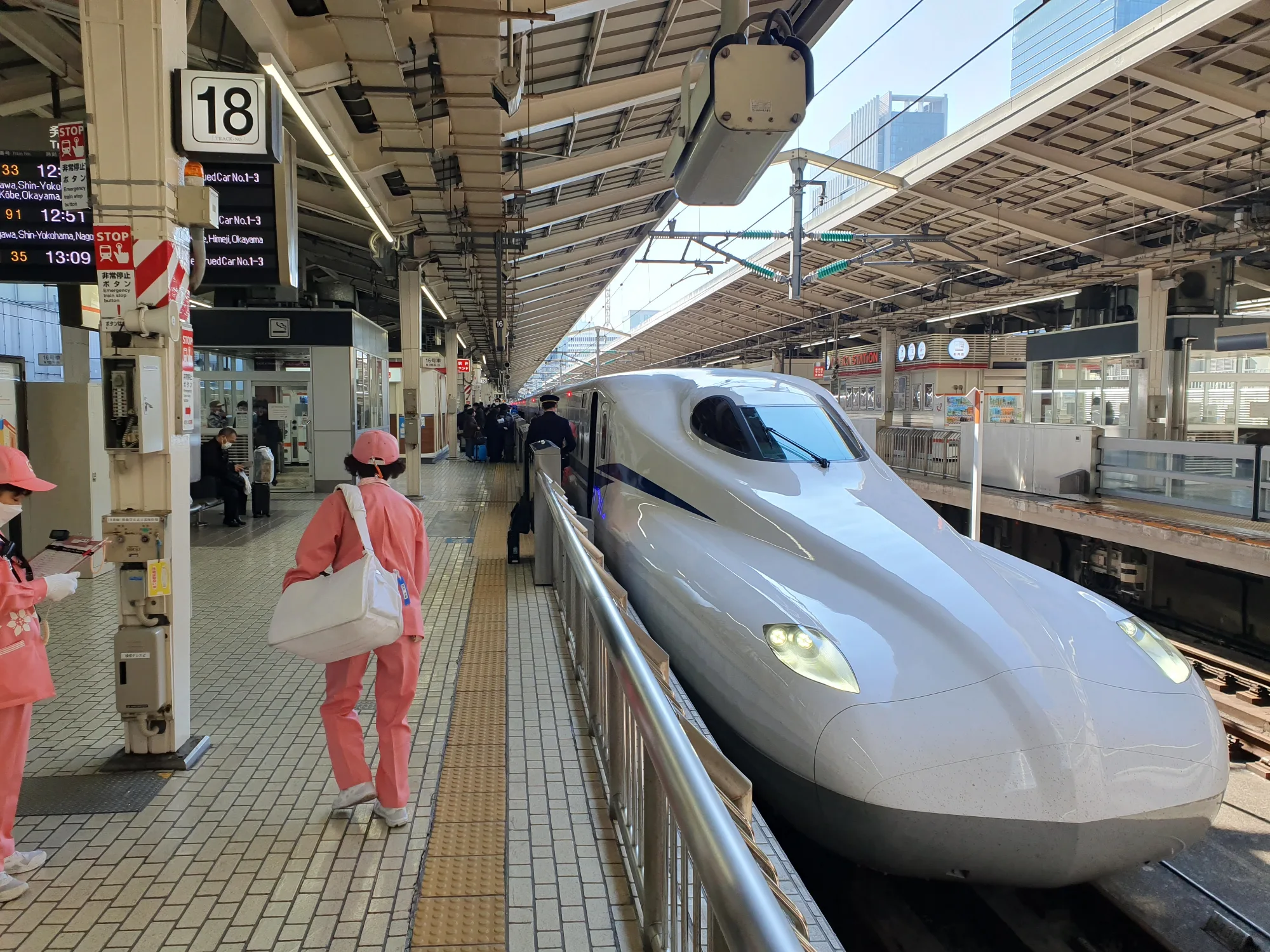
Tokaido Shinkansen bullet train at a platform in Tokyo Station
The Japan Rail Pass is sold by the JR Group. On the official site, a 7-day Ordinary adult pass is ¥50,000, a 14-day pass is ¥80,000, and a 21-day pass is ¥100,000. Those are the online prices. From October 1, 2026, the same passes cost more if you buy an exchange order at an overseas JR-designated agency: ¥53,000, ¥84,000 and ¥105,000. Buy online while that lower price holds, because JR has said the freeze is only for a limited time.
The 14-day pass at ¥80,000, about $503, is easy to overspend on. A reserved ordinary seat on a Nozomi from Tokyo to Kyoto is ¥14,170 one way in the regular season, according to JR Central's published fares. A round trip is ¥28,340, about $178. For a simple Tokyo-Kyoto-Osaka loop, point-to-point tickets usually cost less than the 14-day pass. A 7-day pass can still make sense if you pack the long-distance rides into one week. Add up your actual JR fares before you buy.
The pass also does not cover Nozomi or Mizuho trains unless you buy a separate ticket for those services.
For city trains and buses, get an IC card. Welcome Suica, sold by JR East for visitors, has no deposit. You choose a starting balance of ¥1,000, ¥2,000, ¥3,000, ¥4,000, ¥5,000 or ¥10,000. It is valid for 28 days from the day you buy it, which covers a two-week trip, and unused balance is not refunded. A regular Suica card requires a ¥500 deposit, and the remaining balance can be refunded. Welcome Suica can be topped up with cash only.
If you will ride Tokyo Metro and Toei Subway often for a few days, the Tokyo Subway Ticket is ¥1,000 for 24 hours, ¥1,500 for 48 hours and ¥2,000 for 72 hours, for adults.
Food costs for two weeks
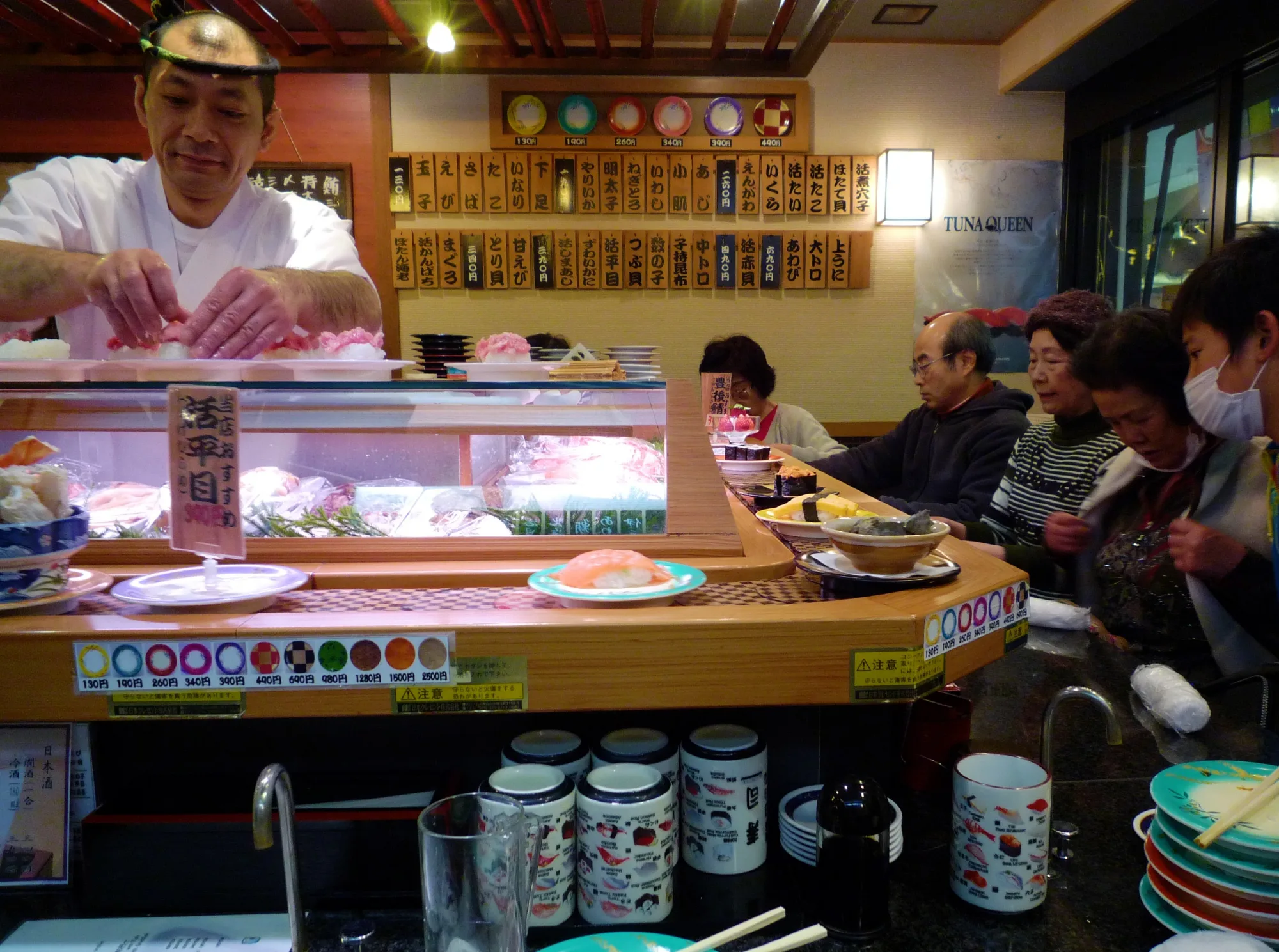
Plates of sushi on a conveyor belt at a kaiten sushi restaurant in Tokyo
US leisure visitors spent about ¥69,700 on food over 10.7 nights in 2025, or about ¥6,500 a day. Over 14 nights, that scales to about ¥91,000, or $575. That is a comfortable mix of convenience-store breakfasts, lunch sets and regular dinners, not daily omakase.
A lunch set at a neighborhood restaurant often lands around ¥1,000 to ¥1,500. A bowl of ramen is commonly in that same band. Convenience stores sell onigiri, sandwiches and bento at lower prices, and they are a normal part of how people eat while traveling. Conveyor-belt sushi and izakaya dinners cost more, especially with drinks. For dishes worth seeking out, see our guide to local foods in Japan.
If you want to spend less, make lunch the main sit-down meal, when many places still offer a set menu, and keep dinner simpler. If you want to spend more, one special dinner can be built into the $6,000 per-person budget without much strain.
Sightseeing and when a private tour fits
Many shrines are free, and temple admission is often ¥500 to ¥1,000. The official US leisure average for sightseeing and entertainment was about ¥15,600 per trip in 2025, or about ¥1,500 a day. Theme parks and some observation decks cost more. Osaka Castle, for example, is ¥1,200 for adults.
Consumption tax is 10 percent on most goods and meals, and 8 percent on food you take away. Posted restaurant prices usually include it.
Tipping is not expected in Japan. You will not need a line in the budget for it. Our etiquette guide covers the customs that matter more than money.
Travel insurance is not in the official spending averages. Set some money aside for it before you go, because visitors pay the full cost of medical care.
International ATM fees vary by card and bank. Japan Post Bank and Seven Bank ATMs are widely used by visitors, but your own bank may add a fee.
Souvenirs can outrun the ¥72,000 shopping average if you are not careful.
$6,000 per person can fall short if you travel in the most expensive hotel weeks, stay in high-end ryokan with meals, or book flights at the last minute in peak season. It is also not a comfortable budget for a family of four unless you count $6,000 per person.
$2,000 for two weeks, a question that comes up often, can cover a careful on-the-ground trip if flights are paid separately. At ¥159, $2,000 is about ¥318,000, or about ¥22,700 a day over 14 nights. That sits in japan-guide's mid-range band for one person, leaving little room for long-distance trains or shopping. It is not enough if the $2,000 also has to cover airfare.
If you would like help planning the days that are hardest to do on public transit, browse our tours or get in touch. We can work around the budget you actually have.
TopicsJapan travel budgetJapan trip costTwo-week Japan tripJapan Rail PassTravel planning
Frequently Asked Questions
Official 2025 data shows US leisure visitors spent ¥350,133 per person on the ground over 10.7 nights, about $2,200, not including flights. Scaled to 14 nights at the same daily rate, that is about $2,880, so a typical mid-range two-week trip plus airfare often lands under $6,000 per person.
Yes for one mid-range traveler including airfare, as long as hotel weeks are not the most expensive of the year and the flight is not a last-minute peak fare. A couple sharing one $6,000 budget can also manage if they share a room and the two flights are reasonably priced.
In this guide, yes: $6,000 is treated as the full trip cost for one person, including airfare. Subtract tickets first, then compare what remains with the on-the-ground figures. The Japan Tourism Agency averages do not include international flights.
Often no, for a simple Tokyo-Kyoto-Osaka trip. The official online price is ¥80,000, while a regular-season Nozomi reserved seat from Tokyo to Kyoto is ¥14,170 one way. Add up your JR fares first. A 7-day pass at ¥50,000 can be a better fit if you group the long-distance rides into one week. Buy on the official site, where the price is still lower than at overseas agencies.
You do not need to carry the whole budget in cash. Cards work in many hotels and restaurants, and an IC card covers trains, buses and convenience stores. Keep some yen for smaller restaurants, temple stalls and topping up a Welcome Suica, which accepts cash only. Unused Welcome Suica balance is not refunded, so do not load more than you expect to spend.
It can cover a careful 14-night stay if flights are paid separately. $2,000 is about ¥318,000, or about ¥22,700 a day, which fits a mid-range daily spend but leaves little for long-distance trains or shopping. It is not enough if the $2,000 also has to cover airfare.