Best Places to Experience Autumn Foliage in Yokohama: A 2026 Guide
Plan autumn foliage in Yokohama for 2026: peak late November to early December, top parks, events, transit, and how to pair leaves with the harbor and Chinatown.
If you are hunting for the best autumn foliage in Yokohama, you do not need to leave the city for a long mountain trip. Maples, ginkgo, and harbor views all sit within easy transit of Yokohama Station, and the peak usually lands later than in cooler highland spots. This guide covers where to go, when colors tend to peak, how to move between parks, and which autumn events are worth building into a day.
Yokohama sits just south of Tokyo, so you can treat foliage viewing as a half-day add-on or a full day that also includes Chinatown, the waterfront, and a museum or two. Temperatures in autumn often sit around 10 to 20 degrees Celsius (50 to 68 degrees Fahrenheit), which makes walking pleasant without summer humidity. Bring a light layer for evenings by the bay.
When to see autumn leaves in Yokohama
Peak color in Yokohama typically falls between late November and early December. Exact timing shifts with the weather each year, so check local foliage reports a week or two before you travel. Aiming for the last week of November is a solid default; arriving a few days early gives you room to adjust if a cold snap or warm spell moves the peak.
Across Japan, autumn color often runs from early November into early December, with cooler inland and mountain areas turning first. In Yokohama the show usually lasts about three to four weeks once it starts. Maple trees often color later than ginkgo, so if you visit more than one park you can catch different stages of the season in the same trip.
For photos and thinner crowds, go early in the morning or late in the afternoon. Weekdays are quieter than weekends at Sankeien Garden and along the waterfront. If you only have a Saturday, start at the garden when it opens and save Minato Mirai or Chinatown for later.
Top locations for autumn foliage
These four spots cover traditional gardens, bayfront walking, a local forest park, and a modern skyline backdrop. You can combine two or three in one day if you keep transit simple.
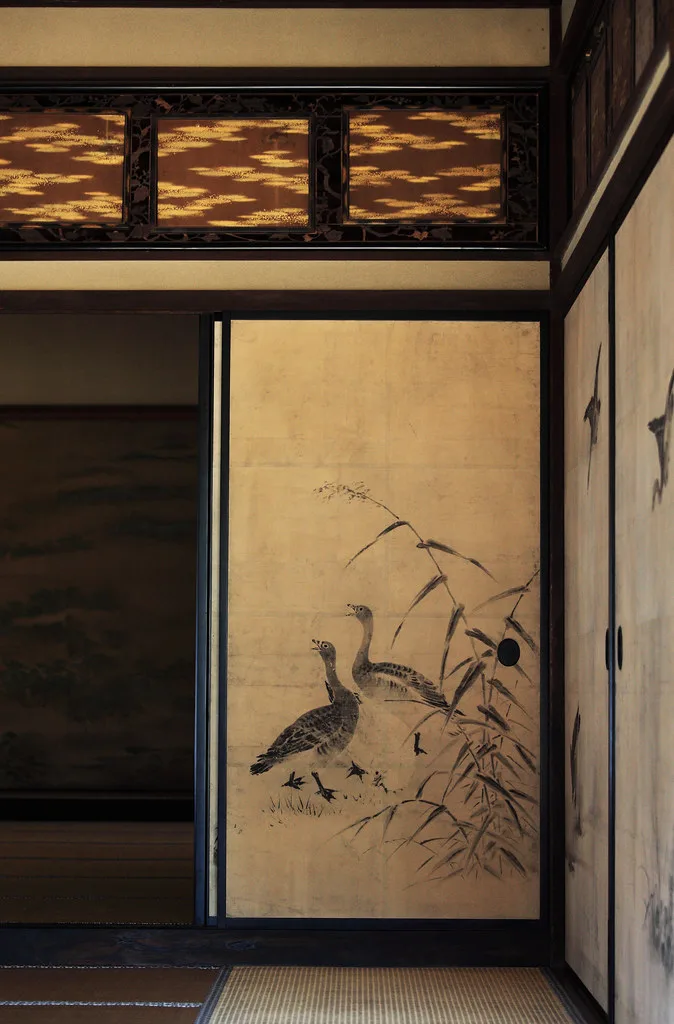
Sankeien Garden: This is the strongest single stop for classic Japanese garden scenery with autumn leaves. Historic buildings sit among ponds, bridges, and carefully planted trees, so you get foliage plus architecture in one ticket. The garden is generally open from 9:00 AM to 5:00 PM, and admission is about 700 JPY (around 5 USD). Weekdays feel calmer; weekends draw more visitors during peak color. From Yokohama Station, plan on roughly a 20-minute bus ride. Give yourself at least 90 minutes so you are not rushing the paths.
Autumn maple leaves and traditional buildings at Sankeien Garden in Yokohama
Autumn color among historic buildings at Sankeien Garden, Yokohama. Photo: TANAKA Juuyoh / Flickr (CC BY 2.0).
If you visit in November, check whether the chrysanthemum exhibition is on. The displays are usually included with garden admission and pair well with the leaf season.
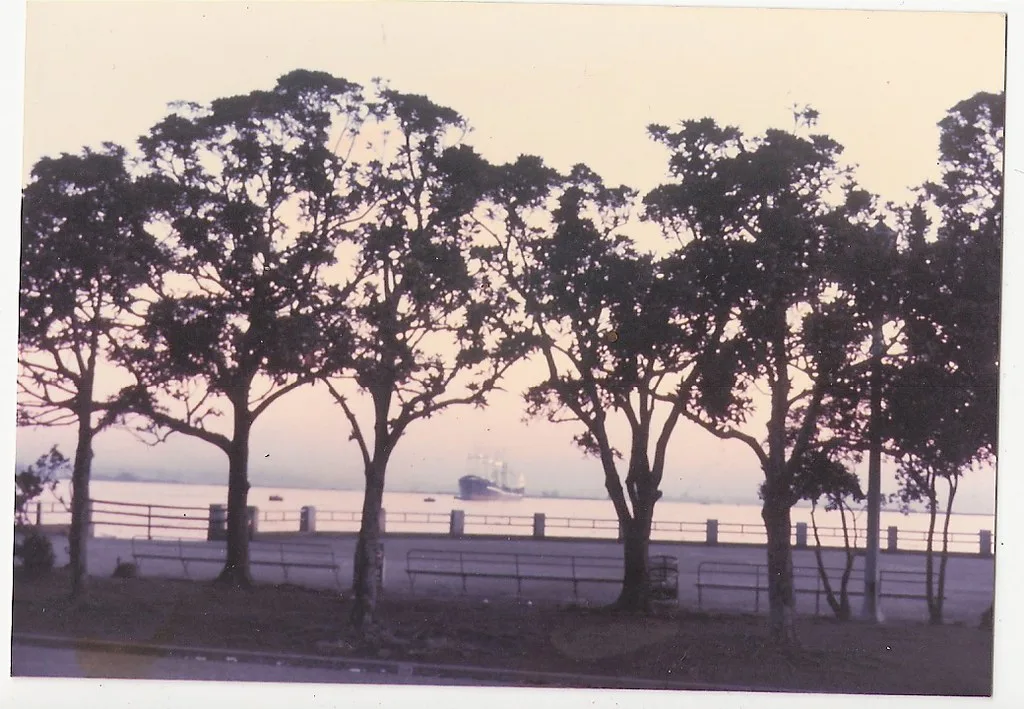
Yamashita Park: This long waterfront park runs along the harbor and mixes lawn, paths, and bay views with autumn trees. It is popular with locals and visitors on weekends, and it works well for a slow walk or a picnic if the weather is mild. Motomachi-Chukagai Station is about a three-minute walk away, so you can pair the park with Chinatown or the nearby Red Brick Warehouse without much extra transit.
Yokohama harbor waterfront with autumn trees near Yamashita Park
Harbor-side paths near Yamashita Park and Yokohama Bay. Photo: roberthuffstutter / Flickr (CC BY 2.0).
Negishi Forest Park: Locals use this park for space to walk and breathe away from the densest tourist blocks. In autumn the wooded sections turn red and gold, and there is room for photography without standing shoulder to shoulder. It is about a 15-minute walk from Negishi Station on the JR Negishi Line. If you want a quieter foliage stop after Sankeien or the waterfront, this is a practical add-on.
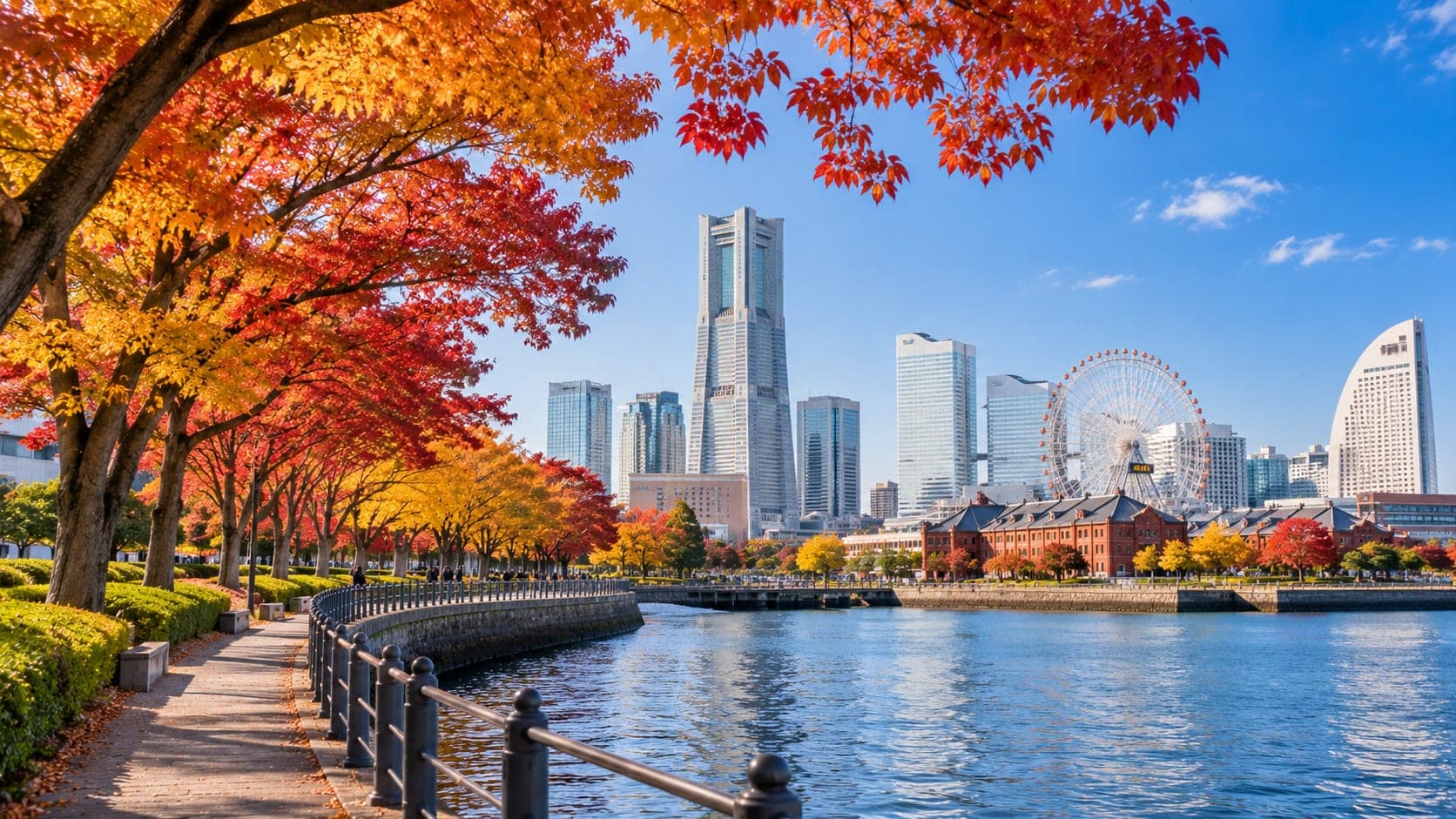
Minato Mirai 21: Here the leaves sit against towers, shops, and the bay rather than against temple roofs. The contrast is the point. For an elevated look over the area, try the rooftop garden at Queen's Square. You can walk between many Minato Mirai stops, duck into cafes when you need a break, and still catch sunset light on the water if you time it right.
Events and festivals during autumn
Foliage is only part of Yokohama's autumn calendar. A few events are easy to combine with leaf viewing if your dates line up.
Yokohama Oktoberfest: Usually runs from late September into early October around the Red Brick Warehouse area, a short walk from Bashamichi Station. Expect German beer, food stalls, and live music. It lands before peak maple season, so treat it as an early-autumn bonus rather than a foliage event.
Yokohama Jazz Promenade: Early October brings outdoor and indoor jazz sets across the city. Venues shift year to year, so check the schedule and map a route that fits your hotel or station. It is a good evening plan after a daytime park walk.
Chrysanthemum Exhibition at Sankeien Garden: Typically held in November and included with garden admission. If your trip sits in that window, you get both chrysanthemum displays and autumn trees in the same visit.
Getting around Yokohama for foliage viewing
Yokohama's train and bus network makes park hopping realistic without a car. The JR Keihin-Tohoku and Negishi Lines cover several useful stations, including Negishi for the forest park and Motomachi-Chukagai for Yamashita Park and Chinatown. Sankeien is the one that usually needs a bus from central Yokohama; from Yokohama Station that ride is about 20 minutes in normal traffic.
Consider a Yokohama Tourist Pass if you will ride city buses and trains for one or two days. Prices often fall in the 500 to 700 JPY range (about 3.50 to 5 USD), and you can buy one at major stations. Walking works well once you are in Minato Mirai or along Yamashita Park, where attractions sit close together. Bicycle rental is another option if you prefer to cover the waterfront at your own pace.
From Tokyo, Yokohama Station is a short JR ride, so a foliage day pairs easily with a Tokyo base. If you would rather not juggle buses and timing yourself, a private guide can stitch Sankeien, the harbor, and a food stop into one route. The Yokohama Private Tour: Explore with a Local Guide is built for that kind of day.
Tips for photographing autumn foliage
Soft morning or late-afternoon light brings out warm leaf tones without harsh midday contrast. A polarizing filter can cut glare on water and wet leaves after rain. Try including a pond reflection at Sankeien, or frame harbor paths with branches in the foreground at Yamashita Park so the photo has depth instead of a flat wall of color.
Give yourself time to walk a loop rather than shooting from the first viewpoint. Crowds thin if you step a few minutes off the main path. If photography is a priority, a weekday visit during peak week is worth the schedule shuffle.
Why autumn is a good time to visit
Autumn weather is easier for all-day walking than midsummer heat, and many parks feel less crowded than during cherry blossom season. Seasonal foods show up in markets and station shops: roasted sweet potatoes, chestnuts, and limited sweets tied to the harvest months. Evenings cool down by the bay, so a light jacket helps after sunset.
After the parks, these stops fill gaps in weather or energy without a long detour.
Yokohama Chinatown: Dense, walkable, and full of places to eat. It sits close to Yamashita Park, so you can finish a waterfront walk with dumplings or a full meal. Go hungry; portions and snack options are easy to overdo.
Cup Noodles Museum: A hands-on indoor stop that works well if rain or wind cuts your outdoor time short. Families and noodle fans both tend to enjoy it, and it sits in the Minato Mirai area.
Red Brick Warehouse: Shops, restaurants, and exhibitions inside restored brick buildings by the harbor. The exterior looks sharp against autumn trees nearby, and the site is a short walk from Bashamichi Station and Yamashita Park. Oktoberfest often uses this area earlier in the season.
Plan your Yokohama autumn day
A simple foliage-focused day could look like this: morning at Sankeien Garden (and the chrysanthemum exhibition if it is on), midday transit back toward the harbor, afternoon at Yamashita Park and Minato Mirai, then Chinatown for an early dinner. Swap in Negishi Forest Park if you want more green space and fewer souvenir streets. Keep an eye on sunset times in late November; daylight ends earlier than in summer, and harbor photos benefit from that last hour of light.
If you are based in Tokyo and want more than one day for the coast south of the capital, the Kamakura & Yokohama 2-Day Private Tour from Tokyo covers both cities at a comfortable pace. For a single Yokohama day with a local guide handling transit and timing, start with the Yokohama Private Tour: Explore with a Local Guide, or browse our tours and contact us if you want a custom foliage-focused route.
Sankeien Garden is the top classic garden stop. Yamashita Park gives harbor-side walking with autumn trees. Negishi Forest Park is quieter and popular with locals. Minato Mirai 21 pairs foliage with a modern skyline; the Queen's Square rooftop garden is a useful viewpoint.
Peak color usually falls between late November and early December. The last week of November is a practical target, but check local foliage reports close to your dates because weather shifts the timing each year.
Once color starts, it typically holds for about three to four weeks from late November into early December. Maples and ginkgo often peak at slightly different times, so visiting more than one park can stretch what you see.
Yokohama Oktoberfest usually runs from late September to early October near the Red Brick Warehouse. Yokohama Jazz Promenade is in early October. Sankeien Garden often hosts a chrysanthemum exhibition in November, included with garden admission.
Pair leaf viewing with Yokohama Chinatown for food, the Cup Noodles Museum for an indoor break in Minato Mirai, and the Red Brick Warehouse for shops and harbor atmosphere near Yamashita Park.
Sankeien is about a 20-minute bus ride from Yokohama Station. Hours are generally 9:00 AM to 5:00 PM, and admission is about 700 JPY (around 5 USD). Weekdays are quieter during peak foliage.
Private tours for this destination
Ready to see it in person? These private tours cover the places in this guide.