Miyama Kyoto is home to Kayabuki no Sato, a thatched-roof village in Nantan. This guide covers official museum fees, train and bus access, parking, and overnight stays.
Miyama Kyoto sits in the mountains of Nantan, in Kyoto Prefecture, about fifty kilometers north of the city. The place most visitors come to see is Kayabuki no Sato, the thatched-roof village in the Kita district of Miyama-cho. There is no ticket gate at the entrance, and most of the houses are still private homes.
I checked official pages from the Kyoto Miyama Tourism Association, its 2026 train and bus timetable (dated March 23, 2026), and the Japan National Tourism Organization (JNTO) on November 19, 2026. Hours, fees, and bus times can change, so confirm the day's details on the association's site before you go.
Kayabuki no Sato
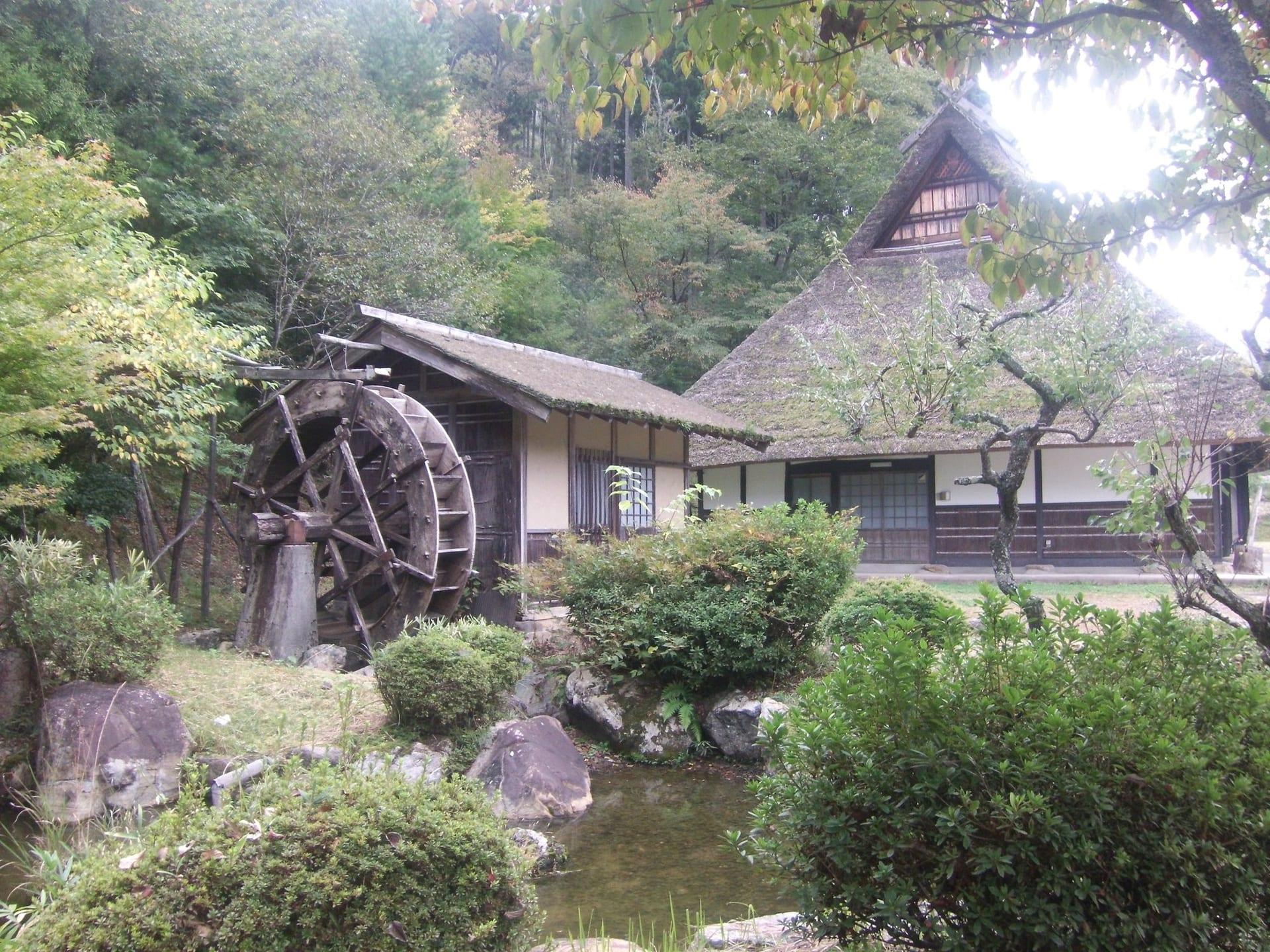
The association's Japanese page on the village describes Kita as a settlement of 50 households, 39 of them with thatched roofs. In December 1993 the district was designated a National Important Preservation District for Groups of Traditional Buildings. JNTO, on its Miyama page, calls Kayabuki no Sato the largest concentration of thatched-roof houses in Japan, and notes that most of Miyama's houses remain private residences, unlike many other thatched settlements that have been turned over to display use.
The official address is Kita, Miyama-cho, Nantan-shi, Kyoto 601-0712. The nearest Nantan City Bus stop is Kita. You can walk the lanes, visit a small museum, stop at a cafe, or, if rooms are open, stay the night in a thatched house. You cannot wander into someone's yard just because the roof is old and photogenic.
The association is direct about this: most houses are private homes, so respect residents' privacy while you walk. Stay on the public paths, keep your voice down, and do not treat doorways, gardens, or laundry lines as a set. If you want a closer look at how a thatched house is built, go into the folklore museum, which is set up for visitors.
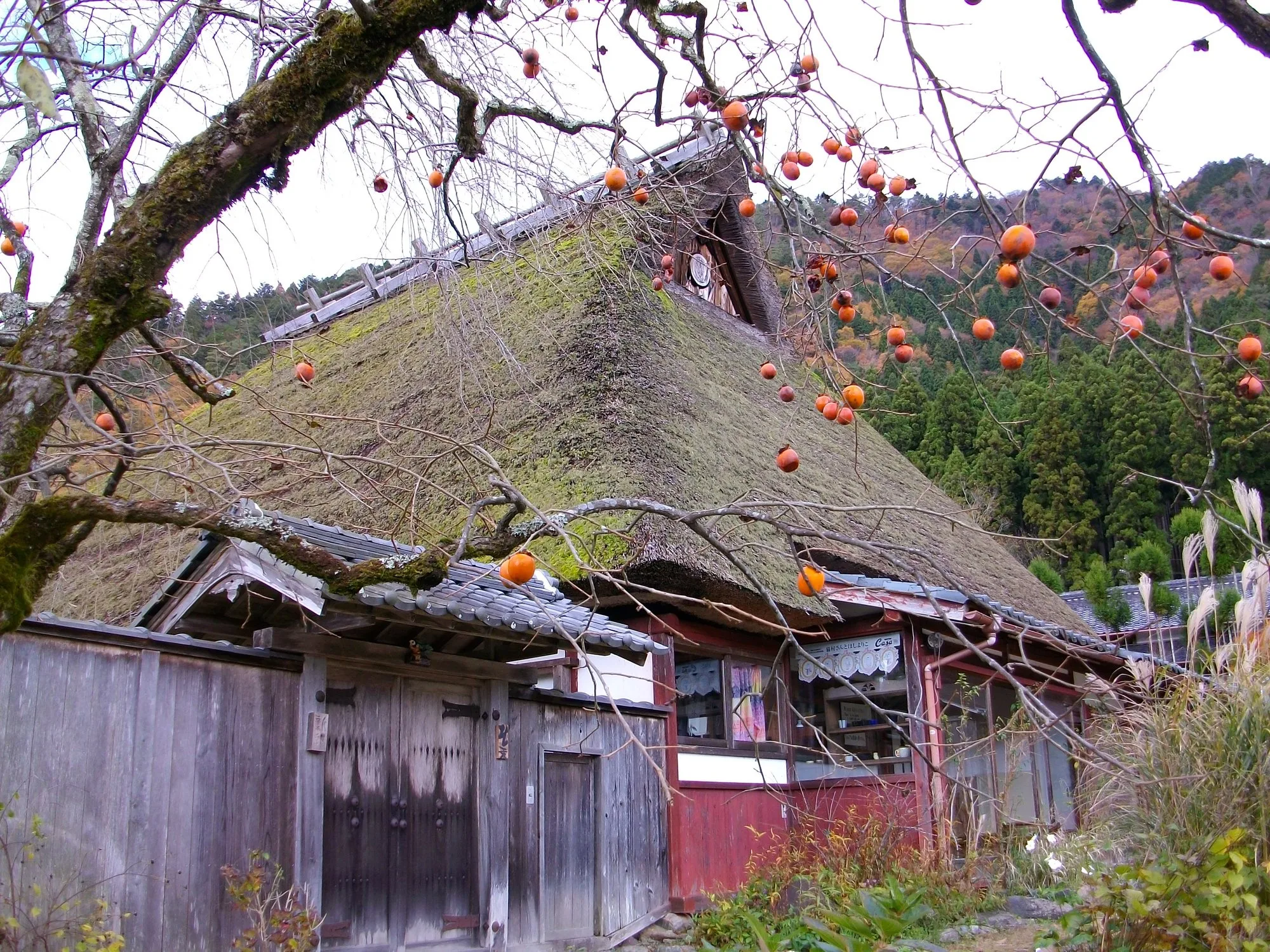
A thatched house in Kayabuki no Sato with persimmons hanging on the trees
The village also has Chii Hachiman Shrine, which the association describes as the main shrine of nine surrounding hamlets, including the thatched village. The shrine precinct is a Kyoto Prefecture heritage site, and the main building is a Kyoto Prefectural Cultural Property. It is a short stop, not a separate destination, and it is still a working shrine.
Cafes and small restaurants sit among the houses. Restaurant Kitamura serves handmade soba made with buckwheat grown in Miyama. Hours and closing days vary by shop, and the association updates them on the official village page, including temporary closures. I am not repeating a full shop list here, because those hours move.
Miyama Folklore Museum
The one indoor stop that is clearly set up for visitors is the Miyama Folklore Museum. The official Japanese museum page says the property is made up of a main house, a barn, and a storehouse. The farmhouse is about 200 years old and has been used as a museum since 1993. In May 2000 the main house and barn burned; they were later restored from detailed records of the original building.
This is where you can go inside a thatched house and, as both the association and JNTO note, climb to the attic to see the underside of the thatch. Traditional tools and household items are on display. The official address is 15 Kitanakamaki, Miyama-cho, Nantan-shi, Kyoto 601-0712, inside the village. The Kita bus stop is about a five-minute walk. The museum has no parking of its own; if you come by car, use the village lot, about an eight-minute walk.
Official hours are 10:00 a.m. to 4:00 p.m. The museum is closed on Mondays, except when Monday is a national holiday, in which case it stays open Monday and closes Tuesday. It also closes for the Obon holiday, the New Year holiday, and a temporary closure on December 8, 2026.
Admission, from the same official Japanese page, is ¥300 for adults (high school age and older). Junior high students and younger enter free when they are with an adult. The English village page phrases the child ticket as ages 15 and under, free with a paying adult. Pay at the museum and follow the posted signs.
A short walk away is the Little Indigo Museum, a private museum run by the indigo dyer Hiromichi Shindo. The official listing puts admission at ¥300 per person, with hours from 11:00 a.m. to 5:00 p.m. It is closed Wednesday, Thursday, and Friday, though it opens on public holidays. The association also lists a temporary closure on November 28 and 29, 2026, and a winter close from December 23, 2026, to February 28, 2027.
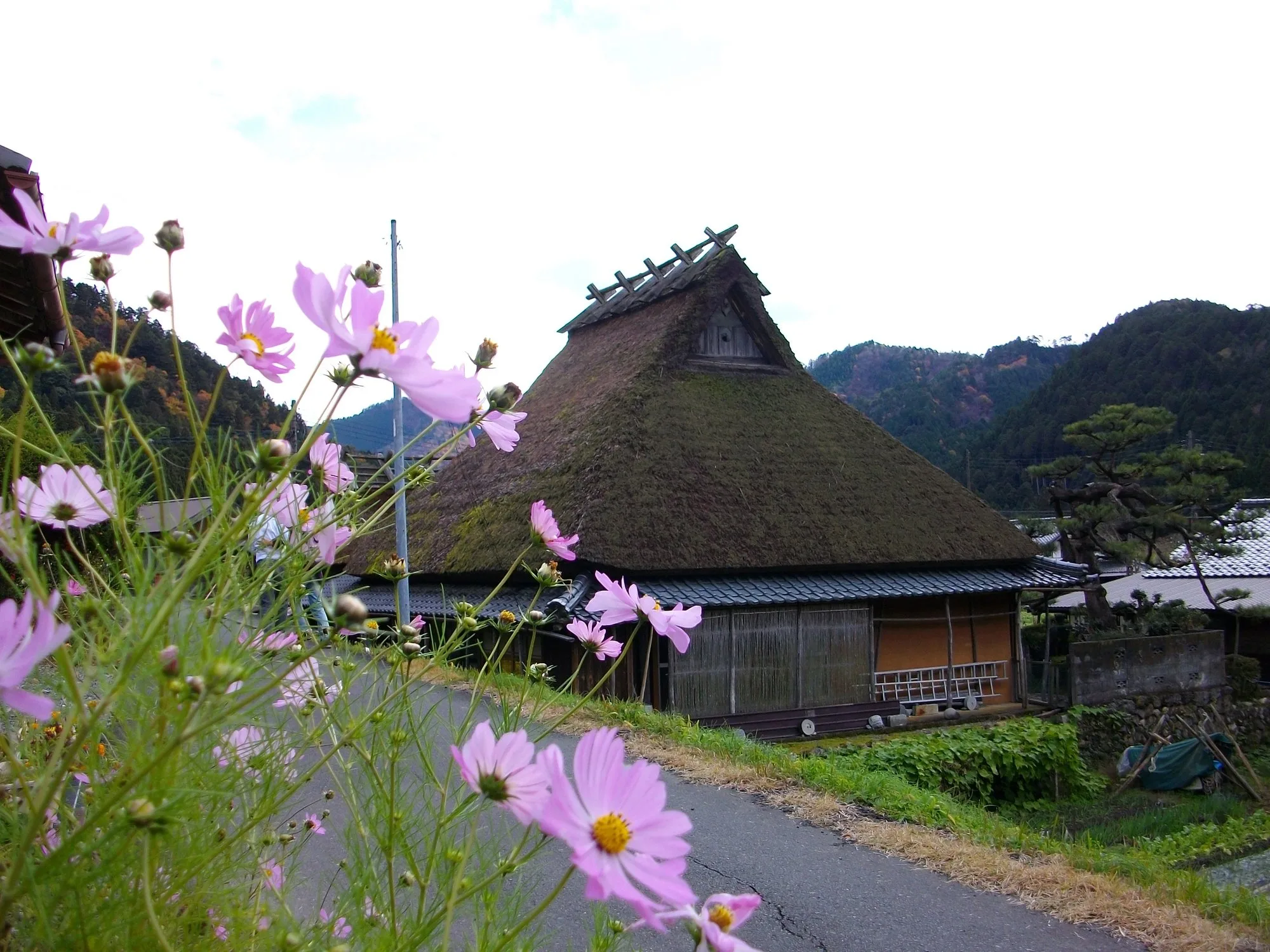
A thatched farmhouse in Kayabuki no Sato beside a lane of cosmos flowers
The association says the trip is about two hours one way from JR Kyoto Station. Take a local or rapid train on the JR Sagano / San-in Line from Kyoto to Sonobe, a ride of about 35 to 40 minutes. Most trains then require a transfer at Sonobe for JR Hiyoshi Station. The official 2026 timetable lists the JR fare as ¥590 between Kyoto and Sonobe, and ¥770 between Kyoto and Hiyoshi. The JR portion is covered by the Japan Rail Pass. The city bus is not.
From Hiyoshi, take a Nantan City Bus and get off at Kita. The English access page gives the ride as about 45 minutes, with a one-way fare of ¥600 to Kita. Most buses start at Hiyoshi; the first and last buses of the day start at Sonobe. If you board at Sonobe, the same official timetable lists the bus fare as ¥900 to Miyama.
A few practical rules come from the association and are worth taking seriously:
Pay the bus fare on board, in cash. IC cards are not accepted.
There is no stop announcement. Tell the driver you are going to Kita when you get on.
Buses do not run as often as city buses in Kyoto. Use the official 2026 timetable on the association's site for the day you travel, including the return from Kita.
I am not copying the clock times here, because they differ on weekdays, Saturdays, and Sundays, and they can be revised. Do not count on a late-evening return.
If you are already staying in Kyoto and want a private car instead of the transfer, our Kyoto Private Tour starts at $550 for two people in a sedan and lasts 10 hours. A standard city day usually stays in Kyoto itself. Miyama is about two hours north, so if you want the thatched village included, ask when you book. You can also get in touch or look at our custom tours.
Parking and arriving by car
By car, the association gives about 90 minutes from central Kyoto, or about 45 minutes from Sonobe Interchange on the Kyoto Jukan Expressway. Sonobe IC is for ETC-equipped vehicles only.
Use the official paid lot. The parking fee helps fund the preservation, repair, and restoration of the historic buildings and streetscape. Current fees, through March 31, 2027, are ¥500 for a standard car, ¥200 for a motorcycle, ¥2,000 for a microbus, and ¥3,000 for a tourist bus. Microbuses and sightseeing buses must be reserved in advance; if you arrive without a reservation, the official fee becomes ¥10,000 per vehicle. From April 1, 2027, the association will raise weekend, holiday, and designated-date car parking to ¥1,000, and reserved bus parking to ¥5,000. Weekday car parking stays ¥500, and motorcycle parking stays ¥200.
Parking hours are seasonal: 9:00 a.m. to 5:00 p.m. from April through November, and 10:00 a.m. to 4:00 p.m. from December through March. Public restrooms in the parking area follow those hours. If you arrive outside them, the official instruction is to put the fee in the payment box.
On some busy days, including the village's water-discharge inspection and the Winter Lantern Festival period, advance reservations are required for all vehicles. The association has listed the next inspection date as December 1, 2026. All facilities in the village, including cafes, lodgings, and the parking area, close during the year-end and New Year holidays.
Staying overnight in a thatched house
If you want more than a daytime walk, two official lodgings sit in the village. Matabe Thatched B&B includes breakfast, with official prices starting at ¥10,890 per person. For dinner, the inn arranges a table at a nearby restaurant and provides transport there and back; you pay the restaurant directly.
B&B Hisaya takes one group per day, up to six guests, and has welcomed visitors since 1995. The standard plan is ¥33,000 for two people with breakfast, plus ¥11,000 for each additional person. A dinner option starts at ¥2,200 per person. Hisaya is regularly closed Monday, Tuesday, and Wednesday, and the official listing gives a winter close from December 21, 2026, into early March 2027 (one part of the page says March 2, another says March 3). Confirm the reopening date when you reserve.
An English-language guided walk is also listed on the official village page. It runs Tuesday, Thursday, Friday, Saturday, and Sunday, with a pause around December 25 to January 7 for the year-end and New Year holidays. The minimum is two people and the maximum is 15. A group of fewer than five costs ¥11,000 for the group. For a group of six or more, the fee is ¥2,200 per adult and ¥1,100 for ages 13 to 15. The official booking deadline is three days before the walk.
A longer day, or a different historic town
Miyama is a full outing from the city, not a quick add-on between temples. If you also want a historic town closer to Kyoto or Osaka, we already have a separate guide to a Nara day trip. This article stays with Miyama Kyoto.
Walk the lanes, go inside the museum if it is open, and leave the private houses alone. If you want help arranging a custom day that includes the thatched village, get in touch or browse our custom tours.
From JR Kyoto Station, take the JR Sagano / San-in Line to Sonobe (about 35 to 40 minutes, official fare ¥590), then transfer for Hiyoshi (Kyoto to Hiyoshi is ¥770). From Hiyoshi, take a Nantan City Bus to Kita, about 45 minutes and ¥600 one way, cash only. The Kyoto Miyama Tourism Association says the full trip is about two hours one way. Confirm the day's official timetable.
The official Japanese museum page lists ¥300 for adults (high school age and older). Junior high students and younger enter free when they are with an adult. Hours are 10:00 a.m. to 4:00 p.m. The museum is closed Mondays, with a substitute close on Tuesday when Monday is a national holiday, plus Obon, New Year, and December 8, 2026.
No. The village has no general admission fee to walk the lanes. Most of the thatched houses are private homes. The folklore museum and the Little Indigo Museum charge their own tickets, and the official parking lot charges a fee that helps fund preservation.
Use the official paid lot. Through March 31, 2027, a standard car is ¥500, a motorcycle is ¥200, a reserved microbus is ¥2,000, and a reserved tourist bus is ¥3,000. Arrive without a bus reservation and the official fee becomes ¥10,000. Hours are 9:00 a.m. to 5:00 p.m. from April through November, and 10:00 a.m. to 4:00 p.m. from December through March. The museum has no parking of its own.
Yes, if rooms are available. Official lodgings in the village include Matabe Thatched B&B, from ¥10,890 per person with breakfast, and B&B Hisaya, at ¥33,000 for two people with breakfast, one group per day. Hisaya closes Monday through Wednesday and has a winter close from December 21, 2026, into early March 2027. Confirm availability on the official site.
The official public-transport trip is about two hours one way from JR Kyoto Station, or about 90 minutes by car from central Kyoto. Once you arrive, a walk through the village plus the folklore museum can fill a half day, and an overnight stay is possible in the official inns. Leave enough time for the limited return buses.
Private tours for this destination
Ready to see it in person? These private tours cover the places in this guide.