
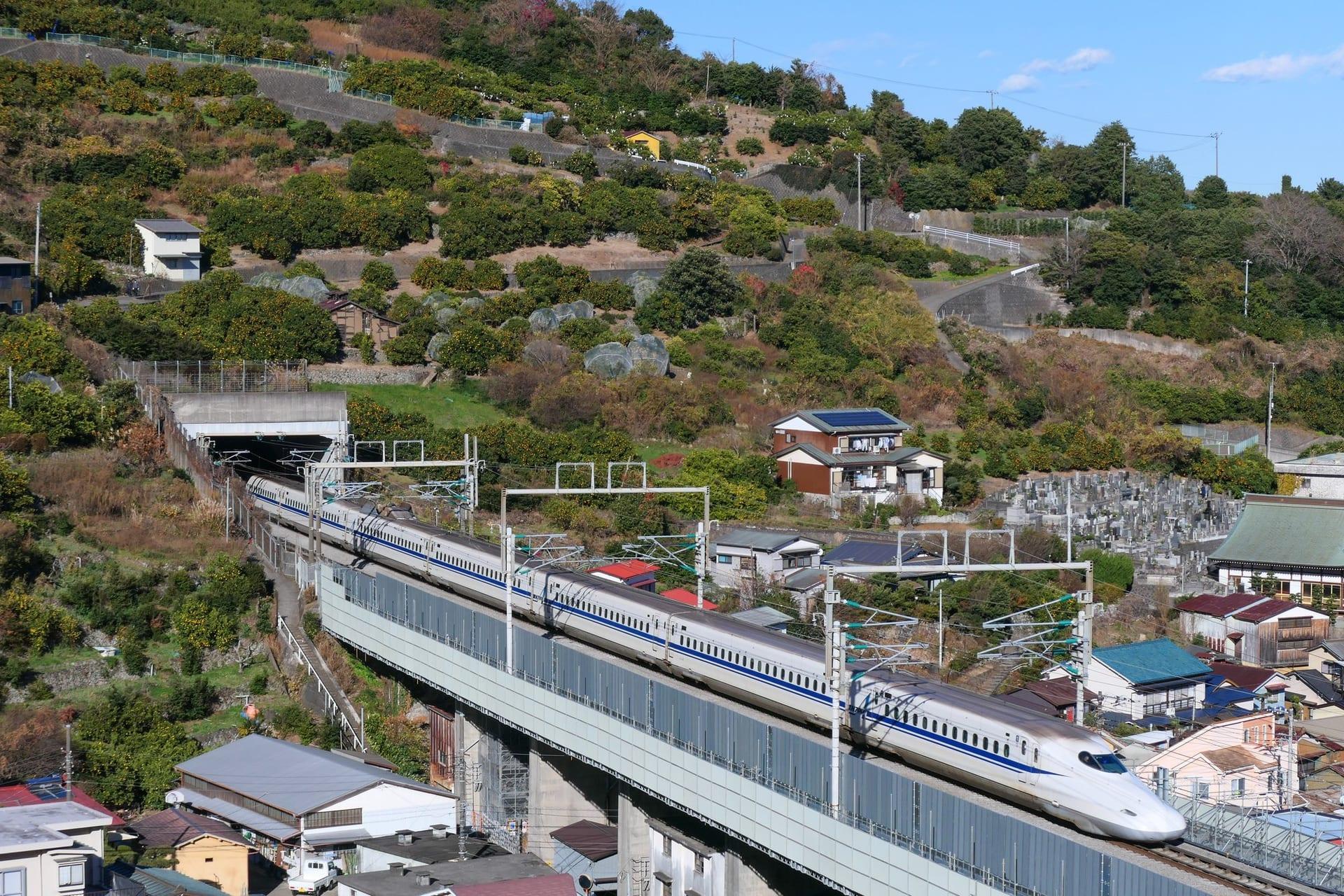
The Tokyo to Hakone shinkansen does not take you into Hakone itself. It runs on the Tokaido line from Tokyo Station or Shinagawa Station to Odawara, and from there you change to a local train or bus for Hakone-Yumoto. The first ride is short, about 35 minutes on a Kodama or on a Hikari that lists Odawara. A Hakone circuit still takes most of a day. If you also hoped to reach the Fuji Five Lakes, Chureito Pagoda, or the Fuji Subaru Line 5th Station on the same public-transit day, that plan is too tight. Those stops sit on a different rail network, and the transfers use up the hours you wanted for the ropeway and the lake.
Travel Tips9 min read
Tokyo to Hakone Shinkansen: How to Go and What Fits in a Day
A practical guide to the Tokyo to Hakone shinkansen via Odawara, with official fares, Hakone Freepass prices, and a realistic one-day plan that does not force in the Fuji Five Lakes.
By MickyEdited by Talha Nabeel
Tokyo to Hakone shinkansen: trains, fares, and Odawara
Odawara is the Tokaido Shinkansen station that serves Hakone. Kodama trains stop there. Some Hikari trains stop there too. Nozomi trains on this line do not stop at Odawara, so a Nozomi ticket will not help you on this trip. Before you buy, check that Odawara is on the stopping pattern for that train. The ride from Tokyo or Shinagawa takes about 35 minutes, sometimes a few minutes less on a Hikari.
Regular-season ordinary fares on Hikari and Kodama are the same for this section: ¥3,280 for an unreserved seat and ¥3,810 for a reserved seat. A Green Car seat is ¥4,580. Those reserved and Green figures can move with the official off-peak, peak, and busiest seasons, while the unreserved fare stays the same through the year. The regular fare from Shinagawa is the same as from Tokyo. Confirm the price for your date on Smart EX, which is JR Central's reservation service for the Tokaido Shinkansen, or at a JR ticket office or ticket machine.
A Japan Rail Pass covers Hikari and Kodama, including this Tokyo to Odawara ride. It does not cover Nozomi, which does not matter here because Nozomi skips Odawara anyway. The pass does not cover the Hakone Tozan Railway, the Hakone Tozan Cable Car, the Hakone Ropeway, the Hakone Sightseeing Cruise, or Odakyu trains. Once you leave the JR ticket gate at Odawara, you are on a different system.
From Odawara into Hakone, and the Freepass
From Odawara, local trains on the Hakone Tozan Line reach Hakone-Yumoto in about 15 minutes. The official adult one-way fare is ¥360, with the child fare at ¥180, on the Hakone Tozan fare table revised in 2022 and still posted in 2026. Some of those trains are Odakyu services, including the Romancecar, which needs a limited express seat ticket on top of the base fare. Buses also run up from Odawara if you prefer not to wait for a train.
If Hakone is your only goal, you can skip the shinkansen entirely. Odakyu's Romancecar runs from Shinjuku Station to Hakone-Yumoto in about 80 minutes, with all seats reserved and no change of train. That is often the simpler rail trip into the mountains. The shinkansen is the faster way to Odawara, not a door-to-door ride into Hakone.
The official Hakone Freepass, sold by Odakyu, is the pass most people use for the Hakone circuit. From Shinjuku, the 2-day adult pass is ¥7,100 and the child pass (ages 6 to 11) is ¥1,600. The 3-day prices are ¥7,500 and ¥1,850. From Odawara, the Hakone-area-only 2-day pass is ¥6,000 for adults and ¥1,500 for children, and the 3-day prices are ¥6,400 and ¥1,750. The Shinjuku version includes one discounted Odakyu round trip between Shinjuku and Odawara. The Odawara version does not include that Odakyu line trip, which is the right choice if you arrive on the shinkansen.
The Freepass covers unlimited rides on eight modes of transport in the Hakone area, including the Hakone Tozan Train, the cable car, the Hakone Ropeway, the Hakone Sightseeing Cruise on Lake Ashi, and local buses. It also gives discounts at many facilities. It does not include the Romancecar limited express surcharge. Official add-on prices are ¥1,200 one way for adults from Shinjuku to Hakone-Yumoto, or ¥600 for children, and ¥1,200 less ¥50 if you buy the limited express ticket through EMot Online Tickets. From Odawara to Hakone-Yumoto the official Romancecar add-on is ¥200 for adults and ¥100 for children, sold on the platform when seats remain.
If you come by shinkansen, budget for the bullet train both ways plus the Odawara Freepass. That combination is usually more expensive than the Shinjuku Freepass, even before any Romancecar surcharge. You are paying for a shorter ride to Odawara. I compared the two options in more detail in Hakone Free Pass or a Private Tour? How to Choose.
A realistic Hakone day after you arrive
You do not need a minute-by-minute timetable. The useful constraint is official last entry and last departure, especially on the ropeway and the cruise, which close earlier in December and January and can stop in bad weather. Keep the day flexible, and leave slack for lines at Owakudani and at the boat dock.
A classic one-way loop, if you want the mountain railway, a museum stop, the ropeway, and the lake, looks like this. Ride from Hakone-Yumoto up the Hakone Tozan Train toward Gora, about 40 minutes. Get off at Chokoku-no-mori for the Hakone Open-Air Museum if you want the sculptures, or continue to Gora and take the cable car to Sounzan. From Sounzan, the ropeway crosses Owakudani and continues to Togendai, on the north shore of Lake Ashi. A sightseeing cruise runs from Togendai to Hakone-machi or Moto-Hakone in about 25 to 35 minutes. Hakone Shrine sits near Moto-Hakone, and buses head back to Hakone-Yumoto or Odawara from the lake ports. You do not have to do every segment. If the ropeway is on a replacement bus, or if the mountain is in cloud, it is fine to spend longer at the museum or at the shrine and skip a leg.
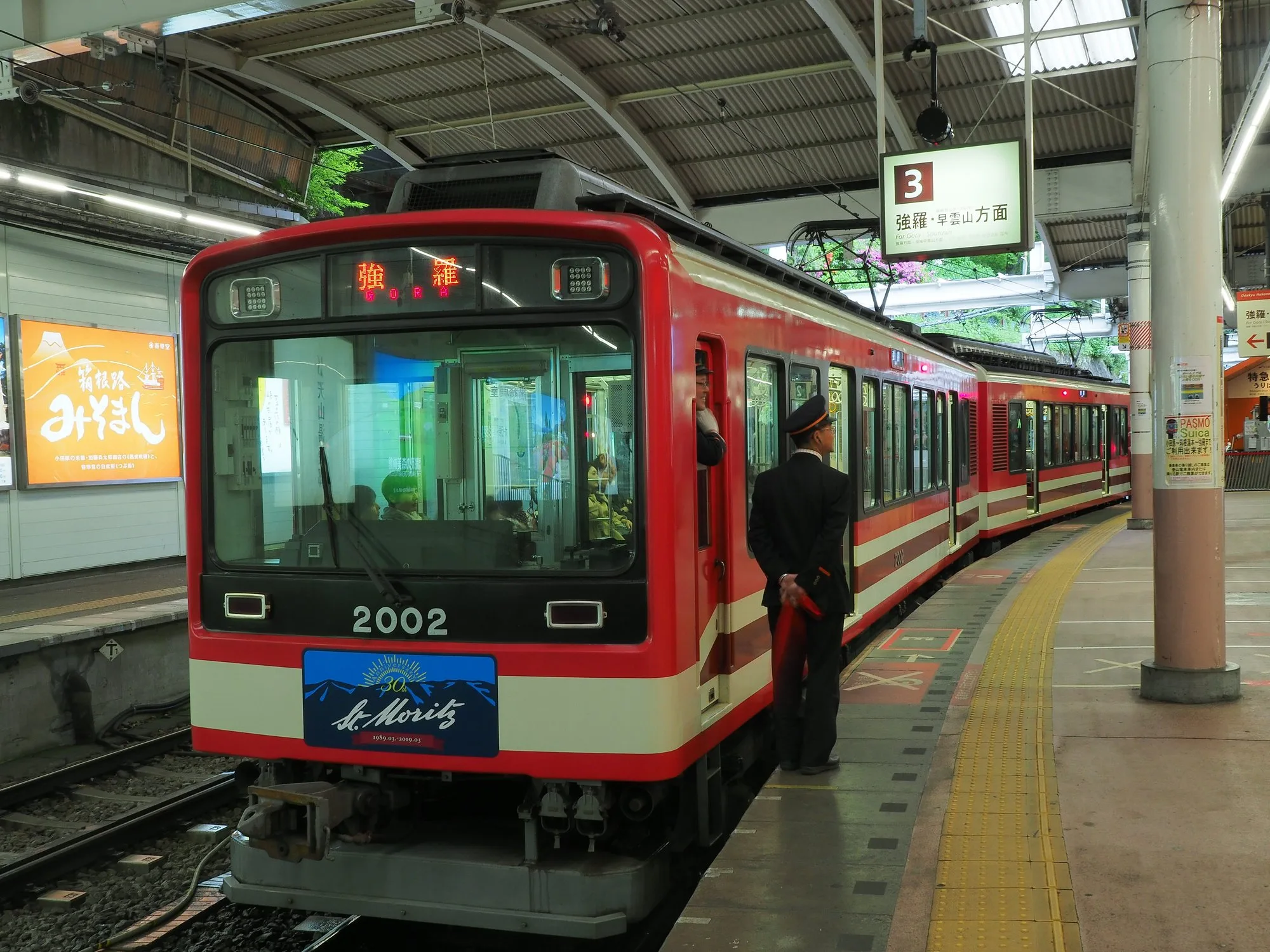
A Hakone Tozan train at Hakone-Yumoto Station. Photo: Kuroc622 / Wikimedia Commons, CC0.
Official hours and fees for the paid stops, checked in November 2026, are as follows.
The Hakone Open-Air Museum is open from 9:00 a.m. to 5:00 p.m., 365 days a year, with last admission 30 minutes before closing. Same-day adult admission is ¥2,000, or ¥1,800 if you buy online. University and high school students pay ¥1,600 at the door or ¥1,400 online. Middle and elementary school students pay ¥800 or ¥600 online. Preschool children are free. An older figure of about ¥1,600 for adults does not match the current official adult tariff.
The Hakone Ropeway runs from 9:00 a.m. to 5:00 p.m. from February through November, and from 9:00 a.m. to 4:15 p.m. in December and January, according to Hakone Navi. Service can stop in bad weather or during regular inspection. Adult fares, in effect since October 1, 2025, are ¥2,000 one way and ¥3,000 for a round trip. Child fares are ¥700 one way and ¥1,000 round trip. An older round-trip figure of about ¥2,500 is out of date. Two inspection closures are already posted: December 7 to 24, 2026, between Owakudani and Sounzan, and January 12 to February 26, 2027, between Togendai, Ubako, and Owakudani, with replacement buses on those sections. Confirm the day's status on Hakone Navi before you leave Odawara.
The Hakone Sightseeing Cruise takes about 25 to 35 minutes one way between Togendai and Hakone-machi or Moto-Hakone, or about 70 to 90 minutes round trip. Winter sailings, on the timetable from December 1 to March 19, can take longer. Official adult fares since October 1, 2025, are ¥1,700 one way and ¥3,000 round trip; child fares are ¥850 and ¥1,300. A short hop between Hakone-machi and Moto-Hakone is ¥600 for adults and ¥300 for children. An older one-way figure of about ¥1,000 is out of date. Hours vary by season, so use the official timetable rather than assuming a 5:00 p.m. last boat. The Freepass covers the standard cruise.
Ordinary worship at Hakone Shrine is free. The red torii that stands in the water is a short walk from Moto-Hakone, and it is a fair place to look for Mount Fuji across the lake when the air is clear.
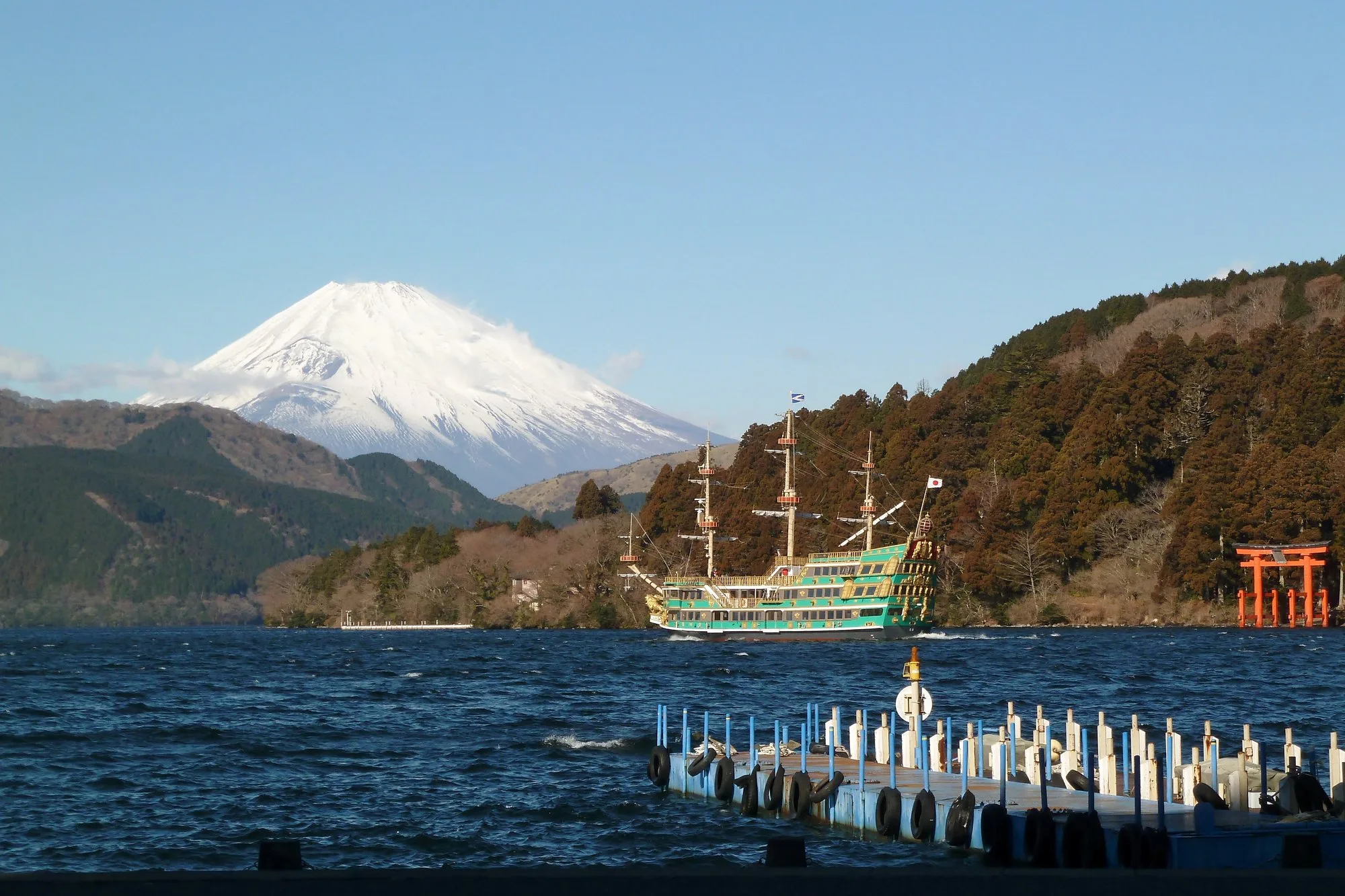
Mount Fuji, a sightseeing boat, and the torii of Hakone Shrine on Lake Ashi. Photo: Quercus acuta / Wikimedia Commons, CC0.
For a Hakone-only walking order, our 1 day Hakone itinerary stays inside this area and does not try to add the Fuji lakes.
Seeing Mt. Fuji without forcing two trips into one
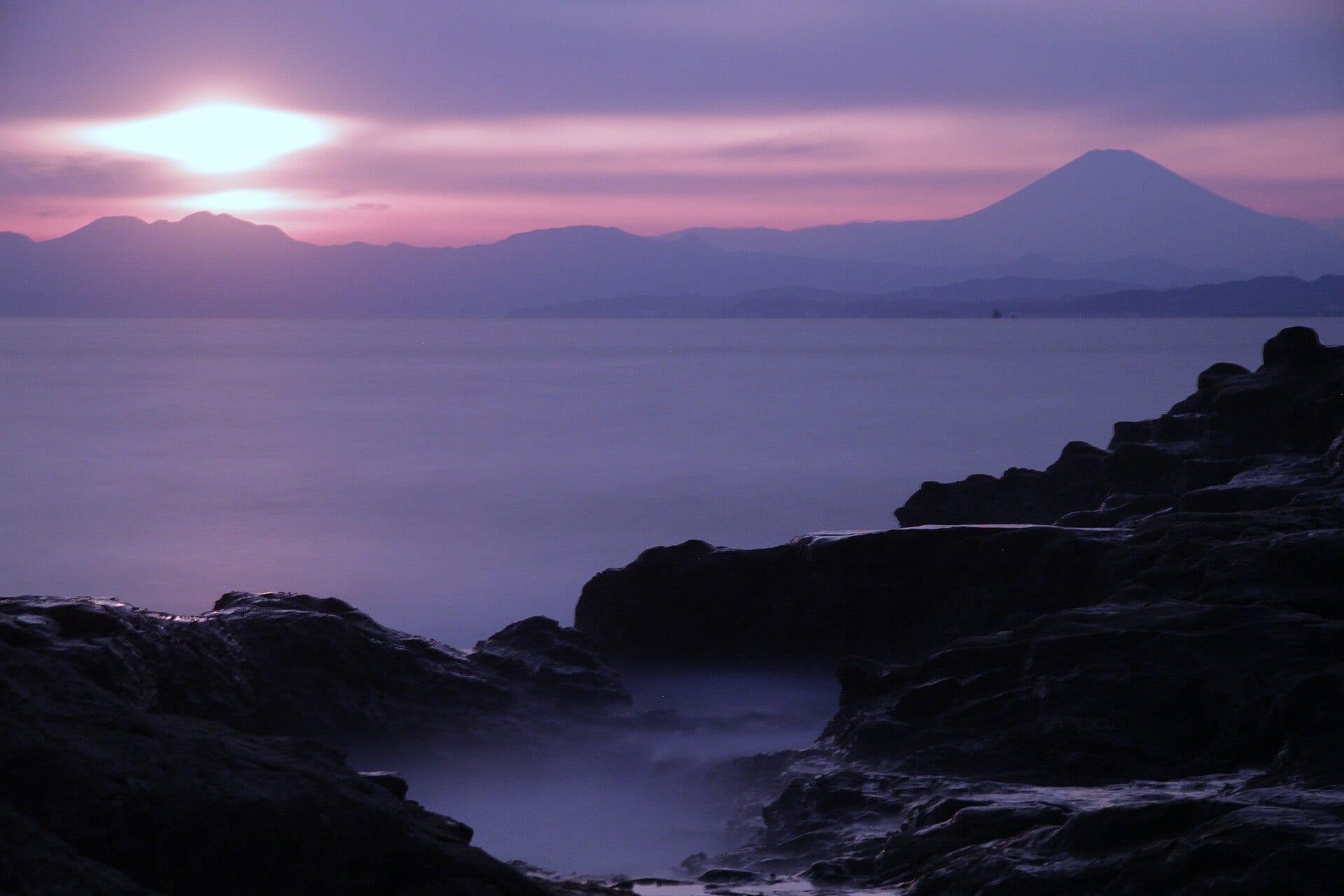
On a clear day you can see Mount Fuji from the Hakone Ropeway and from Lake Ashi. Official Hakone Navi pages say the mountain is visible from Owakudani and from the ropeway when the weather is fine, and the cruise pages point out the same view from the water, sometimes with the shrine torii in the same frame. Clouds hide the peak often, and summer haze is a common reason for a blank view. Winter usually gives the higher chance of a clear mountain, with colder air at the stations, especially Owakudani.
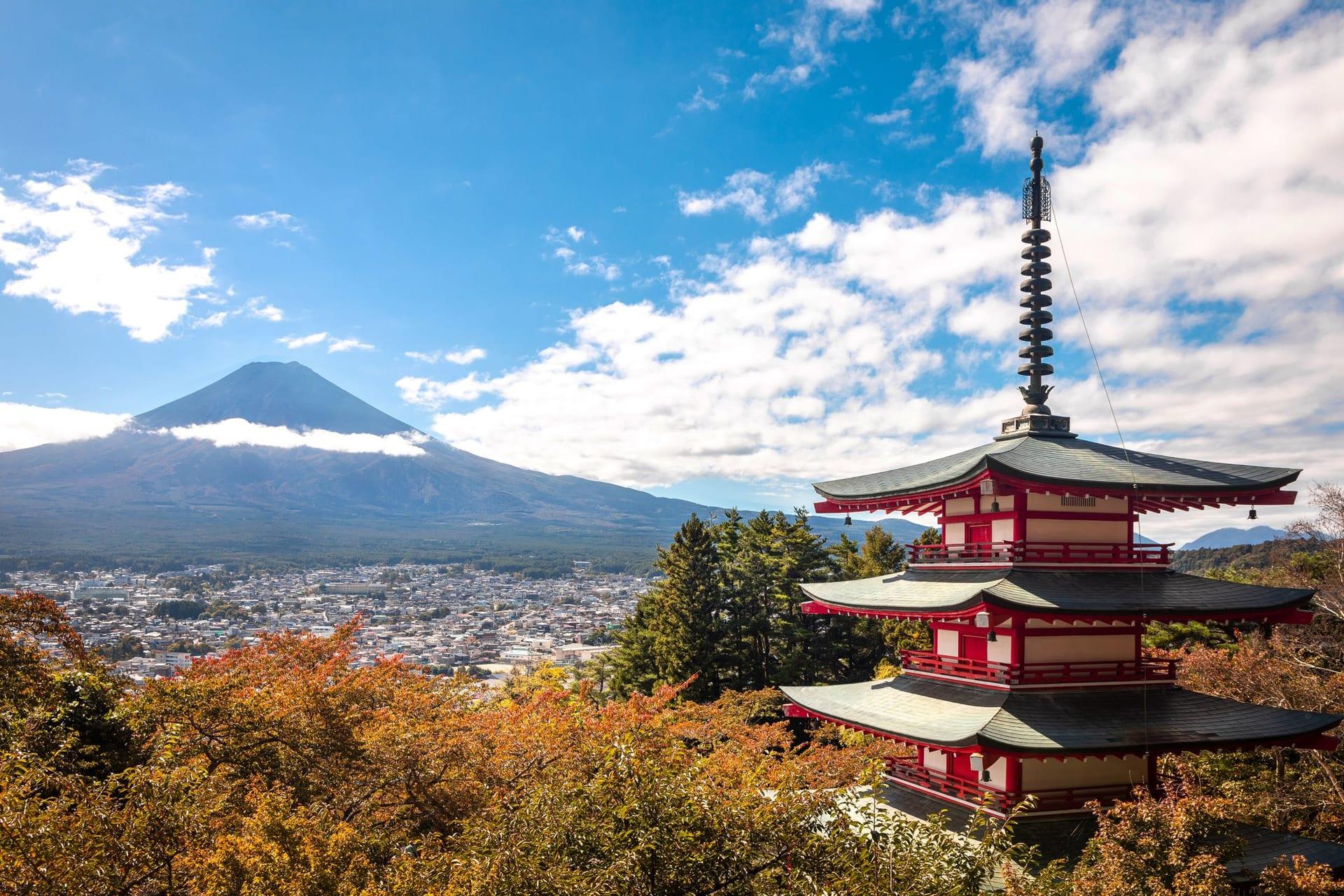
That Hakone-side view is not the same trip as the Fuji Five Lakes. Chureito Pagoda stands at Arakura Sengen Shrine in Fujiyoshida, on the north side of the mountain. It is not a short train ride from Odawara plus a brief walk. Reaching it means a separate rail path, usually toward Otsuki on the JR Chuo Line and then the Fujikyu Railway to Shimoyoshida, followed by a climb of the shrine steps. Lake Kawaguchi sits on that same Fujikyu line. The Japan Rail Pass covers JR as far as Otsuki. It does not cover Fujikyu.
Trying to run a full Hakone loop and then travel to Kawaguchiko in the late afternoon, as some sample plans suggest, leaves almost no time at the lake and a long way back to Tokyo. The two areas use separate tickets and transfers. If you want a closer look at the lakes, the pagoda, or the 5th Station, give them their own day. Our Mt Fuji day trip driver tips and Mt Fuji private tour guide cover that side of the mountain. Mishima and Shin-Fuji are other Tokaido Shinkansen stations, useful for a Fuji-side day, not as a stop you add after the Hakone circuit.
If you have only one day and you want both the lakes on the north side of Fuji and the Hakone cruise and ropeway, a private car is the realistic way to do it. Public transit spends most of that day on transfers. Our Mount Fuji and Hakone Day Trip from Tokyo is a 10-hour day with an English-speaking driver guide, starting at ¥77,020 for two people (about $500) in a sedan, with hotel pickup and drop-off inside Tokyo's 23 wards. Fuel, expressway tolls, and parking are included. Lunch, drinks, and tickets for the Lake Ashi cruise and the Hakone Ropeway are not included; the route and current ticket prices are confirmed before purchase. Time beyond 10 hours is billed at ¥5,000 per 30 minutes, paid by card. The day is long, with more time in the car than on a single-area tour, and the order of stops can change with the weather. If you have two days, the separate Mt Fuji Private Tour from Tokyo and Hakone Private Day Tour from Tokyo give you more time at each stop. I also compared the two destinations in Hakone vs Mt Fuji: Which is Better for Sightseeing.
A train day to Hakone can be a very good day if you treat Odawara as the gateway, use the Freepass inside Hakone, and let Fuji be a view you hope for from the ropeway or the lake. It is a poor day if you treat the shinkansen as a way to stitch two regions together before dinner in Tokyo.
If you want help building a one-day or two-day plan around these trains, browse our tours or contact us. The Mount Fuji and Hakone Day Trip from Tokyo remains the straightforward option when you have one day and do not want to choose between the two areas.
TopicsTokyo to Hakone shinkansenOdawaraHakone FreepassMount FujiHakone day trip
Frequently Asked Questions
Private tours for this destination
Ready to see it in person? These private tours cover the places in this guide.
Related posts


Ready to explore Japan?
Book a private tour with OHAYO TRAVEL JAPAN.
View all private tours · Browse by category · Destinations · Contact us