A Hakone day trip from Tokyo is one of the easiest mountain escapes you can do without overnight bags. Lake Ashi, the ropeway over Owakudani, outdoor art, a red torii at the water, and an onsen if you want to slow down. You can ride the Romancecar and the Hakone loop on your own. You can also go by private car if you would rather not juggle tickets and transfers.
This guide covers both paths: how to plan the day, what to see, what it roughly costs, and when a private tour is worth it.
Why Hakone works as a day trip from Tokyo
Hakone sits southwest of Tokyo in the mountains above Odawara. On a clear day you get Fuji views across Lake Ashi. On any day you get sulfur vents, museums, and hot springs within a compact area.
Public transport is solid if you like puzzles. The Odakyu Romancecar runs Shinjuku to Hakone-Yumoto in about 85 minutes. After that, the Hakone Freepass unlocks local trains, buses, the ropeway, and the pirate ship on the lake. The catch is timing. Miss one connection and your afternoon shrinks fast.
A private day tour skips that math. An English-speaking driver picks you up in Tokyo, moves you between stops, and adjusts if you want longer at the Open-Air Museum or an early onsen. Families and anyone with limited Japan train experience usually prefer that pace.
Outdoor sculptures on a hillside, with indoor rooms for Picasso ceramics and other collections. Give it at least two hours. Kids like the footbath and the play areas. Adults like the mountain backdrop without another packed indoor museum.
Lake Ashi and Hakone Shrine
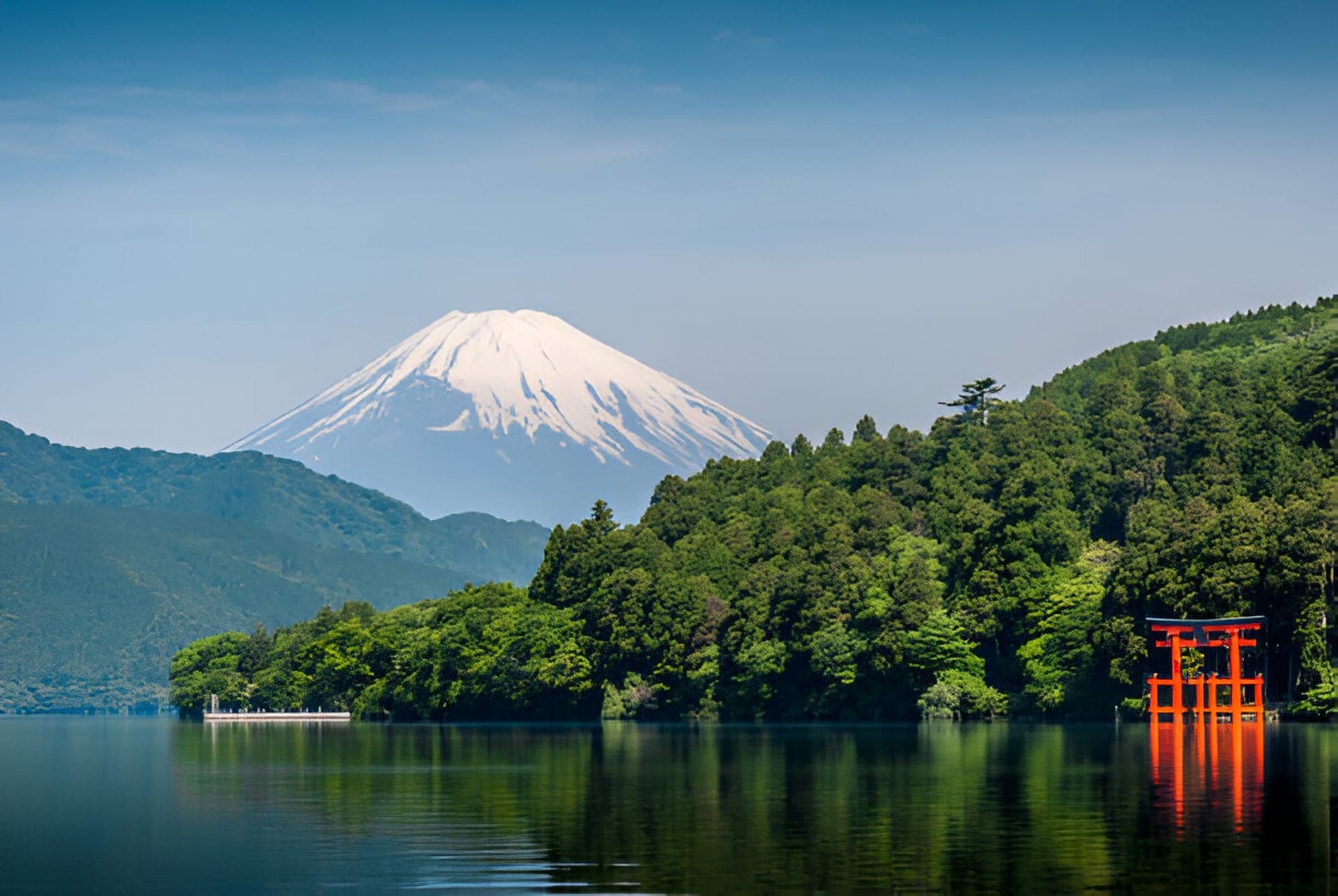
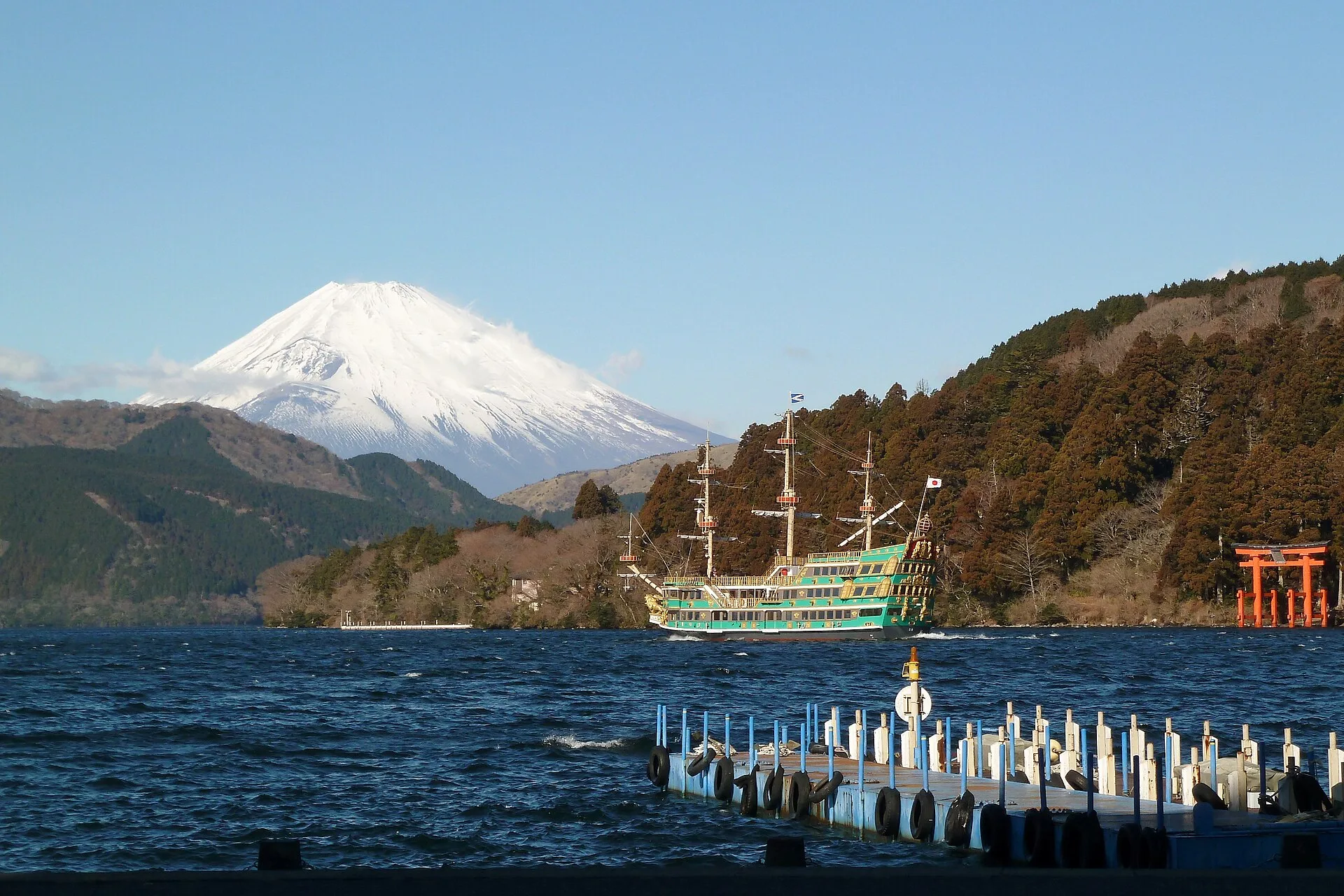
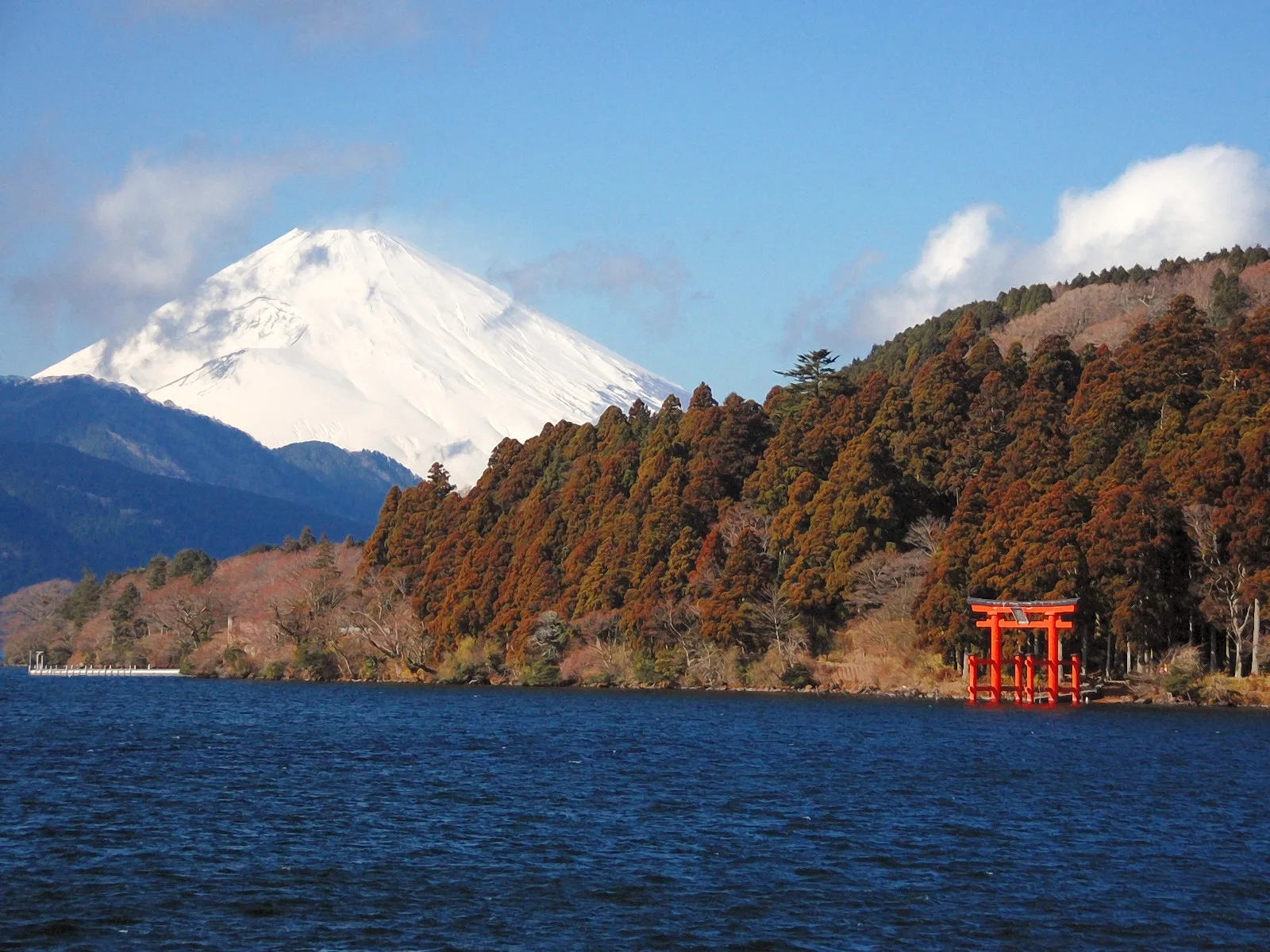
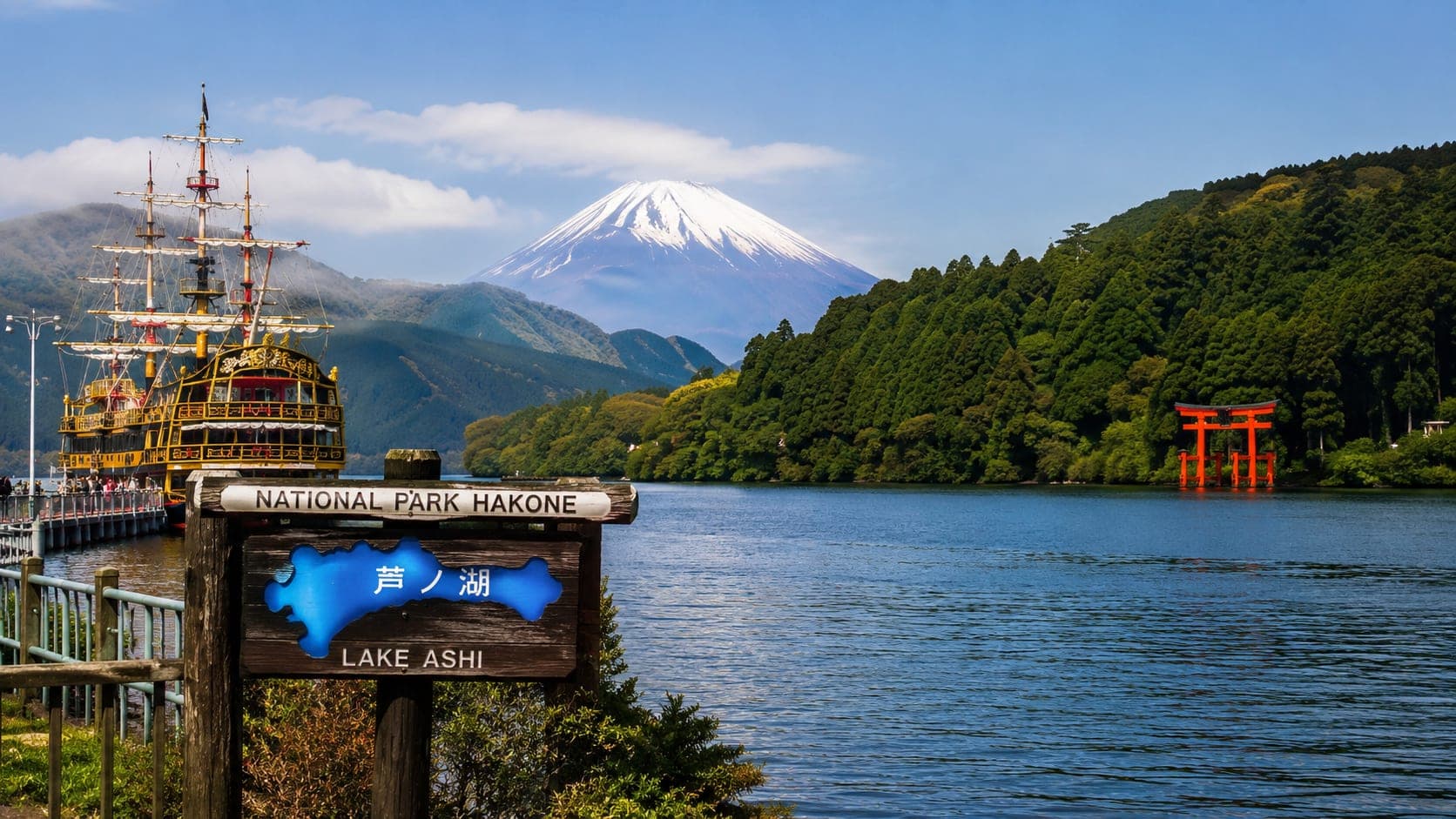
The vermilion torii standing in the water is the photo most people come for. Walk the shrine grounds, then take the sightseeing boat across the lake if the weather is clear. The cruise is about 30 minutes and often around ¥1,000. Fuji shows up on
Mount Fuji from Lake Ashi
good days; haze hides it on others. Do not build the whole trip around that one view.
Photo: Quercus acuta / Wikimedia Commons (CC0).
Owakudani and the ropeway
Owakudani is the volcanic valley with active vents and the famous black eggs boiled in the hot springs. Locals joke that one egg adds seven years to your life. The Hakone Ropeway is the usual way in, and the ride itself is half the point. Bring a light jacket; it can feel cooler and windier up there. Skip it if you have breathing issues around sulfur.
Hakone Checkpoint
A reconstructed Edo-period checkpoint on the old Tokaido road. Small museum, short visit (about an hour), entry often around ¥500. Useful if you like history between the bigger scenic stops.
Onsen
Many travelers save time for a bath before the drive back. Tenzan Onsen is a common pick for outdoor baths (often around ¥1,300). Private tours can build this in so you are not racing a train timetable in a yukata.
A simple Hakone loop itinerary
If you DIY, the classic loop runs roughly: Hakone-Yumoto, then Open-Air Museum or Gora, ropeway to Owakudani, down to Lake Ashi, boat or bus past the shrine, and back. Clockwise or counterclockwise both work; check Freepass maps the night before.
Start early from Tokyo. A late Romancecar means you hit Owakudani in the afternoon crush. In autumn foliage season, roads and ropeway queues get long. Winter can be quieter but windier; summer is green and humid.
By private car you keep the same stops but drop the transfer stress. That is often the difference between a relaxed day and a day spent staring at a transit app.
A full-day private Hakone tour from Tokyo often lands around ¥70,000 to ¥100,000 for the vehicle and English-speaking guide or driver, depending on group size and inclusions. Entrance fees and meals may be separate. Confirm parking, tolls, and attraction tickets in the quote so nothing surprises you at the gate.
DIY is cheaper on paper: Romancecar roughly ¥2,330 one way from Shinjuku, or Shinkansen to Odawara plus a local hop (often near ¥4,000 one way for the faster combo). Add Freepass, boat, ropeway, and museum tickets. You pay less cash and more time.
Romancecar: Shinjuku to Hakone-Yumoto, about 85 minutes. Reserve seats in busy seasons.
Shinkansen + local: Tokyo Station to Odawara, then local train into Hakone-Yumoto. Faster on the bullet segment, more transfers.
Private car: Door to door. Best with kids, luggage, or a mixed-ability group.
The Hakone Freepass is worth it for DIY day trips: round-trip Odakyu travel (depending on the pass type you buy) plus unlimited local transit in the zone. Limited express seat fees can be extra. Check Odakyu's current rules before you buy.
Seasons and small practical notes
Spring is mild and good for walking. Summer brings greenery and humidity. Autumn color around the lake and ropeway draws crowds, so book trains or a car early. Winter often means clearer Fuji views and quieter paths, with colder wind on the ridge.
Eat where it fits the day: a soba lunch near Hakone-Yumoto, a snack at Owakudani, or a meal planned into a private tour. Confirm onsen tattoo rules if that matters for your group. Many baths are flexible; some are not.
What to pack
Comfortable shoes for gravel and museum paths. Layers, because the ropeway and lakeside feel cooler than Tokyo. A light rain jacket. Cash for some smaller counters. A daypack for water and a konbini lunch if you are not booking meals.
Pick your mode first: DIY loop with Freepass, or private car from Tokyo. Then lock two or three priorities and leave slack for one detour. Hakone rewards an early start more than a packed checklist.
If you want pickup, pacing, and an onsen without watching the clock, browse the Hakone Day Tour with Onsen from Tokyo and travel with Ohayo Travels at a pace you can actually enjoy.
One small timing tip: check the last ropeway and sightseeing boat departures before leaving Tokyo, then keep a little buffer for queues at Owakudani. If the lake is windy, switch to the bus and shrine walk rather than waiting on the pier. A convenience-store breakfast and a refillable bottle also make an early start easier, especially when the first train is before the cafés open.
TopicsHakone travelprivate toursTokyo day tripsJapan travel tips
Frequently Asked Questions
Yes, if you leave early and pick a short list of stops. Trying to do every museum, the full loop, and a long onsen usually means rushing.
No. Trains and the Freepass work fine for independent travelers. A private tour mainly saves planning time and keeps the day flexible.
Only on clear days, usually better in winter mornings. Build the itinerary around Lake Ashi and Owakudani either way.
Plan two hours. Art lovers stay longer.
They are a fun snack and a photo, not a meal. Buy one if you are curious; skip the line if the ropeway is backed up.
Paths can be slick and ropeway operations sometimes pause in strong wind. Check same-day notices and pack grippy shoes.
Private tours for this destination
Ready to see it in person? These private tours cover the places in this guide.